
‘New level of danger’: Drone incidents scare Europe amid Russia-Ukraine war
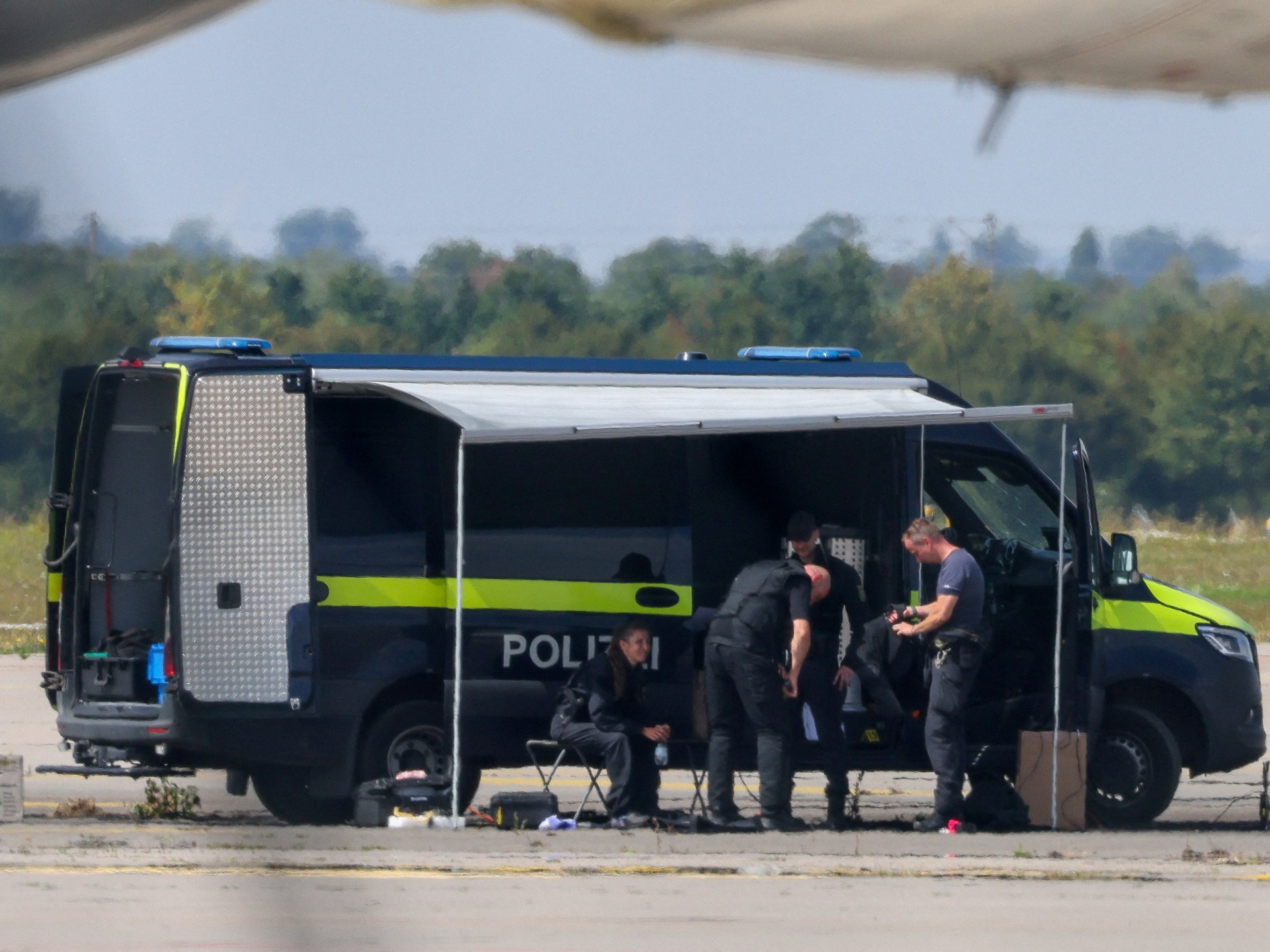
The continent is on edge. A recent, chilling incident involving a drone at Germany’s Leipzig/Halle Airport has ignited a firestorm of anxiety across Europe, casting a stark spotlight on the escalating threat of suspected Russian operations. These European drone incursions, increasingly sophisticated and brazen, represent what officials are calling a “new level of danger.”
On August 4, a quadcopter drone, laden with plastic explosives, reportedly breached the perimeter of Leipzig/Halle Airport, a crucial NATO airlift hub, completely undetected by air defenses. It struck a Ukrainian cargo plane but, fortuitously, failed to detonate. The device was later discovered on the tarmac by a bus driver. German media, citing the Bild tabloid, indicated DNA evidence linked this drone to a previous firebombing at the same airport in July 2024.
Germany’s Interior Minister, Alexander Dobrindt, underscored the gravity of the situation, stating these threats were clearly not amateur work. “We’re dealing with possibly foreign powers,” Dobrindt remarked, without explicitly naming Russia. This cautious rhetoric, analysts note, mirrors Berlin’s historical approach to Moscow. However, US intelligence agencies reportedly concluded the drone was indeed Russian, its military-grade explosives suggesting a deliberate test of NATO’s collective defensive resolve.
The implications ripple far beyond Germany. Lithuanian Defence Minister Robertas Kaunaus recently voiced a more ominous suspicion: Moscow might be orchestrating false-flag attacks on Baltic critical infrastructure using captured Ukrainian drones to incriminate Kyiv. While he deemed the threat non-immediate, nations like Poland and other Baltic states, having experienced their own aerial intrusions, have already heightened security around vital energy and logistical hubs.
Unmasking European Drone Incursions: A Hybrid Warfare Tactic
Military analysts and drone warfare specialists interviewed by Al Jazeera largely agree: the Leipzig incident, far from isolated, is a piece in a larger, years-long hybrid warfare mosaic crafted by the Kremlin with audacious precision. Since 2024, Moscow has allegedly deployed drones into the airspace of a dozen NATO nations and even Ireland. The objectives are multifaceted: sow discord, identify critical air defense weaknesses, and gauge the speed – or glaring lack thereof – of NATO’s coordinated response.
Lieutenant General Ihor Romanenko, a former deputy head of the General Staff of the Armed Forces of Ukraine and a seasoned air defense expert, minces no words: Russian President Vladimir “Putin tests NATO and shows [member states] how weak they are.” A July report from the International Institute for Strategic Studies (IISS), a leading voice in strategic analysis, detailed how these incursions have halted airport operations, disrupted logistics, and even penetrated sensitive sites like nuclear facilities and defense installations housing advanced weaponry. The report theorizes Moscow leverages its “shadow fleet” of tankers navigating European waters to launch and recover these elusive drones. This campaign, IISS concluded, represents “a series of tactical successes for the Kremlin and a strategic failure of allied air defence.” Russia, predictably, dismisses these claims as mere “scare stories.”
Europe’s traditional air defense architecture, honed over decades to counter planes and missiles, struggles profoundly against the agile, smaller drone threat. Identifying, attributing, and intercepting these objects demands precious time. Deploying costly fighter jets and missiles against them is both inefficient and economically draining. Furthermore, the Kremlin’s persistent campaign has exposed palpable “political fractures” within NATO, highlighting the disjunction between military capabilities and governmental authorization.
Nikolay Mitrokhin, a researcher at Germany’s Bremen University, points to Russia’s Main Intelligence Directorate (GRU) as the probable mastermind behind the Leipzig operation. The GRU’s track record includes extensive cyberespionage and efforts to disrupt European logistics. From a military standpoint, Mitrokhin told Al Jazeera, the Leipzig operation was “not bad” given its success in rattling Europe. He estimates European drone detection and interception systems are “outdated by at least five years” in an era where the Ukraine conflict has propelled drone warfare into a cheaper, more lethal domain. “There’s too few of [these systems], and they operate too slowly,” he observed.
Andrey Pronin, who runs a Kyiv-based school for drone pilots, argues the true value of these sightings lies not in reconnaissance data – much of which is already public – but in the psychological impact. “It’s more like a test of responsiveness. Will there be ‘concerns’ or ‘serious concerns’?'” he quipped, referencing Europe’s typically understated diplomatic reactions. His stark recommendation: “any unknown flying objects should be destroyed.”
NATO’s overall response to the surge in European drone incursions has been widely criticized as sluggish, expensive, and excessively cautious. While drones have largely supplanted conventional artillery and jets on Ukraine’s front lines, the Western military-industrial complex lags significantly. No NATO member possesses vast numbers of drone interceptors ready for deployment. “They all live with old NATO doctrines that no longer work,” Pronin declared, adding, “Europe is not ready for a war. They’re preparing, trying, but they’re not ready.” Romanenko recalled a severe incident on September 10, when Russia sent nearly two dozen drones into Polish airspace, grounding flights at four airports. Only two were shot down, a stark contrast to the 500 Russian drones Ukrainian air defenses reportedly neutralized that same day. “It would have been funny had it not been so sad,” Romanenko lamented. “Russians carried out all their tasks while NATO was only waking up.” This indecisive “ostrich position,” he concluded, signals a profound weakness in Europe’s readiness for modern drone warfare.