
Nigerian security forces free more than 300 hostages abducted by militants
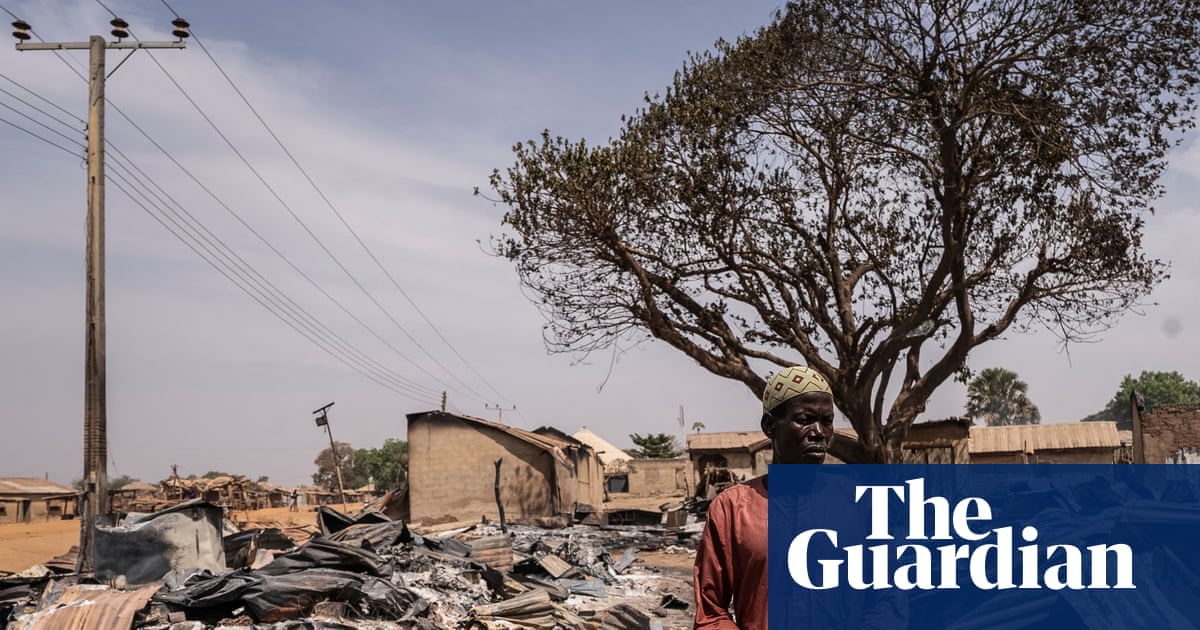
In a monumental triumph against rampant insecurity, Nigerian security forces have executed a historic Nigerian hostage rescue, liberating more than 300 individuals in what President Bola Ahmed Tinubu has lauded as the single largest hostage recovery operation in the nation’s history. This significant breakthrough offers a glimmer of hope for a country grappling with the escalating scourge of mass abductions.
The intricate operation, a testament to inter-agency collaboration, unfolded on Wednesday. A combined force of military, police, and counter-terrorism units meticulously navigated the dense, challenging terrain of the Kainji Lake National Park in Nigeria’s north-central region. Their coordinated efforts successfully extracted captives from the clutches of militants who held them deep within these formidable forests.
Among those who miraculously regained their freedom were 163 people, victims of a brutal raid in February on the village of Woro, situated in Kwara state. Another 145 individuals had been seized predominantly from neighboring Niger state. Both regions, notably, share a border with Benin, where extremist activities have seen an alarming surge lately. Upon their release, survivors are immediately undergoing crucial medical evaluations at an army facility, a critical step before their long-awaited reunions with anxious families.
Unpacking the Nigerian Hostage Rescue Operation
President Tinubu’s office, through an official statement on the presidency’s website, resonated with pride. “The successful execution of this intelligence-led operation demonstrates the growing efficiency and collaboration among our security services,” he declared, praising the “gallant men and women in uniform for their bravery and unwavering commitment to safeguarding Nigerian lives.” Government spokesperson Bayo Onanuga further affirmed that this pivotal Nigerian hostage rescue aligns squarely with the President’s unwavering commitment to re-establishing lasting peace across every inch of the nation.
This latest triumph, however, casts a sharp light on a grim reality: kidnapping for ransom has metastasized into an endemic crisis across Africa’s most populous nation over the past decade. Particularly in the vast northern expanses, shadowy armed groups, ranging from ruthless bandit gangs to hardened jihadists, exploit sprawling, unoccupied forests and shrublands as their havens.
Disturbing statistics from the Lagos-based geopolitical advisory SBM Intelligence underscore the severity. Between July 2024 and June 2025 alone, a staggering 4,722 people were kidnapped across 997 reported incidents, leading to the tragic deaths of at least 762 individuals. During that same harrowing 12-month span, abductors shamelessly demanded an estimated ₦48 billion (roughly $35 million or £26 million) in payments. Desperate families and communities ultimately shelled out at least ₦2.57 billion in ransom money, a heartbreaking sum paid to secure the freedom of their beloved kin. This relentless cycle of violence and extortion continues to plague the nation, making efforts like this Nigerian hostage rescue all the more vital but also underscoring the deep-seated problems.
As January’s presidential election looms, with Tinubu vying for a second four-year term, his administration has visibly intensified its reforms and launched more robust rescue operations. Insecurity, an ever-present specter, has worsened, making these efforts imperative. Just recently, the army declared Abu Musa al-Mangawi Baa Shuwa, the governor of Islamic State West Africa Province (ISWAP), and his deputy, Amirul Jaish Muhammad Jidda, as wanted men. These high-value targets lead an Islamic State-affiliated Boko Haram offshoot, primarily active around the Lake Chad basin, a volatile area touching Cameroon, Chad, Niger, and Nigeria. Furthermore, last week, the presidency announced substantial salary increases, ranging from 30% to 80%, for thousands of soldiers – the largest hike in years for an army once revered as one of the continent’s most formidable but now often criticized as underfunded and ill-equipped to confront concurrent insurgencies nationwide.
In a similar vein, last July saw security services successfully free at least 40 students and teachers. They had been abducted in May from a school in Oyo, located in south-western Nigeria. These consistent, albeit challenging, operations offer glimmers of hope amidst the darkness, emphasizing the ongoing commitment to address the nation’s persistent security challenges.