
Nobel Peace Prize goes to Navi Pillay, former UN human rights chief
Introduction & Key Takeaways
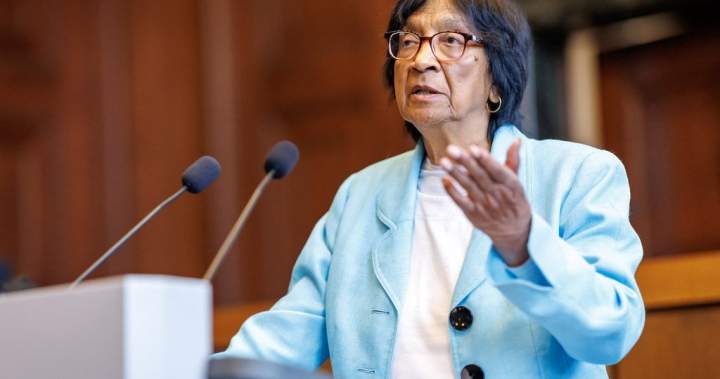
The prestigious 2026 Nobel Peace Prize has been awarded to Navanethem, known as Navi, Pillay, a South African jurist and former United Nations human rights chief. This recognition comes at a volatile moment in global geopolitics, specifically honoring her lifelong commitment to international law. As an expert in global affairs, it is clear that this decision serves as a defining signal from the international community regarding the erosion of institutional accountability. Her selection as the Nobel Peace Prize recipient acts as both a recognition of her historical defense of figures like Nelson Mandela and a pointed critique of contemporary political figures who have sought to dismantle global oversight bodies.
- Pillay, a veteran jurist, is recognized for her courage in upholding international legal standards despite intense pressure from major world powers.
- The award serves as a strategic counter-message to critics of the International Criminal Court and the International Court of Justice.
- Pillay’s career, from the anti-apartheid struggle in South Africa to U.N. human rights leadership, defines her as a persistent advocate for the vulnerable.
Background & Context (What Just Happened?)
The announcement in Oslo, Norway, occurred at the 125th anniversary of the award, underscoring the weight of the moment. Pillay was in Nuremberg, Germany, at the historic Palace of Justice, the site of the post-WWII war crimes trials, when she received the news. This location was symbolically potent, as she has consistently argued that the progress made since Nuremberg is currently under existential threat. Her leadership on the U.N. commission regarding Gaza resulted in findings that triggered significant backlash from Israeli leadership and the U.S. government, positioning her at the center of a heated global debate about what constitutes genocide and legal accountability.
Root Cause & Deep Dive Analysis (Why Did This Happen?)
The decision by the Norwegian Nobel Committee to honor Pillay is rooted in a desire to bolster the international rules-based system. We are witnessing an era where international institutions, such as the International Criminal Court, are facing unprecedented scrutiny. Pillay has been a central figure in these institutions, and her tenure has been defined by a refusal to concede to political pressure. By selecting her, the committee is directly challenging the narrative promoted by leaders like Donald Trump, who has frequently characterized international tribunals as anti-American or out of control. The award highlights the tension between national sovereignty and the universal application of human rights, a recurring theme in modern statecraft.
Strategic Implications & Future Impact
The implications of this win extend far beyond the accolade itself. By awarding someone who has faced accusations of political bias from major nations, the committee is essentially reaffirming its own independence. This move may embolden other international bodies to pursue cases against powerful actors, even in the face of sanctions or political isolation. For further insight into the evolving nature of such geopolitical shifts, one might consider how these institutions navigate current international conflicts. Looking ahead, this win likely guarantees that Pillay will continue to serve as a lightning rod for debates surrounding the legitimacy of global governance.
Conclusion & What to Watch Next
As the international community reacts, the focus will shift to how governments respond to the Nobel Peace Prize winner’s renewed platform. Will this award force a re-evaluation of how world powers engage with international courts, or will it accelerate the drift toward nationalism? Only time will tell if the recognition of a jurist like Pillay can successfully insulate international justice from political volatility. The world should watch for any legislative moves from the U.S. or other nations regarding the funding and participation levels of the courts where she has served. Her voice is now amplified at a moment when the global order remains in a state of flux.