
‘One of the longest’ Russian attacks kills at least six people in Ukraine
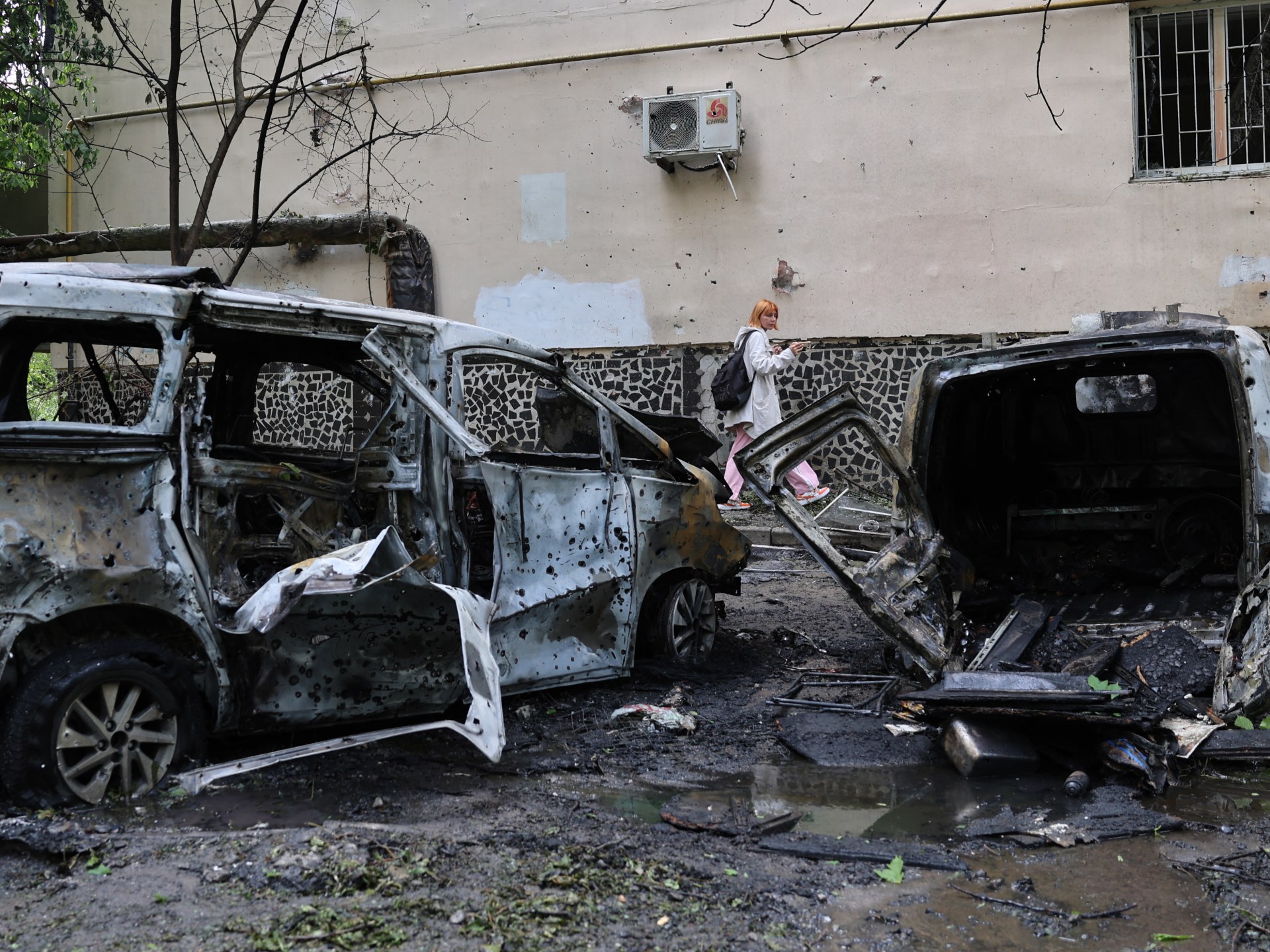
A staggering wave of what Ukrainian President Volodymyr Zelenskyy has dubbed “one of the longest, massive Russian attacks” has tragically claimed at least six lives and left dozens wounded across Ukraine. These devastating Ukraine attacks unfolded over hours, striking major cities, even as both Russian and United States leaders inexplicably suggested the protracted conflict might be drawing to a close.
The relentless barrages, commencing on a Wednesday morning, hammered Kyiv, the western city of Lviv near the Polish border, and the vital Black Sea port of Odesa, among other vulnerable areas. President Zelenskyy, visibly frustrated, communicated via Telegram that Moscow’s insidious objective was to simply overwhelm Ukraine’s valiant air defenses, foreshadowing potential follow-up strikes of cruise and ballistic missiles.
The human toll is harrowing. In the southern Kherson region, a Russian drone callously struck a bus in Bilozerka, killing a woman, according to Governor Oleksandr Prokudin. Further west, in Rivne, Governor Oleksandr Koval reported three fatalities and four injuries from another drone assault. Northeastern Ukraine’s Kharkiv region witnessed the death of a 60-year-old man in a first-person view drone attack near Zolochiv, damaging homes and outbuildings. And in Zaporizhia, a 76-year-old man perished after a guided aerial bomb struck an agricultural enterprise, leaving destruction in its wake, as detailed by Governor Ivan Fedorov.
Escalating Ukraine Attacks Defy Peace Hopes
Astonishingly, these widespread Ukraine attacks unfolded concurrently with pronouncements from high-ranking officials hinting at an imminent cessation of hostilities. US President Donald Trump, just days prior, expressed his conviction that Moscow and Kyiv would “soon reach a deal.” He told reporters before a summit in Beijing, “The end of the war in Ukraine I really think is getting very close.” Even Russian President Vladimir Putin had, only days before, mused that Russia’s invasion was “coming to an end.” Such words now ring hollow against the backdrop of constant shelling and drone warfare.
Indeed, fighting persists ferociously on both sides of the contested border. Russia’s Ministry of Defence asserted its forces had intercepted and destroyed a remarkable 286 Ukrainian drones overnight across multiple regions including Belgorod, Bryansk, Kursk, and Rostov, alongside targets over the Black Sea and the Sea of Azov. Governor Alexander Bogomaz of Russia’s Bryansk region reported two injuries and damage to eight homes and a civilian car from Ukrainian drones in Antonovka. In the Russian-controlled parts of Ukraine’s Kherson region, Moscow-installed Governor Volodymyr Saldo claimed two women died in separate drone attacks in Oleshky and Hola Prystan, with a man injured in Velyka Lepetykha. Belgorod Governor Vyacheslav Gladkov added that four individuals were injured in recent drone attacks, three in the village of Bessonovka.
The grim reality on the ground offers a stark contrast to any hopeful rhetoric. For a deeper understanding of the geopolitical landscape and historical context of this ongoing conflict, further research is invaluable. The tragic toll of these attacks underscores the brutal human cost of a war that shows little sign of abating, despite optimistic pronouncements.