
‘Our Son, Daughter’: Assam CM Himanta Biswa Rejects Gen Z, Gen Alpha Labels
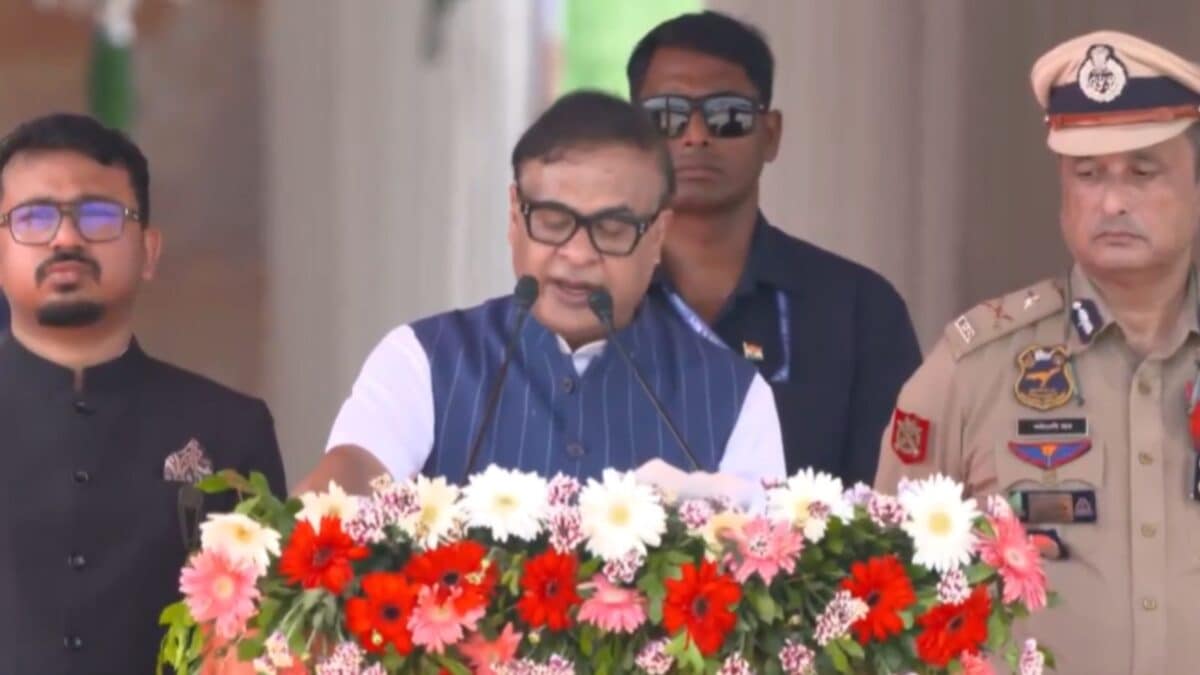
In a bold declaration resonating across the nation, Assam Chief Minister Himanta Biswa Sarma has championed a distinctive ‘Assam Model’ for the state’s progress, vehemently rejecting the adoption of Western societal classifications like ‘Gen Z’ and ‘Gen Alpha’. Speaking from Guwahati, after unfurling the national flag on the 80th Independence Day, Sarma articulated a vision where Assam’s youth are seen not through borrowed lenses, but as integral members of its unique social tapestry: ‘our own son and daughter’.
The Chief Minister’s assertion on Saturday cut through the prevailing discourse, stating unequivocally, ‘I don’t believe in the concept of Gen Z or Gen Alpha. It is a Western concept. For us, the students are not Gen Z or Gen Alpha but our own son and daughter.’ This profound sentiment underpins a broader philosophy: that Assam’s developmental trajectory must be inherently rooted in its own cultural and social traditions, not merely mirroring global trends.
Crafting the “Assam Model” for Tomorrow’s Leaders
To actualize this indigenous developmental philosophy, the state government is poised to establish a dedicated department. Its singular focus? Skill development and comprehensive empowerment for the region’s burgeoning young population. This strategic move aims to equip them with the necessary tools, preparing them not just for employment, but for a future rich with opportunity and self-reliance. This approach is a cornerstone of the emerging Assam Model, ensuring local relevance and sustainable growth. For broader insights into India’s national development strategies, one might consult various Indian policy initiatives.
Beyond youth-centric policies, Sarma unveiled an ambitious infrastructure push. A staggering investment of approximately Rs 1.5 lakh crore is slated over the next five years, targeting crucial sectors such as roads, education, urban infrastructure, and rural development. The allocation comprises Rs 1 lakh crore from the Central government and a substantial Rs 50,000 crore from the Assam government itself. This massive outlay also includes plans for a satellite city, eight new sub-districts, and the continuation of the ‘Khel Maharan’ initiative. Furthermore, a compassionate pledge for free treatment of children suffering from 50 critical diseases underscores a holistic governance approach.
In a stern address on social reforms, the Chief Minister reiterated the government’s unwavering stance against child marriage, revealing over 11,000 arrests in the past five years alone. He signaled continued aggressive action to eradicate this deep-rooted societal ill. Tackling polygamy, Sarma affirmed the administration’s opposition and vowed to protect the rights of first wives. A groundbreaking measure proposes diverting half the salary of government employees abandoning their first wives directly to them. Similar legislative safeguards are in the pipeline for women in non-government employee cases, marking a pivotal shift in marital rights protection.
Significant changes are also on the horizon for land ownership, particularly benefiting long-term residents. Individuals residing for three generations within 40 specified revenue circles will soon be granted the right to purchase land. This critical initiative seeks to fortify the land rights of indigenous communities throughout the state, ensuring generational security. Addressing the devastating recent floods, Sarma assured comprehensive rehabilitation and restoration efforts, promising a clear assessment of property losses by September 10. The Chief Minister also highlighted the symbolic significance of the complete ‘Vande Mataram’ rendition during this year’s Independence Day celebrations, hailing it as an unprecedented moment of national pride.
Concluding his impactful address, Sarma urged all communities and linguistic groups in Assam to proudly identify their language as Assamese in the upcoming census, a move designed to strengthen the state’s distinct linguistic identity. The vision is clear: an Assam Model seamlessly blending economic and technological advancement with the preservation of the state’s profound social and cultural values, charting a truly unique course for the future.