
RSS chief’s visit to US denounced as ‘goodwill tour’ for Hindu nationalism
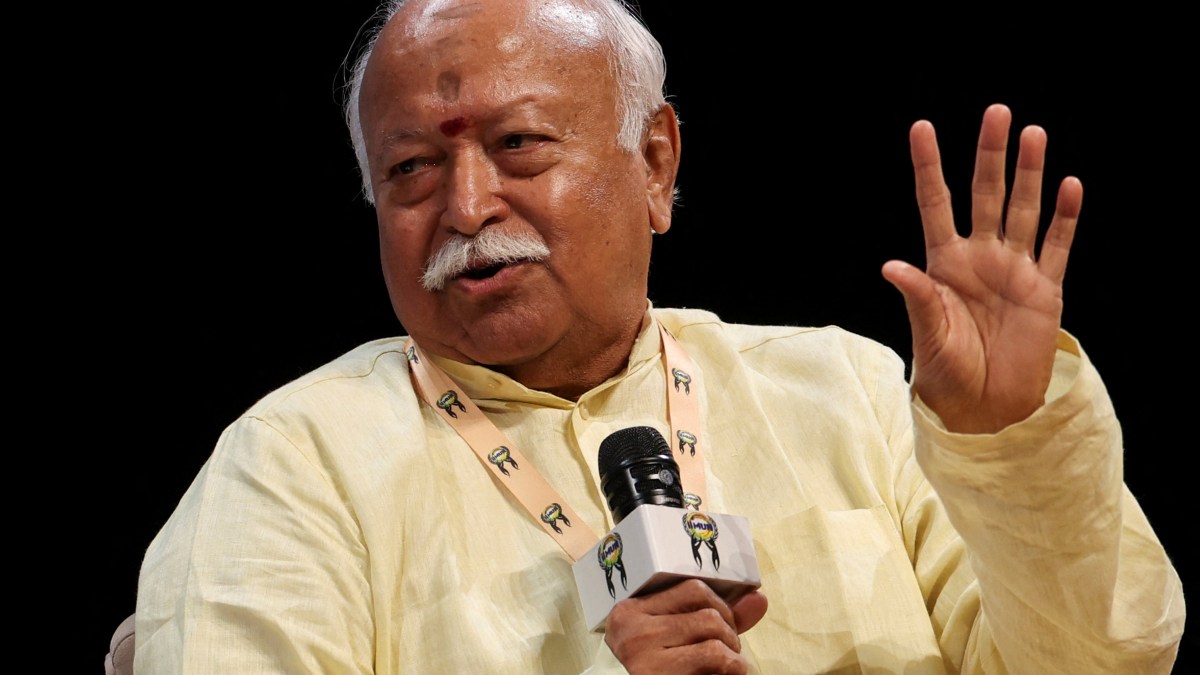
New York City recently found itself at the epicenter of a swirling controversy, as the much-anticipated visit of Rashtriya Swayamsevak Sangh (RSS) chief Mohan Bhagwat to address the ‘Universal Oneness Celebration’ stirred a potent cocktail of anticipation and fierce condemnation. Billed by organizers, American Hindus for Engagement and Dialogue, as a beacon of unity meant to spread the message that ‘the world is one family,’ this high-profile event has instead become a lightning rod, drawing widespread denunciation from a diverse coalition of faith groups, advocacy organizations, and unprivileged-caste movements. These dissenting voices vehemently argue that the rally, held at the venerable Madison Square Garden, represents a calculated attempt to gloss over a deeply troubling history of discrimination and violence intrinsically linked to the ideology of Hindu nationalism.
The core of the contention lies with Mohan Bhagwat himself, the leader of the RSS, an influential Indian organization often described as a Hindu paramilitary group. Critics point to the RSS’s long-standing accusations of embracing discriminatory policies and stoking violence against India’s minority populations, including Muslims, Christians, and Sikhs. Outside Madison Square Garden, passionate protests converged, vehemently denouncing Bhagwat’s appearance and challenging the purported message of universal harmony.
Safa Ahmed, a Muslim community organizer who traveled from North Carolina to join the protests, articulated the profound skepticism felt by many. “This is a movement that has normalized mob violence against Muslims, attacks on Muslim men in relationships with Hindu women, and the bulldozing of Muslim homes,” she stated, her voice laced with conviction. The organizers’ rhetoric about embracing “one family” stands in stark contrast, she argued, to the “bloody reality faced by minorities in India.”
The Contours of Hindu Nationalism and its Global Reach
Activists and human rights advocates assert that Hindu nationalist groups are engaged in a concerted effort to broaden their sphere of influence within the United States, home to an estimated 2.5 million Hindus. This outreach often employs a dual strategy: presenting a softened image of the RSS through cultural celebrations and campaigns highlighting alleged anti-Hindu discrimination, while simultaneously cultivating alliances with the global far-right, united by a shared emphasis on perceived threats from Islam and secular elites. This complex interplay reveals a sophisticated approach to promoting the tenets of Hindu nationalism on an international stage.
Sravya Tadepalli, Deputy Executive Director of Hindus for Human Rights, a group actively opposing the New York event, characterized the rally as “a goodwill tour to improve the public image of the RSS, which is a fascist paramilitary organization that has engaged in decades of communal violence against religious minorities in South Asia.” She emphasized that while the event was framed as an inclusive celebration of Hindu history, the RSS’s foundational ideology advocates for precisely the opposite.
The RSS holds significant sway in India’s political landscape, widely regarded as the ideological parent of the Bharatiya Janata Party (BJP), the ruling party in India since 2014. Under the BJP’s leadership, led by Prime Minister Narendra Modi, India has witnessed a pronounced push to reshape the country along Hindu nationalist lines. This political trajectory, often characterized by contentious policies and rhetoric, continues to fuel debates both domestically and among the Indian diaspora.
The Modi Model: Exporting a Vision
Prime Minister Narendra Modi, whose political journey began as an RSS cadre, has vigorously championed Hindu nationalism throughout his tenure. Like Bhagwat, Modi has extended his outreach beyond India’s borders, engaging with overseas supporters in the U.S. A notable example was the “Howdy, Modi!” rally in Texas in September 2019, where he addressed a crowd of 50,000, underscoring his considerable appeal among Indians living abroad. This massive event, even joined by former US President Donald Trump, highlighted the growing synergy between right-wing populism across continents.
However, such high-profile appearances have not been without controversy. Prior to becoming prime minister in 2014, Modi faced a ban on entering the U.S. due to his leadership during the 2002 massacre of Muslim residents in Gujarat, where he was chief minister. Accusations of complicity and inaction have long shadowed his reputation. Despite these historical grievances and ongoing protests, Modi maintains immense popularity within India, consistently ranking among the world’s most favored leaders.
A Divided Diaspora and Growing Opposition
Outreach campaigns designed to sanitize the RSS’s public image overseas have yielded mixed results, revealing a deeply divided Indian diaspora. A 2024 survey on the foreign policy attitudes of Indian Americans, while showing near-majority support for Modi’s performance as prime minister, also reported that 70 percent of respondents acknowledged his rhetoric signaled a growing threat to minorities in India. This nuanced view underscores a significant internal debate within the community.
Bhagwat’s New York appearance similarly ignited fervent debate over his controversial remarks and leadership. The US Commission on International Religious Freedom (USCIRF), an independent federal advisory body, issued a potent statement calling for Bhagwat’s visa revocation. The commission asserted that Bhagwat, along with other RSS members and Indian officials, was “complicit in religious freedom violations.” USCIRF Chair Asif Mahmood starkly warned, “Religious freedom conditions in India continue to deteriorate as violence and incitement are frequently used to target religious minority communities,” advocating for targeted sanctions.
Even New York City Mayor Zohran Mamdani, an Indian American, voiced his strong opposition to the RSS’s ideology. “It has been incredibly troubling to see the rise of a movement that is predicated on an exclusionary vision of any country, frankly. And it is one that I find myself in deep opposition to,” Mamdani declared, though he acknowledged the city’s limited jurisdiction over private events. This widespread condemnation, from international bodies to local politicians, demonstrates the heightened scrutiny these groups now face.
Safa Ahmed believes the backlash signifies a burgeoning, diverse coalition within the Indian diaspora, uniting Hindu, Muslim, Sikh, and unprivileged-caste voices against the RSS’s agenda. This wave of youth activism and social issues in India is also mirrored abroad. “There is a vocal minority in the diaspora and a new, emerging majority who don’t believe in the politics of Modi and the RSS and who don’t want to see them gain traction here,” Ahmed noted. She confidently predicted that Bhagwat’s event would ultimately backfire, meeting “a resounding rejection that he is not welcome.” As India navigates its complex political landscape, the global spotlight on its domestic policies, and the actions of groups promoting a specific ideological vision, continues to intensify, shaping international perceptions and sparking vital conversations about human rights and inclusivity. The broader context of India’s intricate political tapestry underscores the deep divisions that these movements expose.
The Rashtriya Swayamsevak Sangh, often referred to as a nationalist volunteer organization, plays a pivotal role in the ideological framework of India’s ruling party. For further context on their history and objectives, one can consult resources such as Wikipedia’s detailed entry. Meanwhile, the consistent efforts of a federal advisory body like the US Commission on International Religious Freedom underscore the international community’s concern over religious freedom globally, including in India.