
Seven killed after Thai student opens fire at home and school
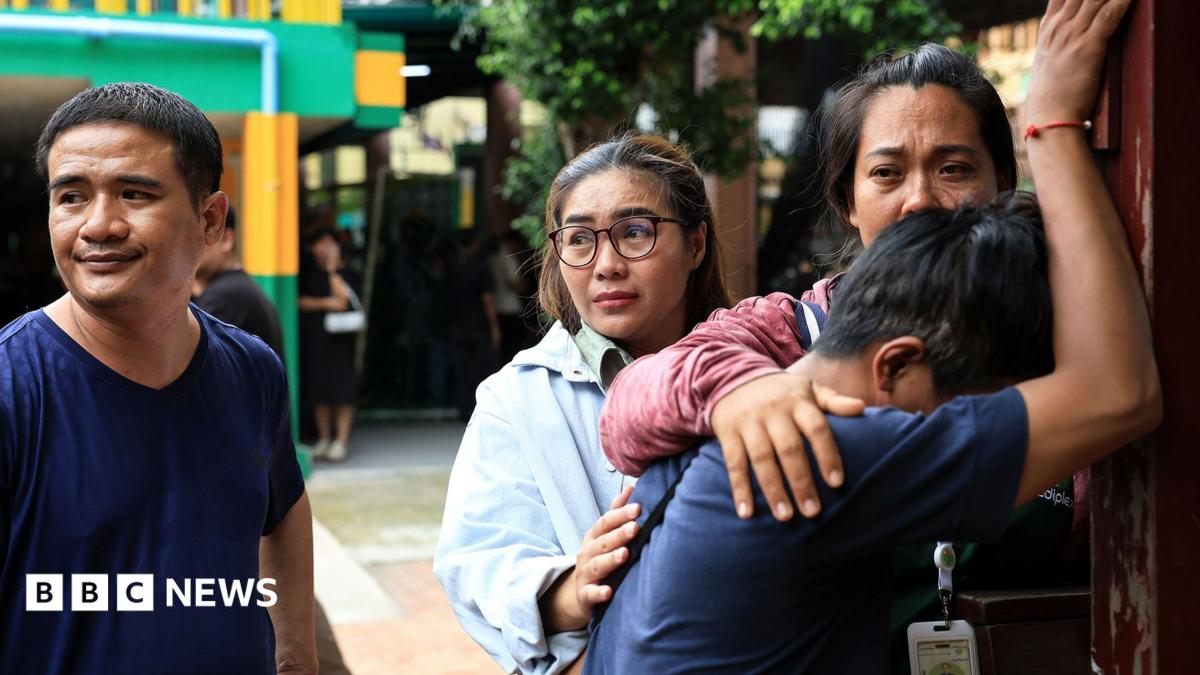
A chilling wave of terror swept through Nonthaburi, on the outskirts of Thailand’s bustling capital, Bangkok, on August 7, 2026. A 14-year-old student unleashed a horrific rampage at both his home and school, an unthinkable **Thailand school shooting** that ultimately left seven people dead and 23 others wounded. The sheer brutality of the act has plunged the nation into a state of profound grief and reignited an urgent, passionate debate over the efficacy of current gun control measures.
The young assailant, a student at the prestigious Debsirin School, first murdered his own grandparents before proceeding to the educational institution. There, he tragically killed five teachers, officials confirmed. Prime Minister Anutin Charnvirakul revealed to a stunned press that the attacker took his own life, astonishingly, with “more than 30 bullets left.” The accuracy of the shots, as later noted by national police chief Gen Kittiratt Phanphet, was disturbingly precise, many hitting vital spots. Nine victims remain in critical condition, battling for their lives in hospitals across the region.
The Horrifying Aftermath of the Thailand School Shooting
Eyewitness accounts painted a harrowing picture. A seventh-grade girl, still clad in her school uniform, recounted to the BBC the terrifying moment her teacher was shot right in front of her. “She was talking to me when [the gunman] showed up and shot her,” she whispered, still visibly shaken. “I couldn’t see anything but a cloud of dust.” The girl described climbing over a school fence in a desperate bid for escape, her mother later recalling her daughter’s chilling words: “I thought I’d never see you again.” Another student initially mistook the gunfire for firecrackers, a stark reminder of the innocence shattered that day.
Police swarmed the school shortly after 10:00 local time, as the active shooting situation unfolded. Authorities swiftly cordoned off the area, advising those trapped inside to shelter in place until rescuers could reach them. In a poignant plea reflecting the gravity of the crisis, the school later issued a call for blood donations via social media. Schools nearby suspended classes, sending students home early as the community grappled with the unfathomable tragedy. Investigators are painstakingly piecing together a motive, though none has been publicly disclosed yet. Officers were observed meticulously removing computer equipment and boxes from the home the shooter shared with his grandparents, the first victims in this appalling **Thailand school shooting**.
This marks the second school shooting in Thailand this year, placing immense pressure on the government to enact more robust gun control legislation. Prime Minister Anutin Charnvirakul expressed his profound sorrow, declaring, “This shouldn’t have happened… How can this happen in our country?” While Thailand boasts strict gun laws, punishing illegal possession with up to a decade in jail, enforcement remains a persistent challenge. Worryingly, the nation records one of Southeast Asia’s highest rates of civilian gun ownership, with an estimated 40% of these firearms believed to be illegal. The weapon used in this attack, owned by the shooter’s grandfather, has not been suggested as illegally obtained, highlighting a different facet of the problem.
In response to the public outcry, Anutin has vowed to introduce new firearms control legislation. The proposed law aims to severely restrict civilians from carrying such weapons, with the explicit goal of allowing only on-duty government officials to do so. Details on potential tightening of ownership requirements remain scant, but the tragic events underscore the urgent need for a comprehensive review of existing regulations and global arms control efforts. The shadow of this devastating **Thailand school shooting** will undoubtedly linger, compelling a nation to confront the complex, harrowing realities of gun violence.