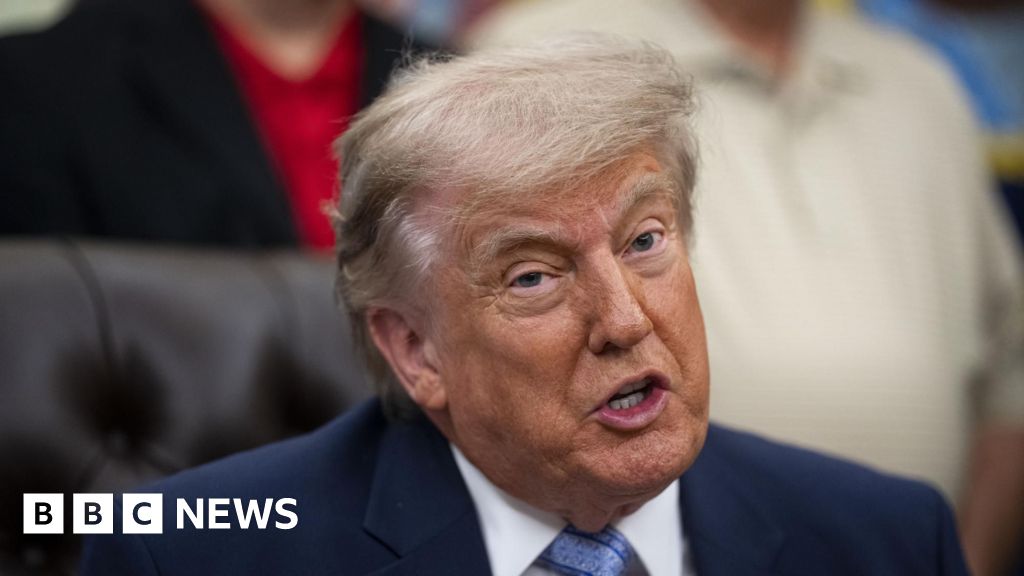
In a surprising weekend announcement that sent ripples across global capitals, US President Donald Trump declared that a monumental Iran deal has been “largely negotiated.” The intricate agreement, he revealed, is on the precipice of finalization, with a critical provision for the reopening of the strategic Strait of Hormuz.
President Trump took to social media and held a series of critical phone calls on Saturday, sharing updates on a “Memorandum of Understanding pertaining to PEACE.” He communicated with leaders from Saudi Arabia, the United Arab Emirates, Qatar, and other allied nations. A subsequent call with Israeli Prime Minister Benjamin Netanyahu also “went very well,” according to the President. While specifics remain scarce, Trump underscored that the forthcoming agreement would unequivocally prevent Iran from acquiring a nuclear weapon, a cornerstone of US policy in the region. “Final aspects and details of the deal are currently being discussed, and will be announced shortly,” he posted, hinting at an imminent unveiling of the accord’s full scope.
Unpacking the Proposed Iran Deal
Echoing a cautious optimism from Tehran, Iranian foreign ministry spokesman Esmaeil Baqaei confirmed to state television that US and Iranian positions had indeed been converging over the past week. However, he carefully tempered expectations, warning that this convergence did not guarantee immediate agreements on all pivotal issues and pointed to what he termed “contradictory statements” from the American side. Baqaei elaborated on Iran’s intent to finalize a “memorandum of understanding” structured around 14 key points, envisioning further discussions within 30 to 60 days to cement a comprehensive, final agreement. It’s a dance of diplomacy, intricate and delicate.
This renewed sense of momentum comes against a backdrop of intense regional friction. The US and Israel had launched extensive strikes on Iran in late February, triggering retaliatory actions across the Middle East. A tenuous ceasefire was brokered in early April, paving the way for the ongoing Washington-Tehran peace talks. The US has maintained a blockade on Iranian ports since April 13, a measure Central Command (Centcom) commander Admiral Brad Cooper hailed as “highly effective” in economically pressuring Iran by stifling its maritime trade. Meanwhile, Iran has asserted military control over the Strait of Hormuz, demanding coordination and authorization for all transit through its waters – a claim vehemently rejected by the US and its Gulf allies. The future of this Iran deal is paramount for complex regional dynamics.
Just last week, the mood in Washington appeared considerably grimmer, with anonymous officials hinting at potential new military strikes against Iran. President Trump himself had previously characterized the truce as being on “massive life support,” dismissing Tehran’s demands as “totally unacceptable.” His decision to remain in Washington D.C. this past weekend, opting out of his son’s wedding, further underscored the perceived gravity of these ongoing diplomatic maneuvers. The path to this potential Iran deal has been fraught with tension, brinkmanship, and last-minute negotiations, making its current stage all the more significant.
About the Author