
Trump says US to reduce military drills with South Korea after it stayed out of Iran war
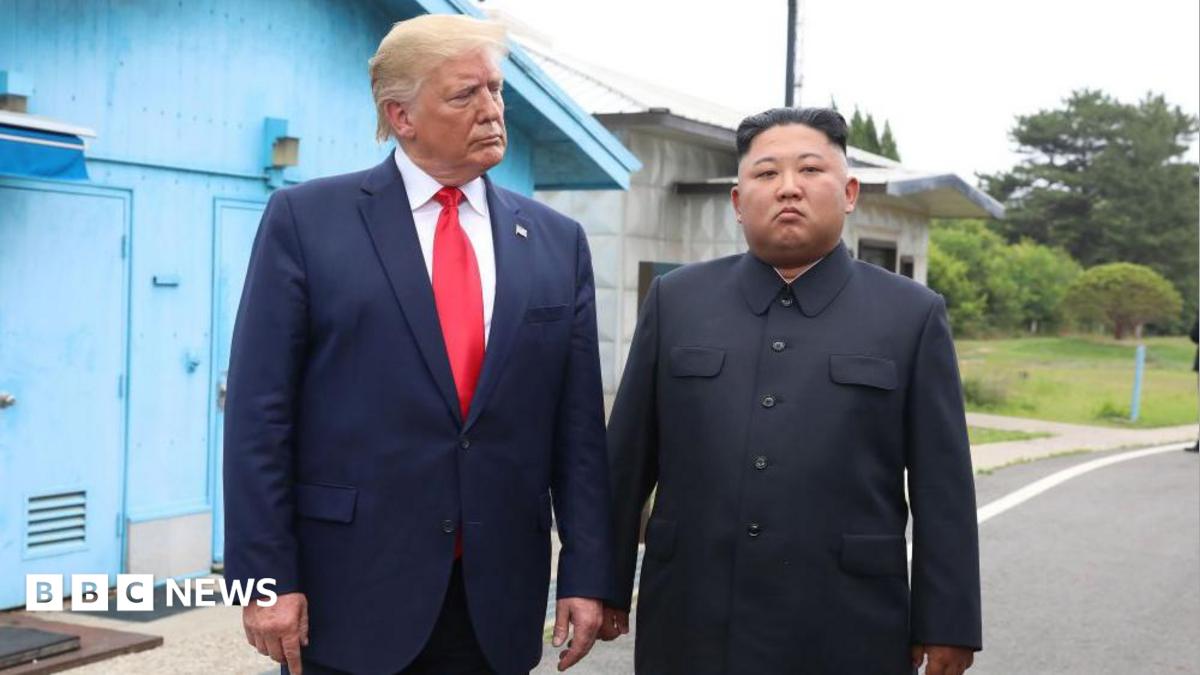
President Donald Trump has declared a dramatic scaling back of US military drills with South Korea, a move he says stems from his “very good relationship” with North Korean leader Kim Jong Un and Seoul’s recent refusal to join American efforts regarding Iran. This startling announcement, made on Truth Social, sends ripples across the meticulously balanced geopolitical landscape of the Korean Peninsula.
The former president, ever the provocateur, asserted these exercises are “not only costly… but send a signal that is totally inappropriate and hostile.” He openly questioned why the United States, “as usual!”, bears much of the financial burden. Notably, Trump explicitly linked the decision to a prior request made to South Korean President Yoon Suk Yeol, asking if Seoul would participate in the “denuclearisation” of Iran, to which he claims the response was a curt “No thanks!”
Experts Question Reduced US Military Drills Efficacy
While Washington and Pyongyang remain silent on the immediate implications, Seoul is carefully reviewing Trump’s comments. The Blue House expressed hope that a more favorable relationship between the US and North Korea might pave the way for “meaningful talks.” This comes despite North Korea’s recent ballistic missile tests, banned by the United Nations, and only days after US and South Korean military leaders confirmed the 11-day Ulchi Freedom Shield exercises would proceed as scheduled, involving some 18,000 South Korean soldiers.
Yet, the wisdom of paring back vital combined defense exercises faces scrutiny from regional experts. Leif-Eric Easley, a professor at Ewha University in Seoul, warns of potential damage: “US-South Korea combined defence exercises are essential for military forces to be ready and capable of doing their jobs.” He cautions that such reductions could “damage alliance coordination, slow the process of South Korea taking on greater responsibility for its own defence, and weaken deterrence against possible conflicts in Asia.” The financial savings, Easley argues, are “marginal,” with dubious diplomatic returns for relations with Pyongyang.
This isn’t the first time Trump has dramatically altered the cadence of US military drills. He suspended them entirely in 2018 amid denuclearisation talks with Kim, labeling them “provocative” and costly “war games.” A scaled-back version also occurred in 2020 due to the global pandemic. The current decision, however, appears to carry additional layers of complexity, intertwining a desire for engagement with Pyongyang with clear dissatisfaction over Seoul’s independent foreign policy choices.
For South Korea, Trump’s pronouncements present a conundrum. On one hand, his engagement with Kim Jong Un, rekindling hopes of bringing the North Korean leader back to the negotiating table, is welcomed. On the other, his thinly veiled displeasure over Seoul’s disinclination to provide military or logistical aid in potential US hostilities with Iran casts a long shadow. Trump has previously voiced similar frustrations with other key allies, including Japan, France, and the UK, over their reluctance to involve themselves in the Iran conflict.
With approximately 28,500 American military personnel stationed in South Korea, the alliance’s foundation has long been perceived by Seoul as critical. Trump, however, has consistently questioned the cost and reciprocal benefits of this arrangement, a point he has reiterated over the years. This strain has led Seoul to attempt to mend fences, including a substantial $350 billion investment commitment in the US and President Lee Jae Myung’s past description of Trump as a “peacemaker.” The future of these crucial US military drills remains a pivotal question for regional stability. For deeper insights into international security policy, visit the Council on Foreign Relations.