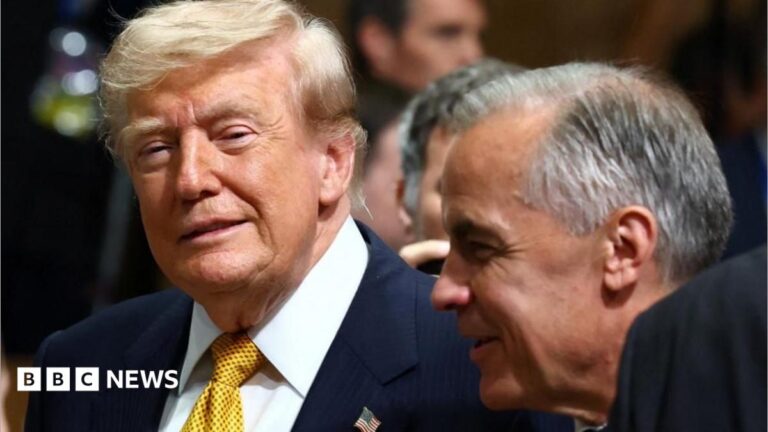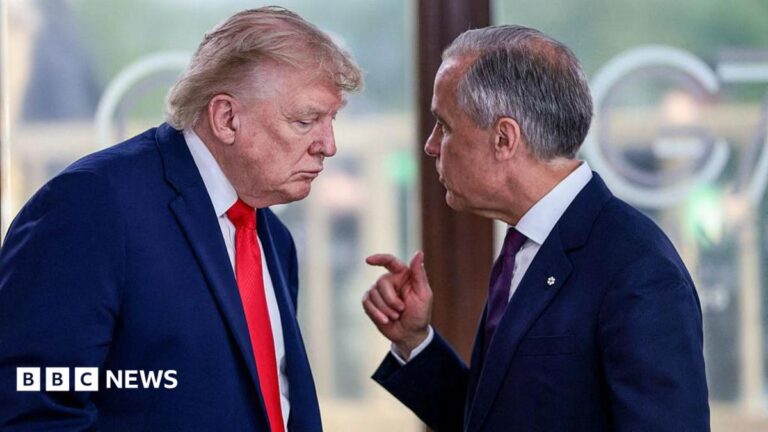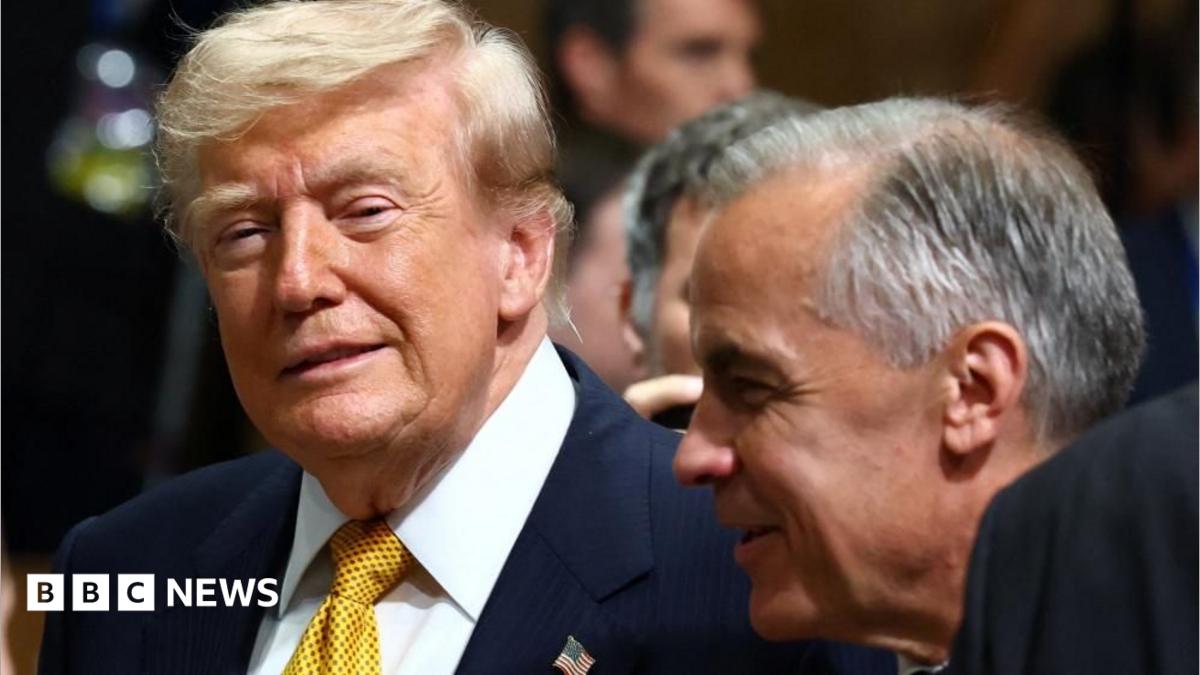
In a dramatic escalation of North American trade hostilities, US President Donald Trump has unilaterally imposed a sweeping 50% tariff on a vast array of goods imported from Canada. This aggressive move, announced late Monday, is framed as direct retaliation for what the White House terms “unequal treatment” of American cars, dairy products, and alcoholic beverages.
The punitive duties are set to impact a surprising breadth of products, from everyday consumer staples like wine and hockey sticks to critical industrial inputs such as cement. However, not all Canadian exports will suffer; key sectors including energy, potash, vital minerals, and fish have been conspicuously spared from this latest trade offensive. Prime Minister Mark Carney of Canada wasted no time in his measured response, affirming that his nation stands fully prepared to “intensify” crucial trade discussions with the United States in the coming weeks. The White House confirmed these new Canada tariffs will become effective within 30 days, marking a perilous new chapter in the fraught relationship between these historically close neighbors.
The Rationale Behind New Canada Tariffs
These mounting tensions are hardly new; they have festered ever since President Trump’s return to office in January 2025, when he unleashed a wide-ranging global program of tariffs. Historically, tariffs are essentially taxes levied on imported goods, paid by companies bringing foreign products into a country. While many of Trump’s earlier globally imposed tariffs, enacted under emergency powers, were recently deemed illegal by the US Supreme Court, this latest action against Canada leverages a different, largely untested, and rather obscure legal provision: Section 338 of the 1930 Tariff Act, which specifically addresses trade discrimination rather than national emergencies.
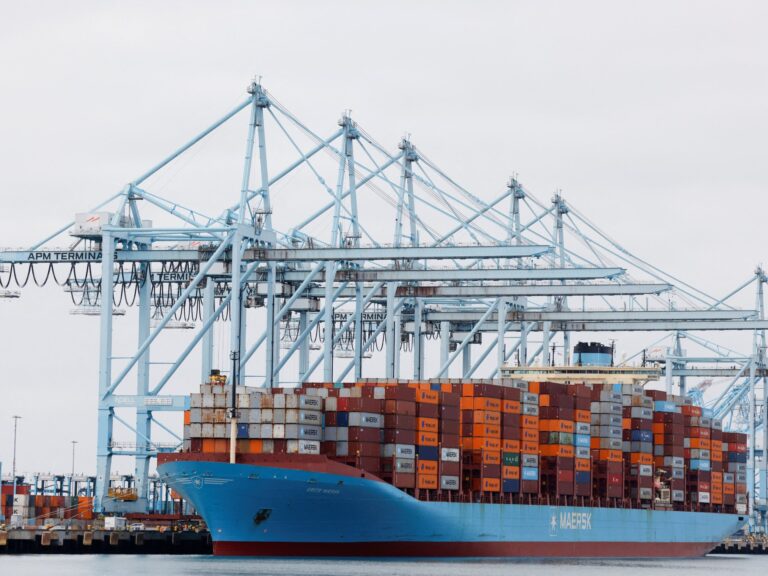
Canada, one of America’s staunchest trading partners, has not shied away from defending its economic interests. Last year, it was among the few nations to strike back against Trump’s previous duties, imposing its own 25% levy on approximately C$30 billion (£16 billion; $21.7 billion) worth of US imports. Though some of these counter-tariffs were later rescinded by Prime Minister Carney, the precedent for tit-for-tat economic warfare was firmly established. A White House fact sheet confirmed that these new duties will apply irrespective of whether the product falls under the existing free trade agreement binding Canada, the US, and Mexico – famously known as the USMCA. The latest announcement of these Canada tariffs only exacerbates an already complex web of trade barriers.
The US continues to maintain tariffs ranging from 15% to a hefty 50% on Canadian steel, aluminum, and copper. Furthermore, a 35% tariff on Canadian softwood lumber persists, alongside a 25% tax on non-US components in automobiles. Canada, in turn, maintains its own 25% counter-tariffs on selected imports of American steel, aluminum, and vehicles.
President Trump’s executive action included three proclamations, meticulously detailing the US’s long-standing grievances against Canada. These complaints, long known to Ottawa, effectively signal a collapse in recent trade negotiations. They focus on three primary sectors: cars, dairy products, and alcohol.
On the automotive front, Trump’s proclamation argues that Canada’s taxation on imported US motor vehicles and parts not covered by the USMCA is both “unreasonable” and discriminatory, alleging that other nations are not subjected to similar taxes. The imposition of these Canada tariffs directly targets industries where North American manufacturing is highly integrated. Understanding the rules governing international trade is crucial here. In the dairy sector, Canada’s supply management system has been a perennial thorn in Washington’s side, with its strict limits on foreign imports and tariffs up to 300% on quantities exceeding those limits. Finally, the widespread boycott of US alcoholic drinks by most Canadian provinces, imposed last year, has become a significant point of contention for American producers. Canadian premiers have repeatedly indicated this boycott would be lifted if the US removed its tariffs on key Canadian sectors, including metals and automobiles.
Canadian Leaders Respond to Heightened Trade Tensions
The Canadian response has been swift and resolute. Prime Minister Carney stated on X, “This is the latest in a series of unilateral US trade actions that began with the US imposing a series of tariffs in direct violation of the Canada-United States-Mexico Agreement.” He also referenced “threats to Canadian sovereignty,” an allusion many believe points to Trump’s recurring remarks about Canada becoming the 51st US state. Ontario Premier Doug Ford echoed a defiant stance, posting on X, “If these tariffs proceed, Canada should respond tariff for tariff, dollar for dollar.”
Michael Devereux, an economics professor at the University of British Columbia, characterized the move as a “significant escalation” specifically because it targets goods previously exempt under the USMCA – an agreement President Trump himself negotiated and signed in 2018. Devereux voiced skepticism that this was a strategic negotiating tactic, suggesting instead it was likely “just an impulsive move that came from kind of a grudge that the US government and President Trump has against Canada.” Other analysts, however, cling to the hope that this aggressive posture might yet spur new negotiations, aiming to avert a full-blown trade war. Candace Laing, head of the Canadian Chamber of Commerce, implored officials to achieve “meaningful progress” in talks before the new duties take hold, while Chris Swonger of the Distilled Spirits Council of the United States warned soberly that the decision “raises the risk of further retaliation.”
About the Author