A severe humanitarian challenge has gripped Uganda, prompting the government to initiate emergency food distribution following reports of at least 19 deaths in the drought-stricken eastern region. The escalating Karamoja hunger crisis has left an estimated 1.5 million people grappling with acute food shortages and widespread malnutrition.
For months, the Karamoja region has suffered an intense dry spell. Crops have failed catastrophically since April, when the anticipated rains for the planting season simply did not arrive. This devastating lack of rainfall has spiraled into an urgent situation, with the Famine Early Warning Systems Network (Fews Net), a crucial global food security monitoring organization, formally declaring a crisis across the area.
Addressing the Karamoja Hunger Crisis: Immediate Relief
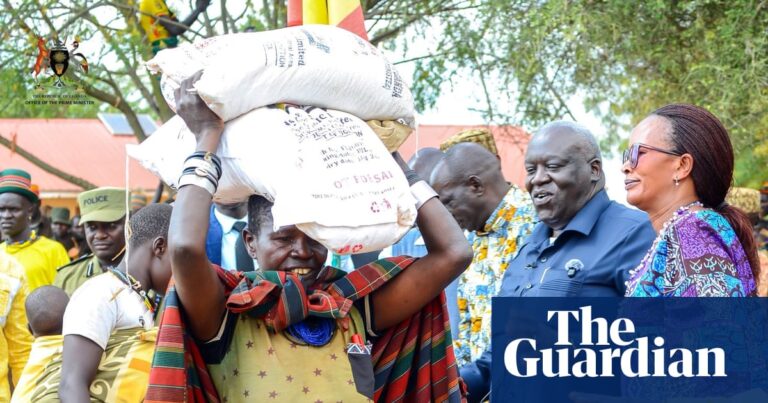
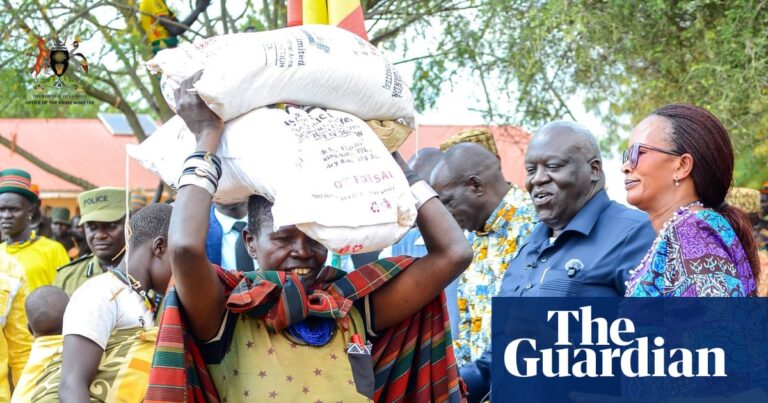
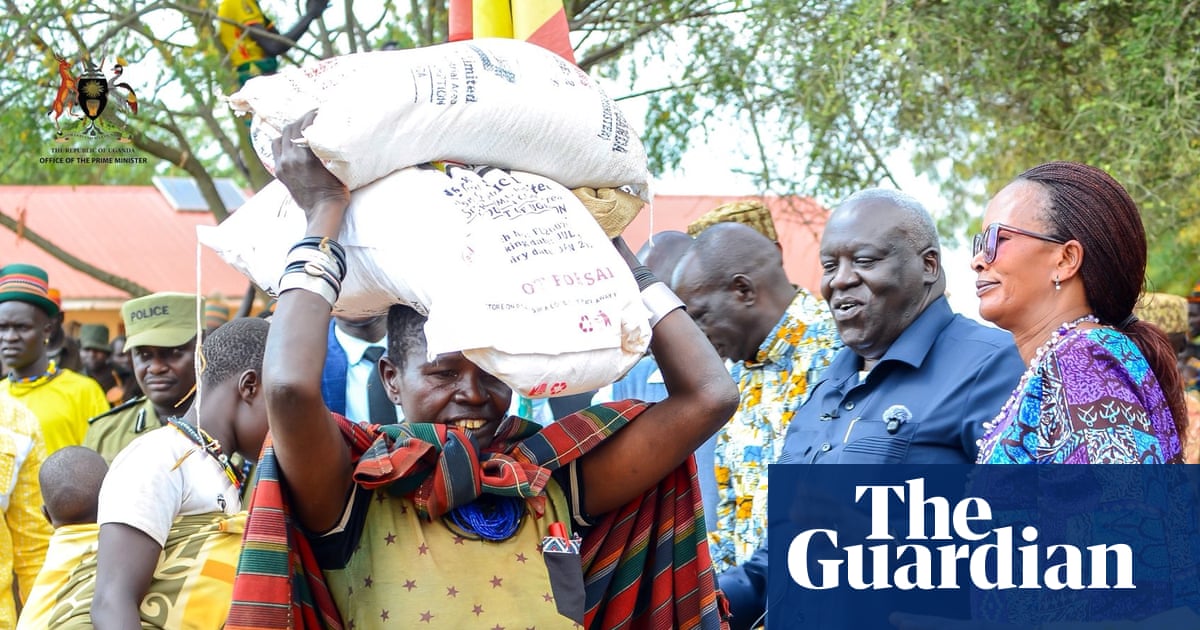
In a significant move, the Ugandan government has stepped forward, announcing plans to distribute 9,400 tonnes of relief food over the coming two months. This large-scale operation, funded by a 45 billion shilling (£9m) emergency allocation approved by parliament, represents a critical intervention in the face of reduced international aid.
Sam Engola, the Minister for Disaster Preparedness and Refugees, personally launched the relief efforts at a primary school in Lodiko sub-county, Kaabong district. His message was unequivocal: “The president does not want to hear of anyone in Karamoja dying of hunger. I am here to supervise the distribution of this food to the end. I will ensure that everyone receives food. No one will be left behind.”
The human cost of this calamity is profound. Angelina Nakiru, a 21-year-old mother of two in Rupa, near Moroto town, vividly describes her daily struggle. With her crops decimated, she toils at a small grinding mill, crushing rock into powder to sift for gold ore. The work is grueling, the pay meager, yet it’s her only recourse to buy a modest cup of maize and beans for her children. “If I don’t, the children will sleep hungry,” she lamented, a stark illustration of the desperation permeating communities. Health facilities across the region are overwhelmed, treating hundreds of children for severe malnutrition, a grim testament to the deepening crisis. A recent nutrition report indicated that nearly half the population in Kaabong and Kotido districts are experiencing a crisis situation.
Long-Term Solutions and Shifting Aid Dynamics
Experts point to a confluence of factors exacerbating the Karamoja hunger crisis: climate change shocks, rampant deforestation, overgrazing, chronic poverty, and low agricultural productivity. While the current emergency aid offers vital short-term respite, the government is also championing a long-term approach through the recently approved Karamoja regional development plan. This initiative aims to bolster community resilience against future droughts. John Baptist Lokii, the Minister for Karamoja, affirmed the government’s commitment to providing drought-resistant, disease-resistant, and early-maturing seeds for the next planting season.
Agnes Kirabo, Executive Director of Uganda’s Food Rights Alliance (FRA), noted a significant shift in the humanitarian aid landscape. Following substantial funding cuts, particularly from agencies like USAID, organizations such as the World Food Programme (WFP) have been compelled to drastically scale back their operations. In Uganda, this has meant phasing out food assistance for over a million refugees and reducing rations for hundreds of thousands more. Kirabo views the government’s increased leadership not merely as a reaction to these cuts but as a pivotal step towards nationally owned, sustainable development.
However, Kirabo emphasizes that emergency distribution, while life-saving, is not a permanent fix. “To break this cycle, we must address the root causes of food insecurity through structural reforms,” she asserted. The FRA advocates for food access to be recognized as a fundamental human right, urging the government to prioritize investment in water infrastructure and climate resilience. She firmly believes Karamoja possesses ample rainfall and water resources to achieve self-sufficiency, but it demands the political will to strategically invest in productive water infrastructure.
Ultimately, the Karamoja hunger crisis is, at its core, a governance challenge. The government’s decisive leadership in this emergency is commendable, but it must be mirrored by an unwavering political commitment to implement the systemic changes necessary to permanently safeguard the people of Karamoja and Uganda from predictable, preventable hunger.
About the Author