
U.S. ambassador denies donations delayed Gordie Howe Bridge opening
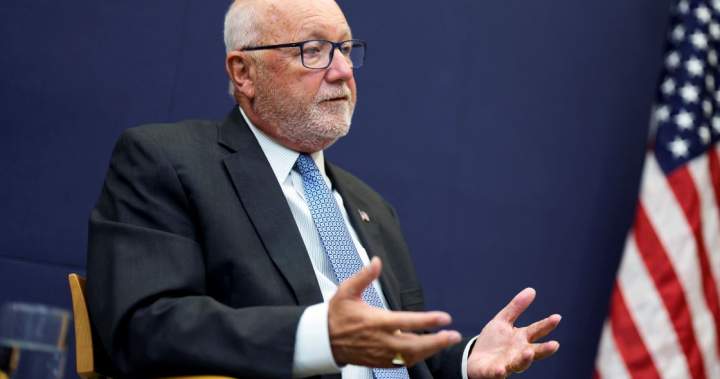
In a direct confrontation with mounting speculation, U.S. Ambassador to Canada Pete Hoekstra has vehemently denied that political donations from the family behind the competing Ambassador Bridge played any role in the prolonged Gordie Howe Bridge delay. The crucial Detroit-Windsor crossing, a symbol of binational cooperation and economic vitality, remains unopen amidst whispers of influence peddling and high-stakes trade negotiations.
“Absolutely not,” Hoekstra declared when pressed by Global News on whether a US$1-million donation from billionaire Matthew Moroun to Trump’s super PAC, MAGA Inc., was behind the holdup. Moroun’s family controls the Ambassador Bridge, a significant rival to the new publicly funded span. The ambassador insisted the planned ribbon-cutting last month was deferred by ‘mutual agreement’ between Washington and Ottawa, citing ‘technical aspects’ — a point echoed by Prime Minister Mark Carney. However, the optics remain problematic, leaving many to question the true cause of the unexpected postponement.
Unpacking the Gordie Howe Bridge Delay Allegations
The plot thickened when The New York Times reported a meeting between Matthew Moroun and U.S. Commerce Secretary Howard Lutnick, occurring mere hours before President Trump himself took to social media, suggesting he might block the bridge’s inauguration without ‘compensation.’ Further complicating matters, campaign finance disclosures reveal the Moroun family channeled over US$35,000 into Hoekstra’s own campaigns during his final congressional term. Despite these significant financial ties, Hoekstra adamantly maintains these contributions held no sway over the negotiations concerning the vital infrastructure project.
“The Morouns operate a significant business in the United States, and in the United States, companies involved in those kinds of businesses donate to all kinds of campaigns,” Hoekstra reasoned. “I know that they donate to Republicans and Democrats.” A White House official, however, indicated last month that Trump’s position on the bridge remained ‘unchanged,’ even after vigorous outreach from Canadian officials, including Prime Minister Carney. This stance persists despite Canada bearing the entire cost of the structure, slated for shared ownership with Michigan.
Hoekstra, while optimistic about the bridge’s eventual opening, argued that American motorists would provide the bulk of the revenue, offsetting Canada’s financial outlay. He contends this revenue would funnel through the Ambassador Bridge, which is an ‘American-owned company.’ Yet, his confidence notably wavered when the conversation shifted to the broader landscape of trade relations.
Navigating North American Trade Tensions
Indeed, the ambassador’s upbeat outlook for the bridge’s near-term resolution contrasted sharply with his guarded assessment of the ongoing Canada-U.S.-Mexico Agreement (CUSMA) negotiations. He acknowledged some progress but cautioned against premature celebration, stating there hadn’t been ‘the significant amount of progress that says, ‘OK, we know exactly where we’re going, now let’s fill out the details.’’ Notably, Canada has yet to engage in formal negotiations with the U.S., unlike Mexico, which has already held multiple discussions with American counterparts. This disparity raises eyebrows, suggesting a potential rift in the trilateral alliance.
Prime Minister Mark Carney has consistently highlighted Canada’s favorable position under the current CUSMA, particularly regarding tariff exemptions on free trade products. However, Hoekstra conspicuously refrained from guaranteeing the continuation of these exemptions. “I’m not in a position to guarantee anything. These decisions are made at the White House. They are made by the president,” he stated unequivocally. These remarks follow the Trump administration’s refusal to extend the trilateral pact for another 16-year term, citing perceived ‘shortcomings’ and ‘trade deficits.’ Mexico and Canada had both publicly advocated for its renewal.
President Trump himself recently mused that the U.S. might be ‘better without’ CUSMA, even suggesting he’d prefer its ‘termination.’ When pressed on whether the administration was actively considering ripping up the deal – an option available with six months’ formal notice – Hoekstra offered a terse, yet telling, response: ‘All options are on the table.’ This statement underscores the profound uncertainty hanging over Canada’s largest trading partnership. The fate of the Gordie Howe Bridge delay, it seems, may just be a precursor to larger, more complex challenges in North American economic ties. For more details on U.S. trade policy, visit the official USTR website.