
UK, France, Germany, Italy and Canada condemn Israel’s West Bank settlement project
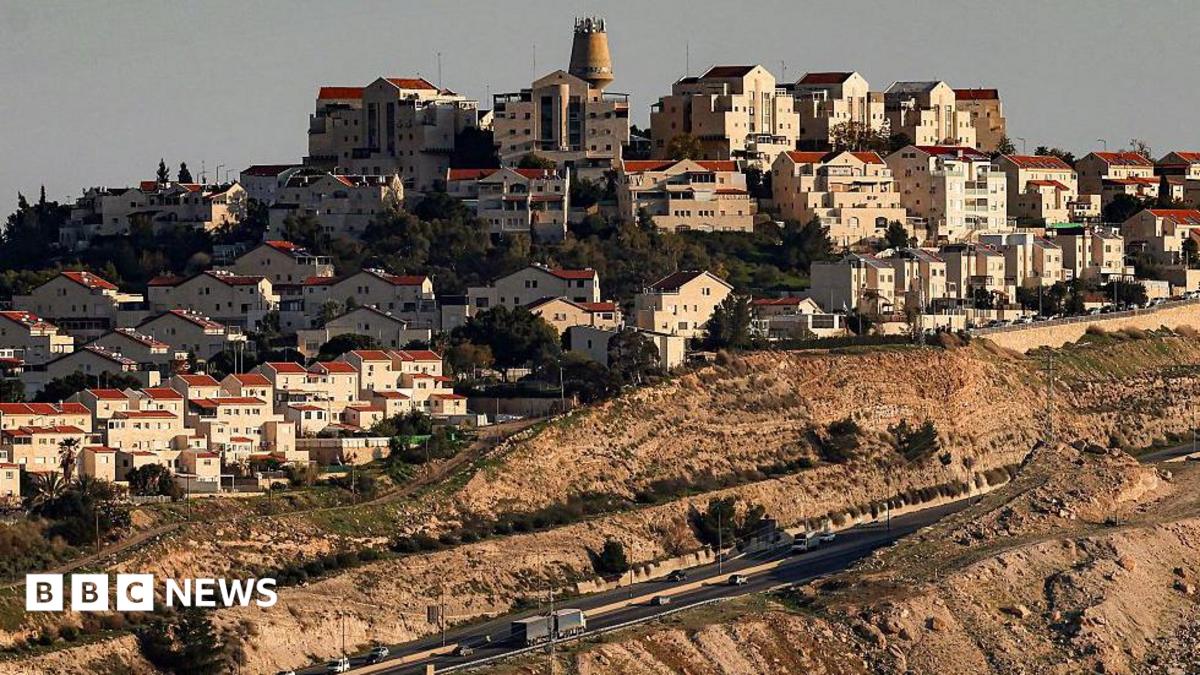
In a move that has sent diplomatic shockwaves across the globe, Israel has pressed ahead with controversial plans to open tenders for approximately 1,200 new settlement homes within a strategically vital section of the occupied West Bank. This decision, centered on the highly contentious E1 project located between East Jerusalem and the Israeli settlement of Maale Adumim, has ignited a fervent wave of condemnation from some of Israel’s staunchest Western allies, including the United Kingdom, France, Germany, Italy, and Canada. In a rare display of unified disapproval, these major powers issued a joint statement, branding the expansion as “unacceptable” and unequivocally urging Israel to “retract the plans immediately.”
The E1 area, a mere 12 square kilometers (4.6 square miles) of land, holds immense symbolic and practical significance. For decades, under intense international pressure, Israel had largely refrained from building in this sensitive corridor. The concern among its allies and, crucially, the Palestinian people, is that developing E1 would deliver a catastrophic blow to the viability of a long-standing vision for a two-state solution. Critics argue such a development would effectively sever the West Bank into two non-contiguous halves, isolating East Jerusalem—which Palestinians envision as the capital of their future state—from the northern and southern parts of the territory.
The Broader Implications of West Bank Settlement Expansion
The global outcry stems from a fundamental disagreement over the legality of these constructions. Under principles of international humanitarian law, all Israeli settlements in the occupied territories are considered illegal. This legal consensus forms the bedrock of much of the international community’s opposition, regardless of the nuances of individual governmental stances. The timing of this particular initiative further exacerbates already volatile regional tensions.
“At a time of grave instability in the West Bank with unprecedented levels of violence by settlers against civilians, and serious restrictions on the Palestinian economy, this decision is even more concerning,” the joint statement from the European allies and Canada lamented. They continued, asserting, “Not only will they [the plans] take us further from peace, but they further undermine Israel’s international standing.” Echoing these sentiments, the UN Secretary-General articulated that the E1 plan presented an “existential threat” to the establishment of a contiguous Palestinian state, a sentiment swiftly affirmed by Belgium’s foreign minister.
Despite the forceful rebuke, Israel’s Foreign Minister outrightly rejected the condemnation issued earlier by UK Foreign Secretary Ed Miliband, signaling a firm resolve to proceed. Indeed, the Israeli housing ministry, notwithstanding an ongoing court challenge by Bedouin Palestinians residing in the area and Israeli peace organizations, issued a tender on Wednesday for 1,234 of the 3,401 housing units that had received government approval last August. The bid deadline of October 19th, falling just days before Israel’s general election on October 27th, adds another layer of complexity. This strategic timing could render it significantly more challenging for any subsequent administration to reverse the tenders once they are officially issued.
A History of Contention and Escalation
Since its occupation of the West Bank and East Jerusalem during the 1967 Middle East war, Israel has systematically constructed approximately 160 settlements, now housing an estimated 700,000 Jewish residents. These settlements exist alongside an estimated 3.3 million Palestinians, whose aspirations for a future state encompass these very lands, along with the Gaza Strip. Despite persistent and often fierce international opposition, successive Israeli governments have permitted, and indeed facilitated, the growth of these settlements.
However, the pace of expansion has notably accelerated since Prime Minister Benjamin Netanyahu’s return to power in late 2022, at the helm of a right-wing, pro-settler coalition. This surge in construction has been particularly pronounced in the wake of the Gaza war, triggered by Hamas’s devastating attack on Israel on October 7, 2023. Critics of the E1 project vociferously warn that its realization would irrevocably fragment any future Palestinian state. It would create a geographical barrier, effectively severing the north of the West Bank from the south and precluding the emergence of a continuous Palestinian urban area connecting key population centers like Ramallah, East Jerusalem, and Bethlehem.
Such actions often draw international scrutiny and complicate diplomatic endeavors, as seen with broader discussions where Palestinians and Israelis remain skeptical of any overarching Gaza plan. The unified stance of these Western nations echoes broader international concerns regarding Israeli actions in the territories. Furthermore, recent events, such as the widely reported outrage over the prosecution decision regarding an aid worker in Gaza, highlight the growing diplomatic pressures and the deepening chasm between Israel and segments of the international community over its policies in the occupied territories. The E1 project thus stands as a critical flashpoint, its fate inextricably linked to the already fragile prospects for peace in the region.