
UK urged to help free British-Egyptian ‘arrested in Cairo over sister’s activism’
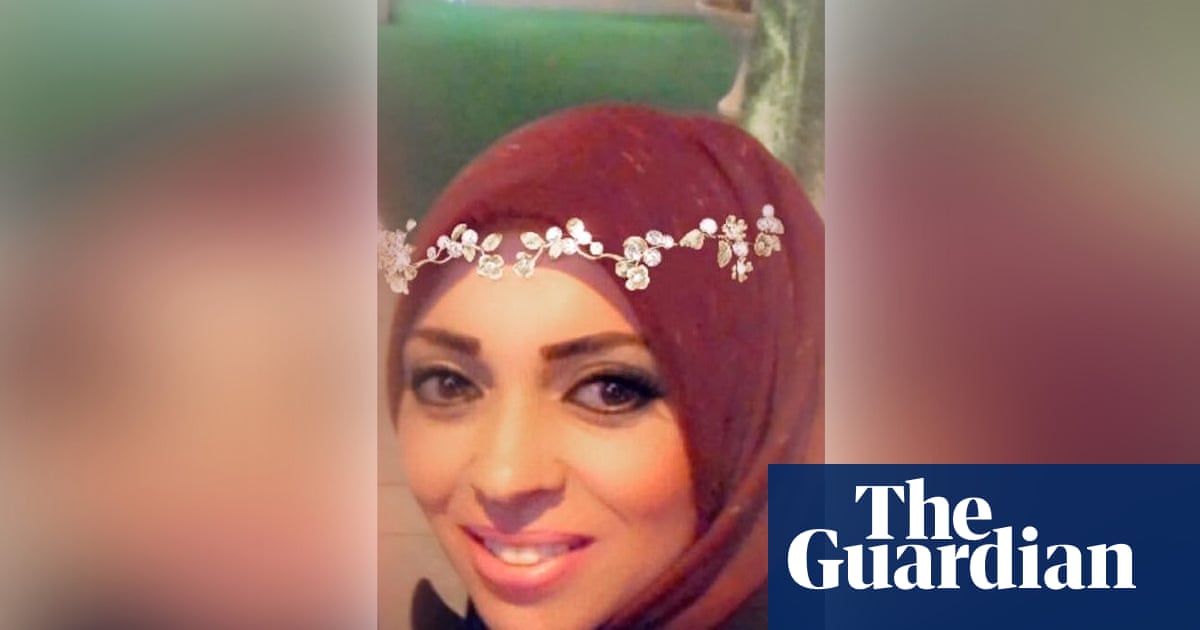
A harrowing narrative of alleged reprisal unfolds as the United Kingdom is urgently pressed to secure the release of a British-Egyptian woman, Eman el-Shazly, who was arrested in Cairo last month. Her detention is purportedly a direct consequence of her sister Mona’s vociferous political activism, casting a chilling light on the tactics employed by the Egyptian government to stifle dissent. This incident brings into sharp focus the disturbing practice of ‘punishment by proxy’ and raises critical questions about human rights in the region and the efficacy of international intervention in cases of Egyptian political arrests.
Eman el-Shazly, a 45-year-old resident of Birmingham, travelled to Egypt on August 16th to care for her ailing mother. Her lawyers contend that her arrest is a calculated move to silence Mona, who operates a highly critical YouTube channel and X account from the UK, regularly lambasting the administration of President Abdel Fatah al-Sisi. This accusation is not isolated; Eman’s two brothers, Hassan and Eid, have already endured three years in jail under charges of “promoting the ideas of a terrorist organisation on social media” and “broadcasting false news harmful to state security.” They were re-arrested in May, exacerbating the family’s protracted ordeal.
The Disturbing Pattern of Egyptian Political Arrests
The government led by President al-Sisi has long faced allegations of systematically targeting relatives of political critics. This strategy, often referred to as ‘punishment by proxy,’ aims to exert indirect pressure on dissidents living abroad, compelling them to cease their criticisms of the regime or alleged state corruption. Mona’s activism, in particular, has focused on corruption within security services and public utilities, a deeply sensitive area in Egypt. Arfan Rashid, the lawyer representing Eman’s husband, Zeesharn Moustapha, with whom Eman shares four children, asserts vehemently that Eman has no political involvement whatsoever. She travelled to Cairo with the sole intention of tending to her sick mother following her brothers’ initial arrests.
“There is ample evidence that Eman has been arrested to silence Mona,” Rashid stated, underscoring the systemic nature of the targeting. He revealed that Eman had even informed security officials she was no longer in contact with her sister, and that numerous family members had implored Mona to halt her political activism. Mona herself confirmed these requests to a prominent media outlet, yet she remains resolute. “I have done nothing wrong nor broken any law… I am a very strong woman, but it is very traumatic for me since 11 or 12 children are without their parents. It is a horrible situation, but the Egyptian government will not stop if I appear weak. The government is close to collapsing,” she bravely declared, highlighting the immense personal sacrifice involved.
International Scrutiny and Calls for Intervention
The UK government, in its own country profile policy and information note published in March 2026, has acknowledged the disturbing practice of ‘punishment by proxy’ in Egypt. This is not a new revelation; both Human Rights Watch and the House of Commons library issued warnings in 2021 about an escalating trend of Egyptian authorities targeting family members of critics residing overseas. This official recognition by the British government lends significant weight to the claims made by Eman’s lawyers and family, emphasizing the urgent need for robust diplomatic action. The UK Foreign Office has confirmed Eman’s detention in the Ramadan rehabilitation centre and has noted that her case shares the same file number as her brothers, suggesting a clear governmental linkage of their respective predicaments.
Despite persistent efforts by the UK’s Foreign Office representation in Cairo to gain consular access to Eman, a positive reply has yet to be received. This lack of access further complicates efforts to ascertain her well-being and to advocate for her release. Zeesharn Moustapha recounted that Egyptian police and security officers visited their family home days before Eman’s arrest, explicitly demanding that she instruct Mona to cease her anti-government publications. The pressure is undeniable, relentless, and profoundly personal.
Mona, through her strong presence on X, has publicly decried the harassment and detention of as many as five members of her family. Her defiant posts, such as, “Kinship is something beyond my family’s will, and I invite them to disown me to save themselves from this despicable, illegitimate dictator. I am the one opposing Sisi, not five individuals from my family. This is a crime against humanity that does not lapse with time,” reveal the depth of her conviction and the agonizing position in which her family finds itself. She has resided in the UK for 18 years, having become a British citizen through marriage, which theoretically should offer a layer of protection.
The appointment of Alistair Burt as the UK’s new envoy on complex consular cases offers a glimmer of hope. Tasked with securing the release of British citizens detained abroad, Burt’s involvement is seen as crucial. His recent meeting with Gurpreet Singh Johal, whose brother Jagtar Singh Johal has been held by Indian authorities for nearly nine years without conviction, underscores the significant, often lengthy, challenges associated with such high-stakes international cases. For more on how governments grapple with allegations of corruption, one might consider recent discussions surrounding similar issues, such as when Zelensky was questioned on government corruption.
This ongoing situation serves as a stark reminder of the global challenges in upholding human rights and the freedom of expression, particularly when dissent clashes with state power. The international community, led by the UK in this instance, faces an imperative to act decisively to protect individuals from what appears to be politically motivated detentions. The plight of Eman el-Shazly and her family is a poignant example of the far-reaching human cost of suppressing independent voices. Similar to the broader concerns about systemic failures and corruption often highlighted in public discourse, as seen in protests reflecting system failure, the core issues remain universal.