
US charges Cuba’s Raúl Castro with murder over 1996 downing of two planes
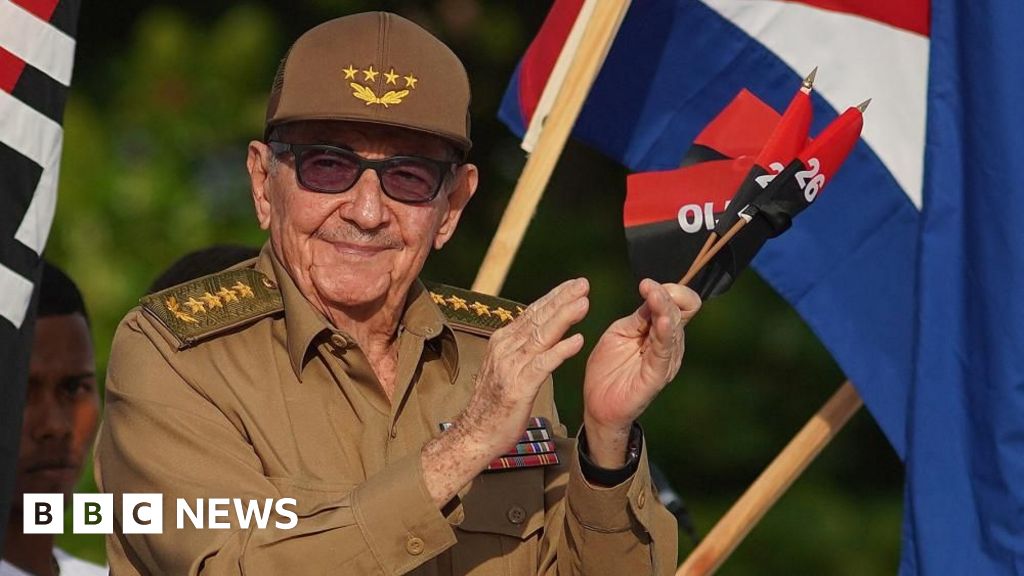
In a dramatic escalation of long-standing tensions, the United States has unveiled unprecedented Raúl Castro charges, accusing the former Cuban leader of conspiracy to murder U.S. nationals and other grave crimes linked to the 1996 downing of two civilian aircraft. This development, nearly three decades after the tragic incident, targets a pivotal figure of Cuba’s communist regime, now 94 years old and facing the specter of severe penalties, potentially even the death penalty.
The Wednesday announcement from the U.S. Justice Department implicates Castro, then head of Cuba’s armed forces, and five others in the fatal shooting down of planes belonging to the Cuban-American exile group, Brothers to the Rescue. Four individuals, including three American citizens—Armando Alejandre Jr., Carlos Alberto Costa, Mario Manuel de la Peña, and Pablo Morales—perished in the brazen attack that unfolded between Cuba and Florida. This long-awaited legal action has ignited a firestorm of controversy and hope among the Cuban diaspora.
Unpacking the Raúl Castro Charges: A Legal & Political Storm
Speaking from the historic Freedom Tower in Miami, Acting Attorney General Todd Blanche detailed the specific indictments: conspiracy to kill U.S. nationals, destruction of aircraft, and four individual counts of murder. “The United States, and President Trump, does not, and will not, forget its citizens,” Blanche asserted, underscoring Washington’s commitment to justice for the victims’ families. These charges, if argued in a U.S. court, carry the possibility of life terms, with the murder counts specifically permitting a maximum penalty of death or life imprisonment.
The timing of these Raúl Castro charges is far from coincidental. It coincides with intensified U.S. pressure on Havana to implement significant political and economic reforms. William LeoGrand, an expert on Latin American politics at American University, suggests this strategy aims to “increase the pressure gradually to the point where the Cuban government will give in and surrender at the bargaining table.” Indeed, the U.S. has recently tightened sanctions and imposed an oil blockade, exacerbating blackouts and food shortages across the island.
Cuban President Miguel Díaz-Canel swiftly condemned the charges as “a political manoeuvre, devoid of any legal foundation,” further accusing the U.S. of orchestrating a collective punishment against the Cuban people. He vehemently denied any wrongdoing by Cuba, asserting the downing was an act of “legitimate self-defence within its jurisdictional waters.” These differing narratives highlight the deep-seated ideological chasm between the two nations, which has only widened in recent times.
Despite Raúl Castro’s advanced age and his relinquishing of active government and party roles in 2018, he remains an immensely influential figure on the island, widely regarded as the “leader of the Cuban Revolution.” The U.S. has issued an arrest warrant, and while no confirmation was given on efforts to capture him, Blanche remarked, “we expect he will show up here, by his own will or another way.” This echoes a similar move against former Venezuelan President Nicolás Maduro, though experts caution against expecting identical outcomes for Cuba, given Castro’s decade-long retirement from active leadership. For deeper analysis on international relations in the region, one might consult the Council on Foreign Relations.
The announcement in Miami drew a crowd of jubilant Cuban Americans, many from exile organizations that have fiercely opposed the Cuban government for decades. Surrounded by poignant images of the four victims, attendees expressed profound relief and gratitude. “It was time, 67 years of that murderous regime,” declared Isela Fiterre, emphasizing that justice, however delayed, is never too late. Mercedes Puid-Soto echoed this sentiment, stating, “I feel very happy. Justice has been served. It’s very important that the families can close that chapter, and we Cubans too.” The weight of these new Raúl Castro charges resonates deeply within the community.
Yet, questions persist regarding the ultimate intent behind the indictment. Roxanna Vigil, an international affairs fellow, pondered whether the Trump administration might leverage these charges as a pretext for a “military operation under the cover of a law enforcement action,” similar to the Maduro case. However, Vigil cautioned against assumptions, noting, “It’s unlikely that the Cuban regime will surrender to the United States without a fight.” Conversations between U.S. and Cuban representatives have occurred recently, but this legal offensive is poised to further complicate any potential diplomatic thaw.