
Zambia elections haunted by ghost of incumbent president’s arch-rival
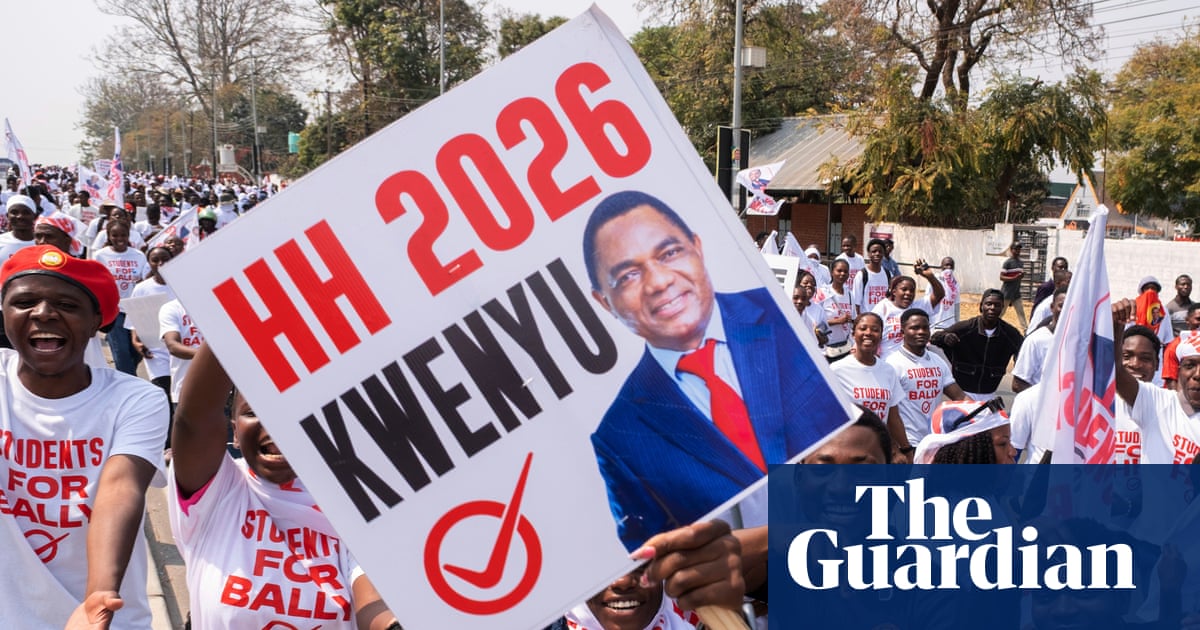
As Zambians head to the polls, the specter of the late Edgar Lungu casts a long, unsettling shadow over the current Zambian elections. President Hakainde Hichilema, 64, is vying for a second term leading the southern African nation, having secured a landslide victory against his formidable rival in 2021. Yet, the deep-seated feud between these two political heavyweights, and their respective families, has continued to dominate the national discourse, even extending beyond Lungu’s passing in June 2025.
Indeed, this extraordinary quarrel even saw Zambia’s government pursue legal action to prevent Lungu’s family from burying him, as they resisted Hichilema presiding over a state funeral. The saga culminated in a South African supreme court of appeal ruling in favor of Lungu’s family, overturning an earlier high court decision. This deeply personal conflict underscores a profound cultural aspect: the reverence for the deceased in Zambian society, a sentiment that even Hichilema’s staunchest supporters acknowledge.
The Shadow Over Zambian Elections: A Lingering Feud
The incumbent finds himself facing the Tonse Alliance of opposition parties, spearheaded by Brian Mundubile, 55, a former chief whip under the late Lungu. Mundubile’s running mate, Makebi Zulu, notably served as the Lungu family spokesperson during the contentious burial dispute. The pair have made a poignant campaign promise: to repatriate Lungu’s body to Zambia for a truly dignified burial, a move that resonates deeply with many voters. Christopher Vandome, a senior research fellow at Chatham House, emphasizes the cultural significance, noting, “When it appears things get messy, it just makes the incumbent look disrespectful.”
Accusations of authoritarian tactics have also plagued Hichilema’s campaign. The Tonse Alliance alleges office raids and the detention of 36 members of Mundubile’s team. Hichilema’s camp, however, vehemently refutes these claims, pointing to his own experiences under Lungu’s regime. “Zambians know what repression looks like,” a spokesperson for the ruling United Party for National Development declared, recalling Hichilema’s 15 arrests in 2021, media shutdowns, and internet blackouts on election day. They assert that today’s opposition campaigns freely, without such draconian restrictions.
However, reports from Transparency International Zambia complicate this narrative. Coordinator Tamika Halwiindi notes police disruptions at opposition rallies, often citing safety concerns, which appear disproportionately biased against opposition and independent candidates. Activists further recount instances of peaceful demonstrations being abruptly halted. Mputa Ngalande of the Fight Inequality Alliance describes being detained for over 12 hours during a protest against extended power outages.
Despite these challenges, Hichilema’s prospects for victory in the upcoming Zambian elections remain high. Yet, Vandome suggests his past experiences with the complexities of Zambian politics may be paradoxically working against him. “His personal lived experience… has given him this insecurity which is actually counting against him… denting his image in a way he doesn’t have to.”
Economically, Zambia has made significant strides since defaulting on its debts in 2020 under Lungu. Inflation has plummeted from 24.6% in July 2021 to a more stable 6.5%, and the government introduced free primary and secondary education in 2022. The nation’s rich copper deposits, crucial for green technologies, have also attracted increased international investment. In a recent move aimed at young voters, Hichilema, affectionately known as HH or Bally, announced a 50% increase in university accommodation allowances.
Yet, the persistent high cost of living could prove a critical factor for the nearly 8.8 million registered voters. While average annual income has risen from $1,127 to $1,318 between 2021 and 2025, according to global economic indicators, prices for essential goods and services have nearly doubled in the same period. “If we are doing well economically, why are we not feeling impact on the ground?” Ngalande queries, highlighting the stark reality that many still struggle to afford three meals a day.