
‘Like a Disney movie’: Three wild dog brothers make Africa’s longest journey
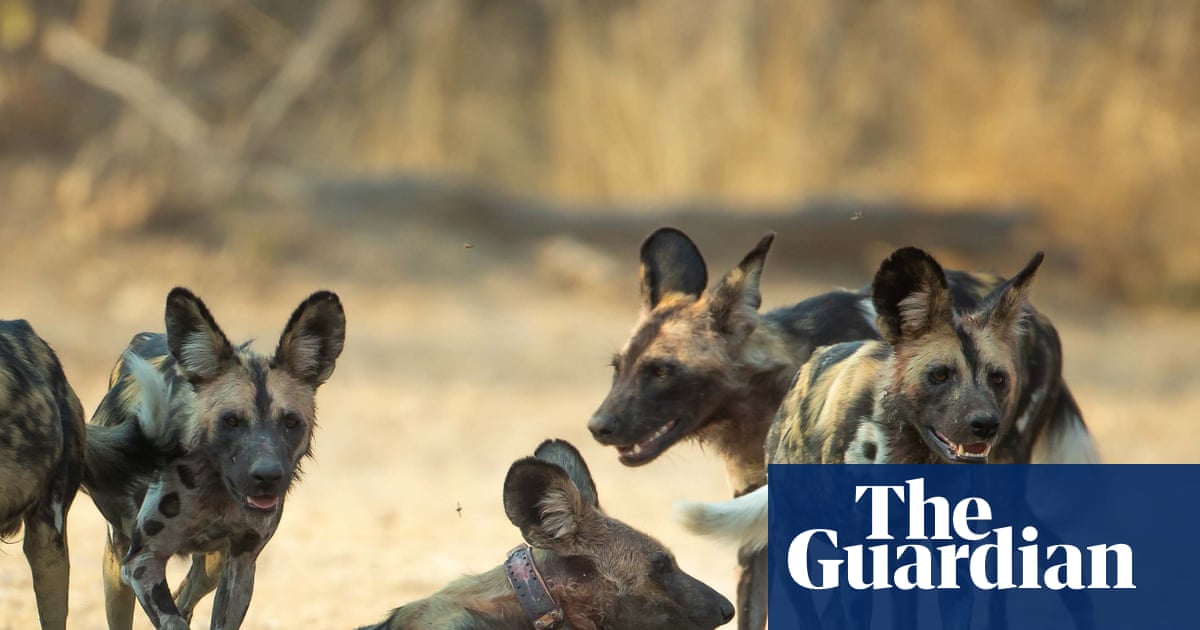
Imagine a tale spun from the pages of an animated classic: three brothers, inseparable yet destined to venture forth, embarking on an epic, perilous quest to forge their own destiny. They traverse vast, untamed lands, confront unseen dangers, and navigate a world increasingly reshaped by human hands, all in pursuit of a new home. This isn’t fiction; it’s the astonishing true story of three African wild dogs, also known as painted dogs, whose extraordinary journey across Zambia has captivated scientists and conservationists alike, setting an unprecedented record for mammal dispersal on the continent.
Last year, these three remarkable siblings embarked on an odyssey that would see them travel more than 2,500 miles (4,100 km) over an grueling eight-month period. This wasn’t a whimsical adventure but a vital “dispersal” journey – a natural rite of passage for young wild dogs, compelling them to leave their birth pack to seek out new territories, find mates, and establish their own families. Their incredible feat, documented meticulously by researchers, underscores both the innate resilience of wildlife and the formidable challenges they face in our rapidly changing world.
The sheer scale of their journey is difficult to grasp. From their starting point in Kafue National Park in western Zambia, the brothers wound their way eastward, covering a direct distance of 340 miles (546 km) to their final sanctuary in the Luangwa Valley. However, their actual meandering route, dodging various obstacles and searching for safe passages, stretched far beyond that point-to-point measurement, culminating in the astonishing 2,500-mile total. This colossal trek overshadows even the famed wildebeest and zebra migrations across the Serengeti, and easily surpasses the previous wild dog record of 2,418 miles set by a group moving between Tanzania and Kenya in 2012. It’s a distance akin to trekking the entire length of a country like Chile on foot, a testament to the vastness of the African landscape, an understanding of which is increasingly clarified by efforts like the UN’s initiative to present Africa’s true scale.
The Perilous Journey of African Wild Dogs and Scientific Insights
Dr. Matt Becker, the astute chief executive of the Zambian Carnivore Programme (ZCP), spearheaded the research that brought this epic saga to light. Utilizing sophisticated GPS collars, his team meticulously tracked 19 different groups of wild dogs, providing invaluable data on their dispersal patterns. Their findings, recently published in a reputable scientific publication, offer a stark, dual revelation: that vital natural connections between Africa’s dwindling wildlife strongholds still, miraculously, persist, but simultaneously, the dangers inherent in traversing these connections have escalated dramatically.
“These extraordinary journeys show that natural connections between Africa’s wildlife strongholds still exist. But they also reveal how difficult and dangerous those journeys have become,” Dr. Becker stated. He emphasized a critical paradigm shift in conservation strategy: “Rather than relying solely on fenced protected areas, these findings reinforce the value of investing in connected landscapes. The dogs are showing us that connectivity still works; now we need to do more to protect and strengthen it.” This insight is profound, challenging conventional approaches and advocating for broader, more integrated conservation efforts.
The perilous reality faced by these creatures was further underscored by the fate of the brothers’ sisters. While the males embarked on their successful, albeit harrowing, journey, a group of their sisters faced a far more tragic outcome. Despite a poignant, brief reunion deep within Zambia’s copper-belt mining region, a chance encounter after two months apart, the sisters were ultimately less fortunate in finding new territory. Two of them tragically succumbed, likely victims of bushmeat snares – a grim reminder of the omnipresent threats.
African wild dogs, with their distinctive patchy coats and large, rounded ears, are among the most endangered mammals on Earth. The International Union for Conservation of Nature’s Red List currently classifies their conservation status assessment as endangered, with only approximately 6,600 adults remaining across 39 fragmented populations continent-wide. Their survival is relentlessly challenged by a cocktail of threats: rampant habitat loss, a precipitous decline in natural prey populations, the ever-present danger of bushmeat hunters’ snares, and escalating conflicts with human populations as their traditional ranges shrink.
Yet, the brothers’ epic journey injects a potent dose of hope into the conservation narrative. It serves as compelling evidence that these intelligent and adaptable predators can, against formidable odds, still navigate and survive within landscapes increasingly dominated by human activity. Their inherent need for vast territories and the capacity for long-distance dispersal mirror those of other iconic species, such as African savannah elephants, whose ancient migratory routes are also increasingly obstructed by human encroachment and development.
Collaborative Conservation for Connected Landscapes
“These long-term studies provide key evidence that connectivity between large landscapes is still there,” affirmed Dr. Nyambe Nyambe, director of the Kavango-Zambezi Transfrontier Area Secretariat. This critical conservation region, spanning five southern African nations including Zambia, is a testament to the power of cross-border collaboration in safeguarding wildlife corridors. “If we conserve and continue to improve these connections – spanning the range of national parks, community areas, nations and regions – a lot of species like these resilient African wild dogs can make the rest happen,” he added, highlighting the transformative potential of sustained, collective action.
The incredible odyssey of these three African wild dogs is more than just a captivating wildlife story; it’s a powerful ecological lesson. It implores us to look beyond immediate boundaries and recognize the intricate tapestry of ecosystems that demand our protection. By prioritizing and investing in connected landscapes, fostering cross-border partnerships, and mitigating human-wildlife conflict, humanity can ensure that future generations of these magnificent painted hunters continue their vital role in Africa’s wild heart, their epic journeys serving not as tales of peril, but of thriving endurance.