
Zelensky presses Nato for air defence systems after intense Russian strikes
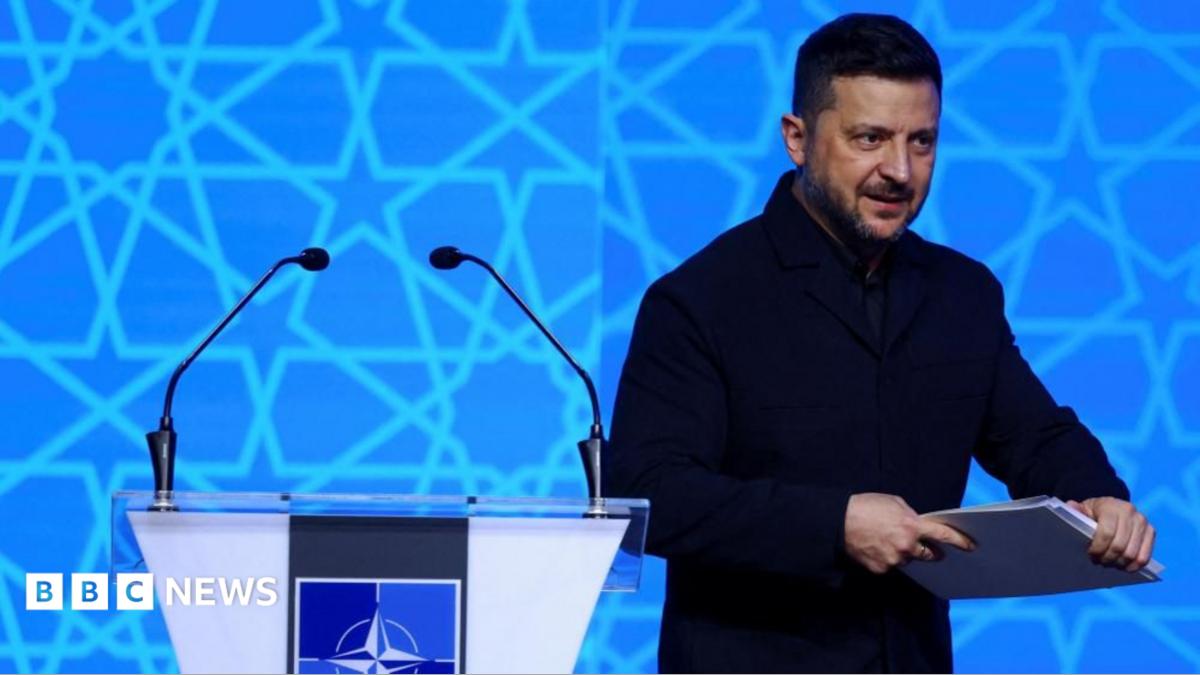
Ukrainian President Volodymyr Zelensky, amidst a terrifying surge in Russian aggression, has issued a desperate plea at the NATO summit in Turkey. He urgently called on allies to provide advanced air defence systems, a critical necessity for protecting his nation’s beleaguered cities and their inhabitants from relentless missile barrages. The stark reality is this: without significant and immediate partner determination, Ukraine’s skies remain dangerously vulnerable.
This intensified cry for help comes directly in the wake of horrific Russian missile strikes that have rained down on the Ukrainian capital twice in less than a week, smashing into residential blocks and claiming over 50 civilian lives. Zelensky articulated this painful truth on Tuesday morning, stating with grave determination, “We are capable of doing everything else ourselves, but when it comes to air defence, we need our partners’ determination.” The Ankara summit offers a crucial opportunity for Zelensky to engage with global leaders, including Donald Trump, to underscore his argument: Russia’s “brutal” attacks are a desperate show of weakness, not strength, and that Vladimir Putin must be compelled towards “dignified” peace negotiations.
The Critical Need for Air Defence Systems
In parallel, Ukraine has subtly but effectively ramped up its own long-range drone attacks against Russian territory, targeting oil refineries and military installations. These strikes have already caused significant fuel shortages and widespread power cuts across Russia. Moscow’s mayor, Sergei Sobyanin, disclosed that anti-air defenses intercepted the majority of an astonishing 430 unmanned aerial drones aimed at the capital overnight, though the precise extent of the resulting damage remains unconfirmed. Social media in Russia is now rife with videos depicting citizens queuing for hours for petrol, often resorting to arguments over dwindling supplies, a clear sign of the strain.
However, as the aerial conflict has escalated, Russia’s ballistic missiles continue to pose an existential threat that standard defenses often fail to counter. Ukraine’s air force meticulously tallies Russian launches versus successful interceptions. Shockingly, on a recent Monday, not a single ballistic missile was successfully blocked in a major assault. These hypersonic projectiles, traveling at several thousand kilometers per hour, are notoriously difficult to intercept. Compounding the problem, there simply aren’t enough US-made Patriot air defence systems currently deployed in Ukraine to effectively counter them.
“It is simply absurd that, in today’s world, production has still not been scaled up to the level actually required to protect people from ballistic terror,” a visibly frustrated Zelensky declared in a Monday video address. He continues to implore European allies to transfer their own stockpiles of Patriot missiles, asserting that they are useless in storage while Ukrainian civilians perish. Zelensky firmly states: “Russia is placing its bets on ballistic weapons, and those who want peace must place their bets on protection against ballistic attacks.” Yet, Patriot systems are in short supply globally, and it remains uncertain how many would suffice should Russia further escalate its ballistic attacks. This predicament has also spurred Zelensky to explore options for Ukraine to domestically produce its own equivalent missile defense, with NATO’s technological assistance.
These concentrated Russian attacks strongly suggest that Ukraine’s increasingly effective deep strikes are indeed getting under the Kremlin’s skin. After years of Russia systematically targeting Ukrainian civilian infrastructure, including power stations during winter, Moscow now hypocritically accuses Kyiv of “terrorism” for hitting its oil refineries with drones. Zelensky characterizes this as an “influence campaign,” eager to share detailed intelligence with NATO allies. The ultimate objective is to pressure Putin into peace talks on terms Kyiv can accept, crucially not including the surrender of the entire eastern Donbas region, as Moscow still demands.
Ukraine’s high-profile campaign targets include an oil terminal in St Petersburg, struck before Putin’s economic forum, and a refinery in Moscow itself, which generated viral explosion videos. More recently, a confirmed hit on an oil refinery in Omsk, Siberia – an astonishing 2,500 km from Ukraine’s border – highlights the alarming stretch on Russia’s own air defenses. Ukraine’s “influence” also extends to Crimea, the peninsula annexed by Putin in 2014 and deeply symbolic for him. Drones now strike military logistics, oil refineries, and power plants there almost daily, causing widespread power cuts, fuel and food shortages, and an official state of emergency. A local resident described the situation to the BBC as “catastrophic,” eerily reminiscent of the turbulent 1990s following the USSR’s collapse.
Zelensky will impress upon NATO, and endeavor to persuade Trump, that Ukraine has indeed turned the tide in this conflict. Its campaign of strategic pressure can, with crucial international assistance, compel Russia into earnest negotiations for a lasting peace. For any real chance of achieving this, and to spare his people another grueling winter of war, Kyiv’s president argues that Ukraine unequivocally needs more interceptor missiles to protect its cities and civilians. For a deeper understanding of the conflict’s geopolitical context, explore this analysis on the Council on Foreign Relations website.