
Who Arvind Kejriwal Wants Justice Swarana Kanta Sharma Removed From Delhi Liquor Policy Case
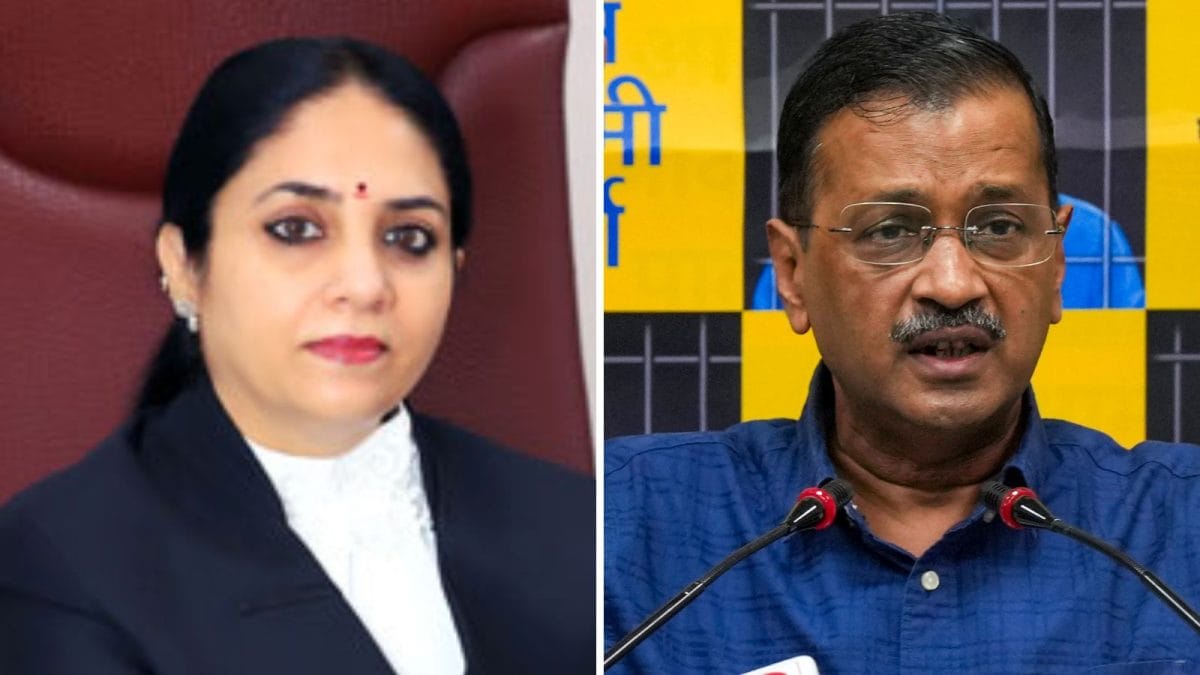
A seismic development has rocked the corridors of power in Delhi: former Chief Minister Arvind Kejriwal has formally lodged a Kejriwal Recusal Plea with the Delhi High Court. This dramatic move seeks to remove Justice Swarana Kanta Sharma from presiding over the Central Bureau of Investigation’s (CBI) petition, which challenges the trial court’s decision to discharge Kejriwal and other accused individuals in the contentious liquor policy case. The stakes are extraordinarily high, plunging the ongoing legal saga into further complexity and uncertainty.
Who is Justice Swarana Kanta Sharma?
Justice Swarana Kanta Sharma ascended to the esteemed position of a permanent judge in the Delhi High Court on March 28, 2022. Her judicial journey, however, began much earlier, with her first appointment as a Magistrate at the young age of 24. Prior to her elevation to the High Court, she distinguished herself as the Principal District and Sessions Judge-cum-Special Judge (CBI) at the Rouse Avenue Court, a role she held until March 2022.
Academically formidable, Justice Sharma boasts an LL.B. (1991), an LL.M. (2004), and even a Ph.D. in judicial education, slated for 2025. Her extensive career encompasses experience across various judicial domains, including civil, criminal, and specialized courts such as Mahila courts. Beyond the bench, her intellectual contributions extend to authorship, with notable books like “Judicial Education – Achieving Constitutional Vision of Justice,” and vital works addressing critical social issues such as “Tumhari Sakhi” (focusing on women’s rights) and “Beyond Baghban” (advocating for senior citizens’ rights).
Justice Sharma’s Involvement in the Delhi Liquor Policy Case
The legal whirlwind around the Delhi liquor policy case intensified significantly after a trial court, on February 27, discharged Kejriwal, Manish Sisodia, and 21 other individuals. The court, in a scathing indictment, criticized the CBI’s case as utterly lacking judicial scrutiny and “discredited in its entirety.”
However, the narrative swiftly pivoted on March 9 when Justice Sharma intervened. Issuing notices to all 23 discharged accused, her bench indicated that the trial court’s findings at the charge-framing stage “prima facie appeared erroneous” and demanded reconsideration. Moreover, Justice Sharma’s bench took the significant step of staying the trial court’s recommendation for departmental action against the CBI’s investigating officer in this very liquor policy case. By March 16, she had granted additional time to Kejriwal and others to prepare their responses to the CBI’s challenging petition.
Understanding the Kejriwal Recusal Plea
Why exactly does Arvind Kejriwal seek the removal of Justice Swarana Kanta Sharma? On March 11, Kejriwal, alongside AAP leader Manish Sisodia and other co-accused in the excise policy matter, submitted a detailed representation. They articulated a “grave, bona fide, and reasonable apprehension” that the proceedings before Justice Sharma would be anything but impartial and neutral.
Kejriwal’s argument is rooted in the judge’s past conduct and her handling of related excise policy matters, which, he asserts, suggest a “predisposition.” He specifically highlighted her recording a prima facie view that the trial court’s discharge order was “erroneous” on the very first day of the CBI’s appeal, all without affording the defense a hearing. Furthermore, AAP leaders have reportedly pointed to instances where the Supreme Court has previously invalidated several orders passed by Justice Sharma in the context of the same excise-related investigation. The stay on the departmental inquiry against the CBI’s investigating officer, a move Kejriwal termed “wide and consequential relief granted prematurely,” further fuels the concerns underpinning this pivotal Kejriwal Recusal Plea.
Sources suggest that similar recusal applications are anticipated from other discharged accused parties, signaling a coordinated legal strategy.
Previous Attempts at Judicial Transfer
This isn’t Kejriwal’s first foray into challenging the judicial assignment. On March 13, 2026, Delhi High Court Chief Justice Devendra Kumar Upadhyaya dismissed an administrative plea by Kejriwal to transfer the case. The Chief Justice clarified that the case assignment adhered to the official roster and that any recusal request must be presented directly to the presiding judge.
Undeterred, Kejriwal then escalated the matter to the Supreme Court, contesting both the refusal of the transfer and certain interim orders issued by Justice Sharma. Ultimately, on April 6, 2026, in a rare move, Kejriwal personally appeared before the Delhi High Court to argue his formal judicial application, directly urging Justice Sharma to step down from the proceedings. The principle of judicial transparency remains a cornerstone of such high-profile legal battles.
The Delhi Liquor Policy Case: A Brief Overview
At its heart, the Delhi liquor policy case is a labyrinthine saga involving serious allegations of corruption and money laundering. These charges stem from the conception and execution of the Delhi Excise Policy 2021–22. Unveiled by the Aam Aadmi Party (AAP) government in November 2021, the policy aimed to completely privatize Delhi’s liquor trade. It marked the government’s exit from retail liquor sales, empowering private licensees to operate 849 shops across 32 zones. Licensees gained unprecedented freedom to offer unlimited discounts, dictate their own prices, and extend shop timings until 3 AM.
The stated goals were ambitious: to boost state revenue, dismantle the “liquor mafia,” and elevate the consumer experience. Yet, a report by Delhi’s Chief Secretary in July 2022 prompted the policy’s abrupt withdrawal. Subsequently, the Central Bureau of Investigation (CBI) and the Enforcement Directorate (ED) launched exhaustive probes. Agencies posited that the policy was “manipulated” to disproportionately benefit a specific consortium of traders, dubbed the “South Group,” allegedly in exchange for a staggering ₹100 crore in kickbacks. A key allegation was the arbitrary inflation of the profit margin for wholesalers from 5% to 12% to facilitate these illicit payments. The ED further contended that this bribe money was illicitly channeled to fund AAP’s election campaigns in Goa and Punjab in 2022.
Key Arrests in the Case
- Manish Sisodia (Former Deputy CM): Arrested February 26, 2023, spent approximately 17 months in custody.
- Arvind Kejriwal (Former Delhi CM): Arrested March 21, 2024, detained for about 5 months, excluding a brief 21-day election reprieve.
- Sanjay Singh (AAP Rajya Sabha MP): Arrested October 4, 2023, spent 6 months incarcerated.
- K Kavitha (BRS Leader): Arrested March 15, 2024, held for 5 months.
- Vijay Nair (AAP Communications In-charge): Arrested September 2022, spent nearly 24 months in jail.
Current Legal Landscape and BJP’s Stance
The current legal status remains highly fluid. A special trial court, on February 27, 2026, discharged all 23 accused, including Kejriwal and Sisodia, concluding that the CBI’s evidence relied on “conjecture.” The CBI, predictably, challenged this ruling in the Delhi High Court. Justice Swarana Kanta Sharma, on March 9, 2026, issued notices to the accused and notably stayed the trial court’s adverse remarks concerning the investigating agencies. Separately, the ED continues its challenge against Kejriwal’s acquittal in cases pertaining to his non-compliance with earlier summons, with the High Court slated to hear this on April 29.
The Bharatiya Janata Party (BJP) has been quick to criticize Kejriwal’s actions. Delhi BJP spokesperson Praveen Shankar Kapoor stated that the move betrays a “lack of respect for the judicial system.” Kapoor was quoted by HT, saying, “This announcement completely exposes Arvind Kejriwal, who is dejected and defeated on all fronts. After losing his petition to transfer the case (to another bench), Kejriwal will now petition the relevant judge himself to drop the case. Is this his respect for the judiciary and the judicial system?”