Introduction: Welcome to the Quantum Era
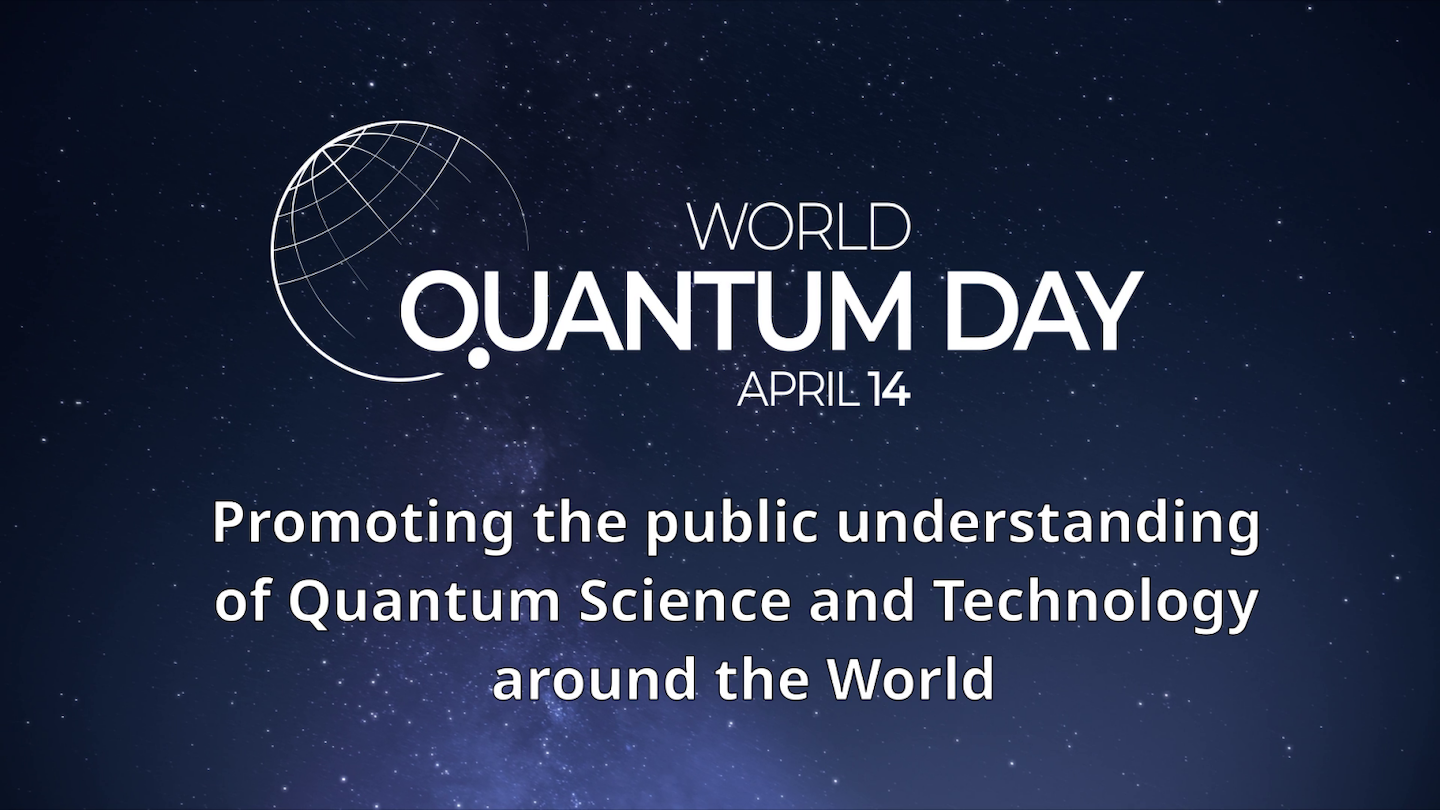
Look at your calendar today. It is April 14, 2026, which means tech enthusiasts, physicists, and leading researchers across the globe are celebrating world quantum day. While it might not involve fireworks or traditional parades, this global initiative is rapidly becoming one of the most important dates on the scientific calendar.
We are currently standing on the precipice of a massive technological revolution. Quantum mechanics, once a purely theoretical branch of physics confined to university chalkboards, is now powering the next generation of supercomputers, secure communications, and advanced medical research. If you have been seeing the word “quantum” dominating your news feed today and want to know exactly what the hype is all about, you are in the right place. In this detailed guide, we will explore the origins of this unique holiday, the latest industry breakthroughs in 2026, and how this mind-bending technology will soon impact your daily life.
Check out our recent breakdown of the Top 10 Technology Trends Shaping 2026 here!
The Origins of the Celebration: Why April 14?
To truly appreciate world quantum day, you have to understand the incredibly clever reason behind the date it is celebrated. It is not just a random day pulled from a hat; it is a brilliant nod to the fundamental laws of the universe.
The Magic of Planck’s Constant
Scientists and mathematicians love a good numerical pun (think of “Pi Day” on March 14). This specific holiday is celebrated on April 14 (4/14 in the US calendar format) in honor of Planck’s constant. In physics, Planck’s constant is a fundamental number used to describe the behavior of particles and waves on the atomic scale. The first digits of this constant, when measured in electronvolt seconds, are 4.14. By officially designating April 14 as the day of celebration, the scientific community pays global homage to the very mathematical foundation that makes quantum mechanics possible.
The Push for Global Quantum Literacy
The holiday was officially launched by an international network of scientists with a very specific goal: promoting public understanding of quantum science. The reality is that this field can seem incredibly intimidating to the average person. Concepts like “superposition” and “entanglement” sound like magic. The primary mission of this day is to break down those complex barriers, encouraging schools, universities, and tech giants to host accessible workshops and seminars that explain these concepts in plain, everyday language.
The Latest 2026 Quantum Breakthroughs
Celebrating world quantum day in 2026 feels more significant than ever because we are finally moving past the theoretical stage and into practical, real-world applications. The last twelve months have seen unprecedented leaps in the industry.
Quantum Computing Reaches New Heights
This year, major tech conglomerates like IBM, Google, and emerging specialized startups have announced massive strides in “error correction.” Historically, quantum computers were incredibly fragile; the slightest change in temperature or a microscopic vibration could corrupt their calculations. However, the latest 2026 hardware models feature groundbreaking logical qubit stabilization. This means we are finally building machines that are reliable enough to solve highly complex problems without constantly crashing. Cloud-based quantum access has also expanded, allowing independent researchers to run experiments on supercomputers straight from their laptops.
Unbreakable Security and Cryptography
Another massive focus of today’s news cycle is quantum cryptography. As digital threats become more sophisticated, traditional passwords and encryption methods are becoming obsolete. In 2026, we are seeing the first large-scale rollouts of Quantum Key Distribution (QKD) networks across major financial institutions. Because quantum states change the exact moment someone tries to observe them, these new communication networks are fundamentally hack-proof. Anyone trying to intercept the data instantly destroys the key, alerting the users immediately.
Read the latest updates on quantum computing progress at MIT Technology Review or Nature.
How Quantum Technology Will Change the World
While the hardware looks like beautiful, gold-plated chandeliers hanging in sub-zero freezers, the real excitement of world quantum day lies in what these machines will actually do for humanity over the next decade.
Revolutionizing Medicine and Drug Discovery
Developing a new life-saving drug traditionally takes billions of dollars and decades of trial and error. Standard computers simply cannot simulate the complex interactions of large molecules accurately. Quantum computers, however, operate using the exact same atomic rules as the molecules themselves. In the very near future, these machines will be able to simulate massive chemical reactions in seconds, potentially discovering cures for diseases like Alzheimer’s and creating personalized, highly effective medical treatments overnight.
Solving the Global Climate Crisis
The fight against climate change is heavily dependent on discovering new materials. Whether it is engineering highly efficient solar panels, developing solid-state batteries that charge in minutes, or creating chemical catalysts that can pull carbon dioxide directly out of the atmosphere, we need material breakthroughs. Quantum simulations are currently being deployed to discover these exact materials, offering a powerful new weapon in the fight to stabilize the planet’s climate.
Conclusion: Embracing the Quantum Era
As we celebrate world quantum day today, it is incredibly exciting to realize that we are living through the dawn of a new scientific era. Just as the invention of the microchip revolutionized the 20th century, the mastery of the quantum realm will completely redefine the 21st century. From unbreakable cybersecurity to life-saving medical discoveries, the potential is truly limitless.
Take a moment today to read an article, watch an educational video, or simply marvel at how far human ingenuity has come. The future is no longer just digital; it is quantum.
About the Author