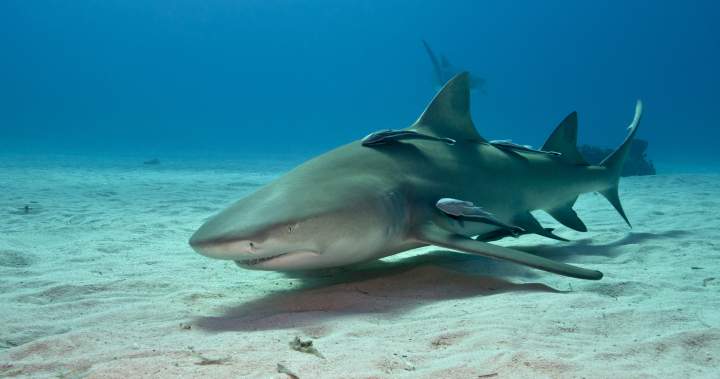
The pristine waters of the Bahamas, long celebrated for their vibrant marine life, are harboring a disturbing secret. A recent, groundbreaking study has unveiled that Bahamas sharks are ingesting an unsettling cocktail of cocaine, caffeine, and various pharmaceuticals, raising serious alarms about ocean health.
Tourism’s Hidden Cost: Contaminated Bahamas Sharks
Published in the esteemed journal Environmental Pollution, the research paints a grim picture. Three distinct shark species — the Caribbean reef, Atlantic nurse, and lemon sharks — were found with varying levels of drugs like acetaminophen, diclofenac, sertraline, and the more notorious cocaine and caffeine in their systems. This isn’t just about a recreational buzz; these “contaminants of emerging concern” (CECs) are triggering significant physiological responses in the marine predators.
Think about it: stimulants such as cocaine and caffeine can induce hyperglycemia, fundamentally disrupting a shark’s capacity to regulate blood sugar. It hampers their ability to metabolize crucial fats. Researchers observed altered triglyceride, urea, and lactate levels in affected animals, hinting at deeper, systemic issues.
While cocaine has surfaced in sharks off Brazil before, this marks the inaugural report detailing CECs and their potential physiological fallout in the Bahamas. This archipelago, often lauded as a “pristine” sanctuary, now faces a stark environmental challenge. The study’s authors point squarely to tourism as a prime culprit.
The booming vacation industry, alongside an explosion in rental properties, drastically amplifies the sheer volume and chemical complexity of local wastewater. Many Bahamas sharks frequent shallow coastal zones — precisely where human activity and its associated effluent are most concentrated. This proximity, scientists suggest, is relentlessly escalating their exposure risk.
Despite the country’s commendable establishment of the Bahamas Shark Sanctuary in 2011, which bans commercial shark fishing across its entire ocean territory, this new threat looms large. The sanctuary, a beacon of conservation, now grapples with an invisible contaminant.
This unsettling discovery comes amidst a year of curious shark-related revelations, including footage of a colossal sleeper shark navigating an Antarctic seabed. However, the plight of the Bahamas sharks— swimming in a pharmaceutical and stimulant-laced ocean — demands urgent attention and a re-evaluation of human impact on even the most revered ecosystems.
About the Author