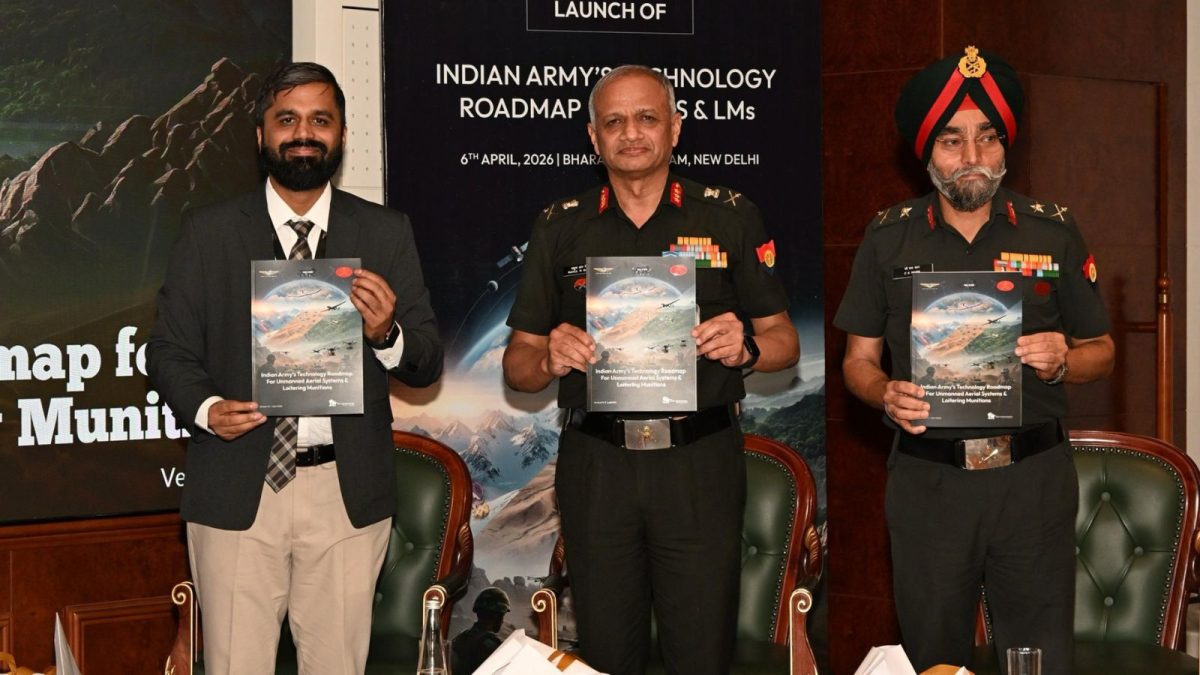
The Indian Army has dramatically unveiled its groundbreaking Indian Army Drone Roadmap, a comprehensive blueprint setting out the nation’s ambitious push for self-reliance in cutting-edge aerial technologies. This pivotal document, officially titled the ‘Indian Army’s Technology Roadmap for Unmanned Aerial Systems and Loitering Munitions,’ signals a decisive shift, aiming to galvanize domestic innovation and fundamentally reshape modern warfare capabilities within the country’s borders.
Released on April 6, 2026, at an event in New Delhi’s Bharat Mandapam, this landmark publication is poised to become a critical guide for the development of next-generation aerial systems. Its core purpose? To offer long-term clarity on the Army’s operational needs, thereby cultivating a robust and independent drone ecosystem.
Charting the Course: The Indian Army Drone Roadmap’s Objectives
For too long, India’s private sector, prolific research institutions, and burgeoning startups have grappled with a persistent lack of clarity regarding the military’s precise technological demands. This nearly 50-page document addresses that very void. It meticulously acts as a crucial communication conduit, bridging the gap between the armed forces and industrial stakeholders, providing clear, actionable insights.
It empowers these entities to strategically channelize their investment, invaluable time, and technological efforts towards priority areas painstakingly identified by the Army. Major General CS Mann, ADG of the Army Design Bureau, emphatically stated this marks an unprecedented move towards transparency. He stressed that India’s drone ecosystem must evolve in a structured, demand-driven fashion, fostering long-term strategic investments in these emerging technologies.
A Blueprint for Indigenous Drone Technology
The depth and breadth of this roadmap are truly remarkable. It delineates 30 distinct types of Unmanned Aerial Systems (UAS) and loitering munitions, further breaking them down into an astonishing 80-plus variants. These diverse requirements span five critical categories: surveillance, loitering munitions, UAS in air defense roles, UAS in special roles, and logistics UAS. Imagine the sheer scope of this vision, from compact reconnaissance drones to robust heavy-lift transport platforms – all envisioned for indigenous development. This detailed guidance isn’t merely aspirational; it’s a direct challenge to reduce India’s historical dependence on foreign technology. The initiative is expected to ignite greater participation from agile startups and resourceful micro, small, and medium enterprises (MSMEs), which are often the wellsprings of rapid technological advancement.
The timing of this strategic unveiling is no accident. Global conflicts, from the protracted Russia-Ukraine war to the simmering tensions in West Asia, unequivocally highlight the increasing dominance of unmanned systems in contemporary battlefields. Lessons learned from recent operations have been diligently integrated, ensuring the force remains at the forefront of operational effectiveness. The imperative for such an ambitious Indian Army Drone Roadmap could not be clearer, adapting to profound international relations.
Echoing the Centre’s ‘Atmanirbhar Bharat’ (Self-Reliant India) initiative, the roadmap champions a “whole-of-nation approach.” It harmoniously convenes key players: the defense industry, the Drone Federation India (DFI), the Society of Indian Defence Manufacturers (SIDM), and the Federation of Indian Chambers of Commerce and Industry (FICCI). Lieutenant General Rahul R Singh, Deputy Chief of the Army Staff (Capability Development & Sustenance), issued a stern caution regarding the sensitive nature of the document. He underscored the critical importance of preventing these detailed specifications from falling into adversary hands, highlighting the inherent risks in the evolving international security environment.
This isn’t just about procuring new hardware. This technology roadmap is a forward-thinking strategic document, meticulously crafted to align domestic industrial growth with urgent national security imperatives. By furnishing the private sector with an unambiguous vision, the army is steadfastly ensuring India’s future drone technology is conceptualized, engineered, and deployed entirely from within its own borders.
About the Author