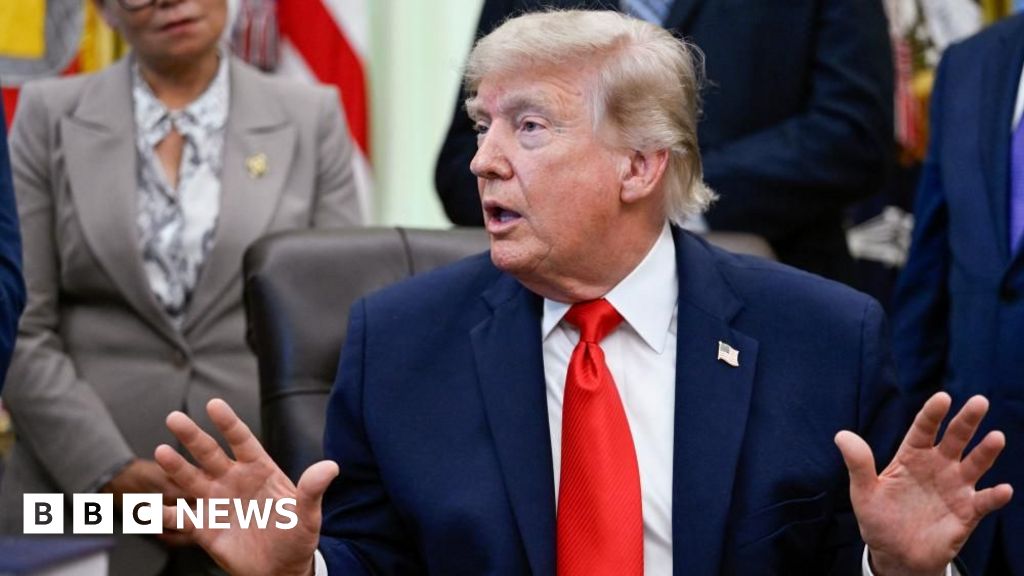
In a dramatic weekend announcement, President Donald Trump declared a definitive US-Iran deal would be formally inked this Sunday, promising to reopen the strategically vital Strait of Hormuz. Yet, even as his words resonated across global capitals, a shadow of skepticism immediately fell from Tehran, casting considerable doubt on the highly anticipated timeline. The prospect of peace, so fleeting in this turbulent region, once again hangs precariously in the balance.
Trump, leveraging his preferred social media platforms, asserted that once the agreement was solidified, the Strait of Hormuz — a critical choke point for international shipping, particularly oil and liquefied natural gas — would be “open to all.” He further alluded to a future operation to secure and neutralize Iran’s enriched uranium stockpiles, which he termed “Nuclear Dust,” once “all is calm.” For decades, Western nations have accused Iran of pursuing nuclear weapons, allegations Tehran consistently denies, maintaining its program is for peaceful energy generation and research.
Meanwhile, Pakistan, a crucial mediator in the complex negotiations, echoed a cautious optimism, indicating the deal’s finalization was imminent, possibly within 24 hours. They even mentioned preparations for an “electronic signing.” Pakistani Prime Minister Shehbaz Sharif, expressing hope, stated on Saturday that the world was “closer to a peace deal than ever before,” with technical-level talks expected next week.
The Elusive US-Iran Deal: Sticking Points Remain
Despite the declarations from Washington and Islamabad, Iran’s foreign ministry spokesman, Esmaeil Baghaei, injected a note of caution. “We will have to wait and see about the exact date of the signing of the memorandum of understanding, although it will not be tomorrow,” he clarified before Trump’s Sunday signing claim emerged. This divergence underscores the fragile nature of diplomacy in the Middle East.
Iranian Foreign Minister Seyed Abbas Araghchi, just days prior, confirmed that an agreement was indeed close. He revealed key provisions: an end to the conflict between Israel and Hezbollah in Lebanon, the reopening of the Strait of Hormuz, and the lifting of a U.S. blockade on Iranian ports. Significantly, however, Araghchi stressed that discussions surrounding Iran’s contentious nuclear program would be deferred to a later stage. U.S. officials have partially corroborated these details, emphasizing that any economic benefits for Iran are contingent upon Tehran fulfilling its obligations.
This potential breakthrough follows months of intense, often fraught, discussions. The conflict itself erupted on February 28 with U.S. and Israeli strikes on Iran, provoking Iranian retaliatory attacks on Israel and U.S.-allied Gulf states. The Strait of Hormuz was effectively closed, plunging global energy markets into turmoil. Even after an April ceasefire, intermittent exchanges of fire have persisted, including two recent rounds of tit-for-tat strikes this very week. Learn more about this crucial waterway.
Previous attempts at finalizing an agreement have faltered at critical junctures. The current iteration, while promising, faces significant hurdles, not least the differing timelines and public statements from key players. The path to a lasting US-Iran deal remains fraught with peril, a testament to the deep-seated mistrust and complex geopolitical dynamics at play.
About the Author