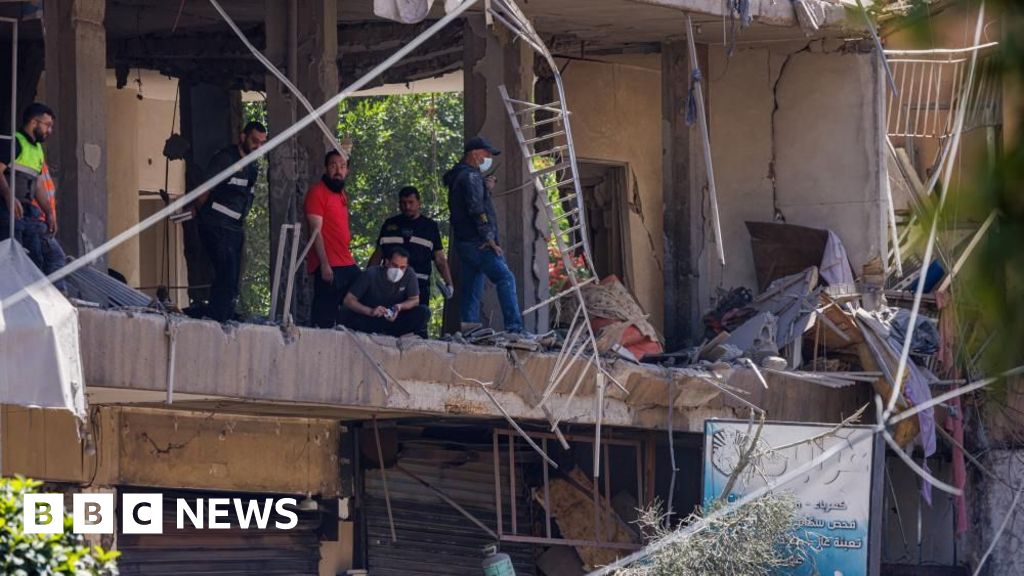
The delicate threads of diplomacy frayed severely today following a devastating Beirut strike by Israeli forces on the southern suburbs of Lebanon’s capital. This audacious military action, targeting the Iran-backed armed group Hezbollah in Dahieh, has thrust attempts for a fragile US-Iran peace deal into profound uncertainty, even as President Donald Trump maintained a truce remained “close.”
Escalating Tensions After the Beirut Strike
Just hours after the US signaled an agreement with Iran was imminent for Sunday, Israeli jets unleashed their payload. The Israeli military confirmed the attack, stating it was a direct retaliation for Hezbollah’s earlier firing of aerial targets towards northern Israel. This aggressive exchange immediately ignited fears of a dangerous escalation, with Tehran swiftly vowing a robust response to any further assaults on Beirut by striking Israel itself.
President Trump, typically a staunch ally of Israel, voiced his dismay on social media. “This should not have happened particularly on a special day when we are so close to a Peace Deal with Iran,” he posted, adding a desperate plea: “This could be the beginning of a long and beautiful peace – Let’s not blow it!” His attempts to extricate the US from a protracted and increasingly costly Middle Eastern quagmire now appear severely hampered by Israel’s persistent operations in Lebanon.
Iran, for its part, has consistently demanded that any ceasefire must encompass an end to the conflict in Lebanon, where Israeli forces have been battling Hezbollah. However, Israeli officials adamantly reject this precondition, insisting that military operations must continue unabated. Since rockets first rained down on Israel from Hezbollah in March, the Israeli military has undertaken extensive air campaigns across Lebanon, even initiating a ground invasion in the country’s south. Their stated objective remains the safeguarding of Israeli communities from Hezbollah’s formidable arsenal of rockets and drones.
Within Israel, a broad public consensus supports the ongoing war. Many view the potential US-Iran deal not as a triumph, but as a strategic setback, fearing that their hard-won military gains against Iran and Hezbollah might not translate into a decisive geopolitical victory. One Israeli military official, commenting on leaked details of the proposed agreement to Ma’ariv newspaper, chillingly branded it “very bad” and “catastrophic.” An Israeli defense official echoed this sentiment to N12 TV, noting that “none of the goals set by Israel have received an immediate response in the agreement.”
Regional Repercussions and Diplomatic Fallout
The Lebanese government, caught between powerful regional actors, has been actively striving to decouple its domestic situation from Iran, seeking to diminish Tehran’s influence and, crucially, weaken Hezbollah as part of its disarmament efforts. However, the recent Beirut strike undeniably complicates these delicate internal dynamics.
Tragically, the attack on Dahieh claimed at least three lives and left fifteen injured, according to Lebanon’s state media. President Trump, while asserting Israel’s right to self-defense, downplayed the preceding Hezbollah provocation as “very small and meaningless,” urging that it “should not disrupt this important process.” He called for a mutual cessation of hostilities from all parties in Lebanon and against Israel. This stark contrast in perspectives highlights the immense difficulty in forging lasting peace.
Mohammad Bagher Ghalibaf, Iran’s chief negotiator, publicly accused the US of failing to uphold its commitments due to Israel’s actions, while Brig Gen Mohammad Jafar Assadi warned that the attack would not go “unanswered.”
The broader conflict began on February 28, with joint US-Israeli strikes across Iran, which then triggered Iranian counter-attacks against Israel and Gulf allies, including a significant disruption to shipping in the critical Strait of Hormuz. Lebanon itself was tragically drawn into this wider war on March 2, when Hezbollah retaliated for an Israeli strike that reportedly killed Iran’s supreme leader. Despite a ceasefire agreement in April, intermittent exchanges of fire persist between the US and Iran.
For decades, Western nations have accused Iran of pursuing nuclear weapons, a claim Tehran consistently denies, asserting its program is solely for peaceful energy generation and research. For more context on global geopolitical shifts, consider visiting this news source.
About the Author