Defying direct criticism from US President Donald Trump, Israeli forces have once again launched Israel Lebanon strikes, targeting areas in the south. This latest escalation unfolds amidst a fragile new agreement between Washington and Tehran, raising serious questions about the region’s tenuous path to peace.
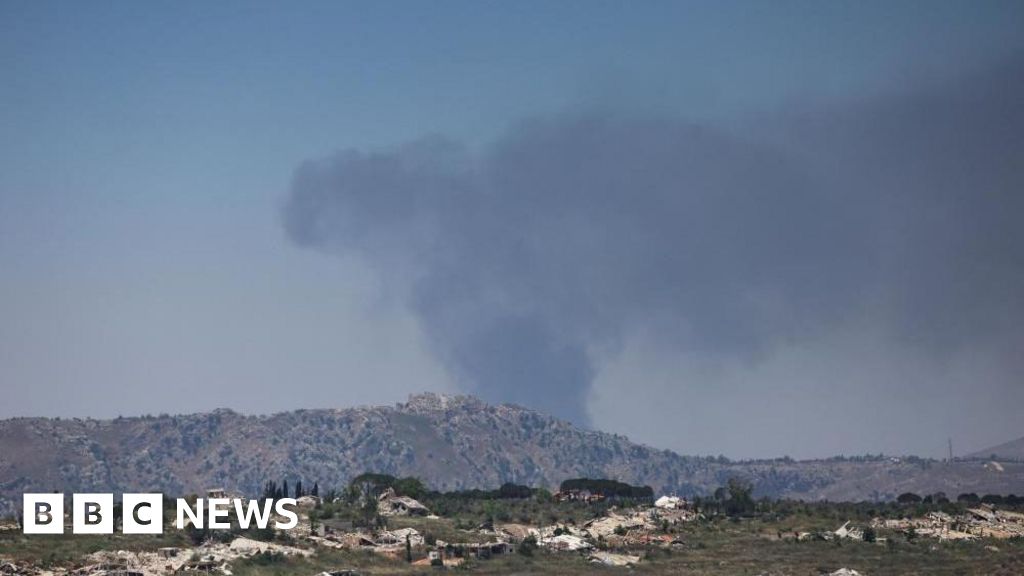
Lebanon’s National News Agency (NNA) reported on Wednesday that Israeli jets struck the Nabatieh al-Fawqa area and the outskirts of neighboring Kfar Tebnit. While the Israeli military has yet to comment on these specific actions, it has consistently stated its operations target the Iran-backed armed group Hezbollah.
The intensity of these military actions flies in the face of Trump’s recent strong statements. Speaking at the G7 summit in France, the US President urged Israeli Prime Minister Benjamin Netanyahu to exercise “more responsibility with respect to Lebanon.” He further elaborated that Israel had been fighting Hezbollah for “too long and too many people are being killed,” signaling a palpable frustration from Washington.
Renewed Israel Lebanon Strikes Challenge Fragile Diplomacy
This fresh wave of military engagement comes hot on the heels of a newly brokered, albeit unreleased, deal between the United States and Iran, intended to de-escalate regional tensions. Mediator Pakistan has indicated that this agreement explicitly includes Lebanon. However, both Israel and Hezbollah have continued their exchanges since the deal’s announcement on Sunday night, suggesting that de-escalation remains a distant prospect.
Earlier that fateful Sunday, an Israeli airstrike on Beirut — a direct response to a cross-border rocket attack by Hezbollah — had already strained the delicate efforts to finalize the new US-Iran understanding. Trump, despite acknowledging a “great relationship” with Netanyahu, expressed his displeasure, stating, “I didn’t like that he did an attack… that was too much.” His assertion that “Without the United States, there would be no Israel. Without me, there would be no Israel because no other president was willing to do what I did,” underscored the depth of his conviction regarding his administration’s support for Israel and, by extension, his expectation of reciprocal deference.
The diplomatic tightrope walk has become exceptionally fraught as these Israel Lebanon strikes directly undermine efforts to solidify a regional truce. On Monday, Prime Minister Netanyahu declared that his country’s forces would remain in Lebanon “for as long as necessary,” a stance that directly contradicts the spirit, if not the letter, of the nascent US-Iran deal.
Adding another layer of complexity, Iran’s Foreign Minister, Abbas Araghchi, issued a stark warning. Tehran, he cautioned, would consider any Israeli assault on Lebanon or continued military presence in Lebanese territory a direct violation of the interim agreement with the US.
The precise contents of this “memorandum of understanding” remain under wraps, fueling speculation and uncertainty across the globe. Both parties are reportedly slated to sign the accord this Friday in Switzerland. Trump has indicated his intent to publicly disclose the agreement, reading it “word by word,” a move designed to highlight what he touts as a superior alternative to the 2015 Joint Comprehensive Plan of Action (JCPOA), brokered by the Obama administration. He emphasized that his deal would ensure Iran “never have a nuclear weapon” and secure a “toll-free” Strait of Hormuz, all without the “billions of dollars” paid by his predecessor. For more on the complex regional dynamics, explore analyses from global policy experts.
About the Author