
Bengaluru Is Reclaiming Its Footpaths After The Supreme Court Ruling. Can Delhi, Mumbai Follow?
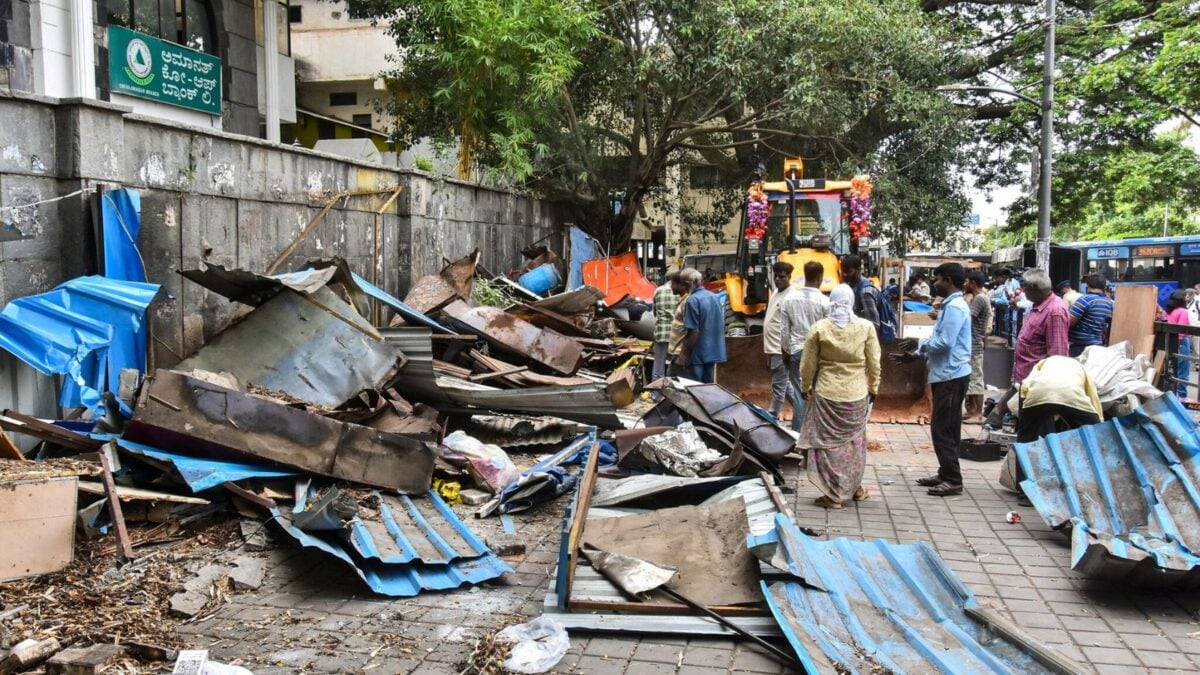
In the chaotic tapestry of Indian urban life, simply walking often feels like a perilous adventure. Footpaths, those supposed sanctuaries for pedestrians, routinely vanish beneath an unsightly mélange of parked vehicles, intrusive utility poles, gaping open drains, construction debris, and brazen illegal encroachments. This hostile environment forces countless individuals directly into the roaring maw of traffic, where they must contend with speeding cars and motorcycles. The tragic consequence? Death.
Between 2019 and 2024, a staggering 1.8 lakh pedestrians met their untimely end in road crashes across the nation. Government data paints an even grimmer picture, revealing that close to 54% of these fatalities resulted from collisions with cars and two-wheelers. Now, Bengaluru, reeling from its own high pedestrian casualty rates, is embarking on an ambitious mission to redefine pedestrian safety within its bustling limits.
Weeks after a landmark Supreme Court declaration affirmed the right to safe sidewalks as a fundamental human right, Karnataka has unfurled one of India’s most assertive pedestrian safety campaigns. Authorities have not only swept clear encroachments spanning hundreds of kilometers but have also proposed drastically steeper penalties for motorcyclists illegally riding on pavements. Furthermore, civic agencies have been mandated to purge all manner of obstructions, from poles to cables, that have long rendered walkways unusable.
This aggressive push raises a pivotal question for the nation’s urban centers: Could Bengaluru’s concerted efforts become the definitive blueprint for other cities grappling with similar challenges, particularly in the wake of the Supreme Court’s seminal ‘Right to Walk’ judgment?
The Supreme Court’s Mandate for Pedestrian Safety
The judiciary delivered a powerful message in June, pronouncing that the right to traverse a safe, clearly delineated footpath is far more than a mere civic amenity; it is an inherent constitutional right. This groundbreaking judgment was spurred by the heart-wrenching death of a five-year-old boy, struck by a tanker while being forced onto a road alongside his father.
Beyond simply adjudicating compensation, the court delved deeper, acknowledging that India’s legal architecture had, for too long, disproportionately focused on vehicular movement rather than the most basic form of transit: walking. The Bench emphatically declared that the right to walk emanates directly from the freedoms guaranteed under Article 19(1)(d) and the fundamental right to life under Article 21. Crucially, it established that wherever a road exists, governments bear an unequivocal duty to provide safe, clearly demarcated, and impeccably maintained footpaths. More significantly, it boldly asserted that pedestrians’ right to walk unequivocally takes precedence over the movement of motorized vehicles.
Moreover, the court directed the central government to craft a national legal and institutional framework dedicated to pedestrian safety, recognizing that the current patchwork of municipal regulations has demonstrably failed to safeguard walkers across India’s sprawling urban landscapes.
Why Bengaluru is Leading the Charge
Bengaluru has swiftly emerged as the pioneering metropolitan city to tangibly respond to the Supreme Court’s verdict. In July, the Karnataka government unveiled its citywide ‘Safe Footpath Campaign’, elevating pedestrian safety from a cosmetic civic exercise to a top governance priority. The campaign’s overarching goal is to reclaim pavements, drastically improve walkability, and curb pedestrian deaths by restoring footpaths to their original, intended purpose.
Within a mere ten days of the drive’s launch, authorities reported the astounding clearance of 490 kilometers of footpath encroachments across the tech hub. Concurrently, officials have proposed significantly stiffer penalties for motorcycles found on footpaths and instructed civic agencies to systematically remove utility poles, tangled cables, bulky transformers, and other permanent fixtures that routinely shunt people off pavements.
This initiative transcends simply removing vendors or parked cars. A chronic issue for Bengaluru has been its disjointed pedestrian infrastructure. In numerous areas, footpaths simply terminate abruptly, are choked by electric poles, or vanish entirely beneath private property ramps. Even roads designed under supposedly modern urban improvement projects frequently fail to ensure uninterrupted pedestrian access.
Urban planners have long championed the idea that a footpath’s utility hinges on its seamless, continuous network. A broken pavement every few hundred meters, they argue, inevitably shoves pedestrians back into perilous traffic, utterly nullifying its core function. Despite recent improvements, Bengaluru sadly registered the highest number of pedestrian deaths among India’s mega cities in 2024, according to the National Crime Records Bureau (NCRB).
The Stubborn Struggle Elsewhere: Why Other Cities Lag
The stark reality outside Bengaluru paints a grim picture. In Delhi, pedestrians routinely execute an intricate dance around fractured pavements, illegally parked vehicles, treacherous open drains, and omnipresent construction detritus. A casual stroll through the capital quickly reveals the utter disarray of most of its footpaths. Further afield, in Gurugram and Noida, many primary arterial roads were conceived primarily for blistering vehicular speeds, leaving pedestrians with either fragmented or utterly non-existent walkways.
Mumbai, despite its celebrated public transport web, continues to wrestle with perpetually overcrowded pavements, pervasive illegal parking, and relentless encroachments. Hyderabad faces a similar predicament, particularly around its burgeoning commercial zones and rapidly expanding suburban corridors.
A sobering India Status Report on Road Safety, meticulously compiled by the Transportation Research and Injury Prevention Centre (TRIPC) at IIT Delhi, indicates that usable footpath availability fluctuates wildly, from a dismal 3% in Jammu and Kashmir to a more respectable, yet still insufficient, 73% in Maharashtra. States like Bihar, Haryana, and Puducherry report an alarming scarcity of functional pavements.
For decades, India has poured colossal investments into expressways, towering flyovers, intricate Metro systems, and expansive highways. Yet, the critical first and last mile of virtually every public transport journey fundamentally relies on walking. If commuters cannot safely reach a Metro station, a bus stop, or a railway station on foot, the entire efficacy of the grander transport system is severely compromised.
Infrastructure spending starkly mirrors this imbalance. The Ministry of Road Transport and Highways commanded a staggering Rs 3,09,875 crore in the 2026-27 Union Budget for highways and related projects. In stark contrast, dedicated funding for pedestrian infrastructure largely remains relegated to sporadic municipal budgets and localized urban development initiatives, rather than a cohesive, nationwide program. For more information on urban development initiatives, visit the official government portal.
Prioritizing Cars: The Lingering Challenge
The problem is not merely a question of funding; it is deeply entrenched in urban planning philosophy. Road-widening projects, for instance, almost invariably consume footpaths first. Flyovers are engineered to alleviate motorist congestion, forcing pedestrians to navigate longer, often poorly maintained crossings or downright unsafe intersections. Governance too remains frustratingly fragmented. Urban roads often fall under a bewildering array of authorities: municipal corporations, development bodies, public works departments, traffic police, Metro agencies, or utility providers. When a pavement is inevitably dug up for cables or pipelines, the accountability for its restoration frequently evaporates into thin air.
Enforcement, tragically, is equally inconsistent. Encroachments, once cleared, inevitably reappear because civic drives are typically episodic, one-off operations rather than sustained, vigilant monitoring exercises. Utility agencies blithely install poles directly on footpaths. Builders erect ramps that block pedestrian flow. Vehicles occupy pavements with little, if any, fear of repercussions. Perhaps the most formidable hurdle is the disheartening truth that pedestrians rarely command the same political capital or attention as motorists.
A traffic jam is an immediate, highly visible crisis. A missing footpath, however, silently impacts thousands daily, often remaining unnoticed until it culminates in a tragic injury or death. This silent suffering rarely ignites political urgency.
Can Bengaluru Truly Forge a Blueprint?
Bengaluru’s ongoing campaign holds immense significance, not because it has definitively solved India’s profound pedestrian crisis, but because it vividly illustrates what a swift, decisive response to the Supreme Court’s judgment *can* look like. The city’s methodology brilliantly fuses robust enforcement with crucial administrative coordination. It understands that simply removing encroachments is insufficient; truly walkable cities demand pavements rebuilt to universal design standards, rigorously maintained, and staunchly shielded from future misuse. The fight for comprehensive pedestrian safety is a long one.
Other major metropolitan cities will undoubtedly face escalating pressure to emulate Bengaluru’s example. The Supreme Court has fundamentally transformed pedestrian rights from mere aspirational planning goals into undeniably enforceable constitutional rights. This paradigm shift irrevocably changes the conversation, moving it decisively from civic beautification to an incontrovertible legal obligation.
Ultimately, making Indian cities genuinely walkable transcends the mere act of constructing pavements. It necessitates a profound societal recognition: that walking remains the country’s most fundamental and universal mode of transport. Every commuter, every Metro passenger, every schoolchild, and every elderly citizen, without exception, becomes a pedestrian at some point in their day.