
Trump says US to scale back military drills with South Korea after it stayed out of Iran war
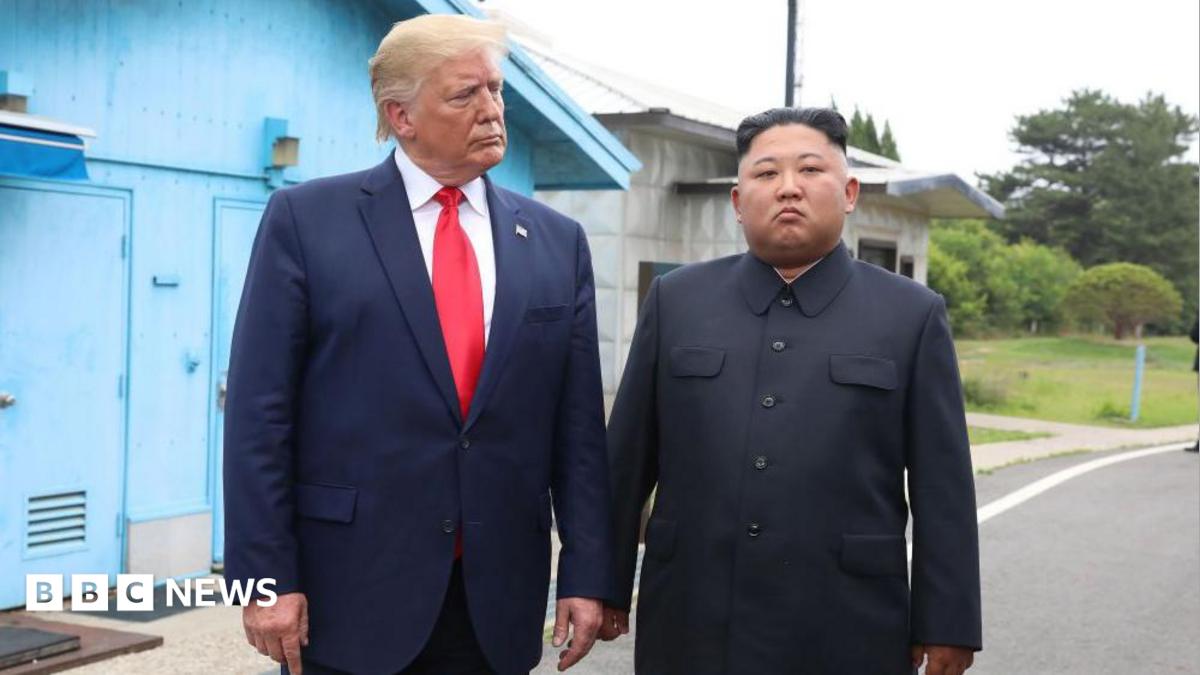
President Donald Trump has declared a significant scaling back of joint US Military Drills with South Korea, citing both the prohibitive cost to American taxpayers and, notably, Seoul’s recent refusal to partake in Washington’s “denuclearization” efforts concerning Iran. The surprise announcement, made via Truth Social, underscores a complex interplay of diplomacy, financial considerations, and shifting alliances on the global stage.
The former president, known for his unconventional approach to foreign policy, explicitly stated that these exercises are “not only costly, with much of these costs paid for by the United States of America (as usual!), but send a signal that is totally inappropriate and hostile.” He also alluded to his “very good relationship” with North Korean leader Kim Jong Un as a factor, a dynamic that previously led to the temporary suspension of such drills during his first term in office. Trump’s post further revealed that he had directly asked South Korea’s President about joining the Iran initiative, to which the reply was a polite, yet firm, “No thanks!”
Despite Trump’s pronouncements, officials in Seoul quickly affirmed that joint drills with the United States would proceed “as scheduled.” Last week, US and South Korean military leaders publicly announced the “Ulchi Freedom Shield” exercises, an 11-day event anticipated to mirror the scale of previous years, involving approximately 18,000 South Korean troops. This steadfast commitment from Seoul arrives amidst heightened regional tensions, particularly after North Korea’s recent ballistic missile tests, which remain explicitly banned by the United Nations.
The Evolving Stance on US Military Drills
The decision to potentially downsize these crucial joint operations is not entirely unprecedented for Trump. He famously suspended exercises completely in 2018 during a period of denuclearization negotiations with Pyongyang, and scaled them back again in 2020 due to the global Covid-19 pandemic. His recent remarks, hinting at frustration with Seoul over their non-involvement in Iran, echo similar sentiments he has voiced about other allies—including Japan, France, and the UK—who have shown hesitance to engage directly in US hostilities in the Middle East.
Meanwhile, the broader security landscape on the Korean Peninsula remains precarious. Pyongyang has aggressively ramped up its nuclear and missile programs since the breakdown of high-level diplomacy with Trump in 2019. The recent detection of a second North Korean missile test within days, coinciding with the announcement of the joint drills, only serves to amplify these anxieties. Furthermore, US military leaders have acknowledged North Korea’s deployment of troops to support Russia’s war in Ukraine, with US military spokesperson Ryan Donald confirming that “our training accounts for that threat,” referring to the potential return of these battle-hardened soldiers. Around 28,500 American military personnel are currently stationed in South Korea, forming a critical component of regional stability. For deeper insights into the intricacies of this enduring alliance, one might consult resources on bilateral security cooperation.
Amidst these geopolitical machinations, South Korea’s president last week extended an offer to North Korea: talks aimed at formally ending the Korean War, which, technically, remains active since the signing of an armistice in 1953. This proposal highlights the profound desire for lasting peace in a region continually grappling with the specter of conflict, even as the scale and scope of fundamental US Military Drills face a new wave of scrutiny.