
Israel re-establishes closed West Bank settlement, defying growing international protests
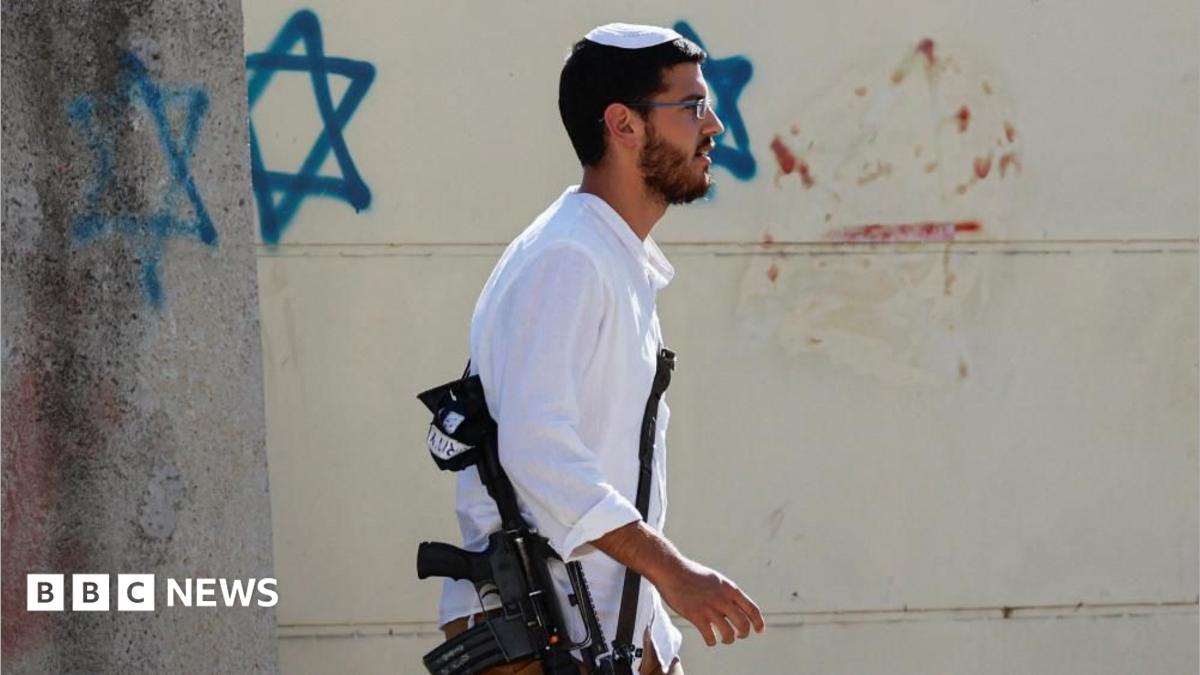
A new generation of Israeli settlers has defiantly re-established the Kadim settlement in the occupied West Bank, an act that reverberates with profound historical irony and escalating geopolitical tension. This audacious move comes two decades after Kadim was dismantled by a previous Israeli government as part of a unilateral disengagement plan, highlighting a dramatic reversal in policy driven by the current, staunchly nationalist administration. Thirty “pioneer families” arrived from Tel Aviv, their vehicles adorned with blue and white Israeli flags, carrying everything from bedding to building materials, symbolizing a forceful reclamation of land deemed illegal under international law.
The re-occupation of Kadim is not merely an isolated incident but a potent symbol of Israel’s intensified settlement expansion. Palestinian residents in the vicinity, particularly around the city of Jenin, are watching this unfolding situation with palpable fear and a chilling sense of déjà vu. The international community, through numerous resolutions and statements, unequivocally considers all Israeli settlements in the occupied Palestinian territories illegal. Yet, the current Israeli government, emboldened by a wave of Jewish nationalism, appears unfazed by global protests.
The Alarming Pace of West Bank Settlement Expansion
Israel’s far-right Finance Minister, Bezalel Smotrich, marked the return to Kadim with triumphalist rhetoric, proclaiming, “21 years after the crime of expulsion from northern Samaria, we have completed the correction […] and have returned to the settlement of Kadim.” His words, delivered alongside other senior Israeli politicians, underscore a deep-seated ideological drive that seeks to cement Israeli control over the West Bank. Kadim, once deemed too isolated and strategically insignificant to protect in 2005, now represents a crucial frontier in a broader, accelerated settlement project.
This Kadim settlement resettlement is just one piece of a much larger puzzle. Since taking power in late 2022, the current Israeli government has approved over 100 new settlements across the West Bank, with 19 specifically targeting the northern region. This rapid construction, according to Hagit Ofran, director of the Settlement Watch program at Peace Now, is part of a calculated “race” to expand before potential Israeli elections in October. Ganim, Sanur, and Homesh – other settlements evacuated in 2005 – have already been formally reopened, with families moving in.
The establishment of Emek Dotan, to the west of Jenin, further illustrates this aggressive expansion. Teacher Samer Jaber, a Palestinian living adjacent to Emek Dotan, recounts the systematic harassment that began even before most families arrived. “Groups come and stand opposite our houses, filming us,” he described, detailing incidents of powerful floodlights beamed into homes at odd hours and aggressive attempts to enter their residences. “Fear dominates everything. We are completely defenceless,” he lamented, a poignant reflection of a population living under constant siege. Indeed, the international community, including significant global players, has often voiced its apprehension; for instance, UK, France, Germany, Italy and Canada condemn Israel’s West Bank settlement project, highlighting widespread diplomatic concern.
The Crushing Impact on Palestinian Lives
The re-establishment of these settlements brings with it devastating consequences for Palestinians. A vegetable farmer, born 53 years ago in a house adjacent to Kadim, recounted his childhood memories of watching the original settlement being built, then its dismantlement, and now its terrifying return. He spoke of a previous era of peaceful coexistence, starkly contrasting it with the current “life of fear.” His nephews have been driven from their citrus trees, told they “have no place here.” For families like his, who fled Haifa during the 1948 Arab-Israeli War, the spectre of renewed displacement is a living nightmare. “There’s no more displacement left in me,” he uttered, his voice heavy with resignation.
Beyond civilian settlements, a more insidious military infrastructure is also rapidly materializing. Two new Israeli military bases are under construction around Jenin, with towering concrete walls, watchtowers, and barbed wire. Critically, a military outpost is being built on seized Palestinian land next to the Jenin Refugee Camp – a significant development as it marks the first Israeli military base on land under full Palestinian Authority control since the Oslo Accords were signed in 1993. The Israel Defence Forces confirmed this construction was “in accordance with operational needs,” but Palestinian Authority Governor Kamal Abu al-Rub expressed deep concern that this portends a plan to house settlers within the heart of the Palestinian city, effectively dividing it like Hebron or Jerusalem. He remembered the past two decades without settlers around Jenin as “bliss,” now describing their lives as “hell orchestrated by them and their assaults.”
The speed and ruthlessness of these changes are truly breathtaking. Roads are cut off, agricultural lands bulldozed, and trees felled. Just weeks ago, a bustling café along the road from Kadim to Israel stood as a place of respite; today, it and dozens of other Palestinian businesses lie in ruins, demolished by the Israeli army. The political calculus behind this aggression, particularly with Israeli elections looming, seems to dictate that more Palestinian buildings are demolished, and more settler caravans installed. The Kadim settlement resettlement epitomizes a larger, alarming trend.
Samer Jaber’s grim assessment of the global landscape – “Europe has no time for us, America is preoccupied with Iran, China has no interest… The United Nations is finished, and the Arab countries have their own internal problems” – rings with a devastating truth. This sense of abandonment feeds a profound bitterness, culminating in his stark conclusion: “Democratic systems are over, they’re finished. Civilisation, progress and modernity are lies.” This sentiment reflects a deep skepticism about the efficacy of international diplomacy and the prospects for peace, a skepticism often mirrored in broader regional discussions, where Palestinians and Israelis remain sceptical of any Gaza plan or wider peace initiatives. The re-establishment of Kadim, therefore, is not just a territorial shift; it is a seismic blow to any lingering hope for a just and peaceful resolution.