
Chilling Video: Teen Attempts Suicide After Family Dispute Over iPhone Demand; Parents Die Trying To Save Him
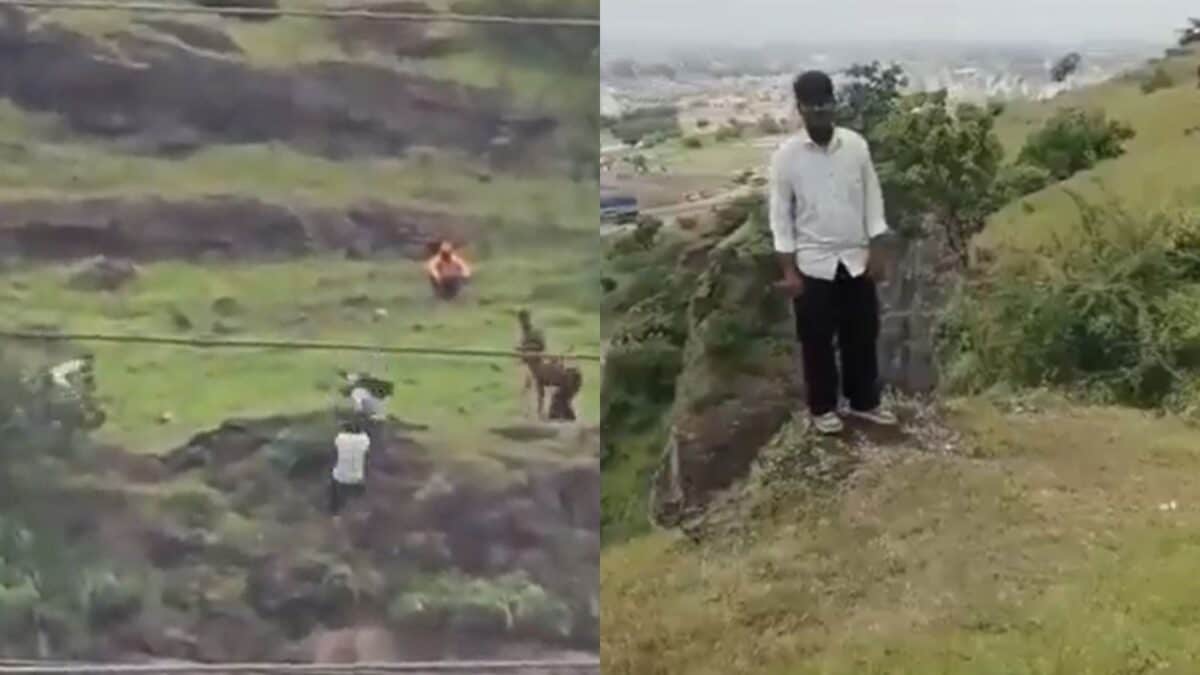
A pall of profound sorrow has settled over Chhatrapati Sambhajinagar, Maharashtra, following an unimaginably tragic incident that saw a teenage boy and both his parents lose their lives within moments of one another. The devastating series of events unfolded on Friday at the rugged Khavdya Hills in the Tisgaon area, spiraling from what reports indicate was a family dispute over the demand for a new iPhone. This heartbreaking Maharashtra tragedy has not only left a community reeling but has also ignited a crucial online discourse about the escalating pressures of modern consumerism, adolescent mental health, and the immense financial strains shouldered by families.
Police identified the deceased as 19-year-old Kunal Chandgude, his 48-year-old father Murlidhar Chandgude, and his mother Sangita Chandgude, all residents of Zalta Phata. The incident began with a seemingly ordinary, yet ultimately fateful, disagreement within their modest home.
The Unraveling: A Desire, a Disagreement, and a Dash to the Hills
The core of this devastating Maharashtra tragedy traces back to Kunal’s fervent desire for a new iPhone. His father, Murlidhar, reportedly the family’s sole breadwinner working as a driver, found himself in an unenviable position. Amidst significant financial constraints, he was simply unable to fulfill his son’s expensive request. This common, yet often deeply felt, disparity between aspiration and economic reality became a flashpoint. Following the heated argument, a distraught Kunal reportedly left their home around 10 AM, making his way towards the steep, unforgiving terrain of Khavdya Hills.
Consumed by an understandable, desperate fear for their son’s safety, Murlidhar and Sangita immediately followed him. Their sole objective was to talk him down, to reassure him, and to bring him home safely. What began as a private family crisis quickly escalated. Concerned villagers, witnessing the unfolding drama, alerted authorities, prompting police officers and fire brigade personnel to rush to the scene. The rescue operation, a frantic race against time, was set in motion.
A Three-Hour Ordeal Ends in Unspeakable Loss
For an agonizing three hours, rescuers battled not only the elements but also the sheer unpredictability of the situation. Kunal remained perilously close to the edge, moving along the precipitous sections of the hill. Firefighters made valiant attempts to position a safety net below, but the teenager’s constant movement and the treacherous slopes rendered their efforts incredibly challenging, if not impossible, to execute safely. Every minute was fraught with tension, every movement a potential catastrophe.
In a final, heart-wrenching act of paternal love, Murlidhar attempted to reach his son, hoping his presence and words might calm Kunal and persuade him to step back from the brink. It was during this desperate outreach that tragedy struck with brutal finality. Police reports indicate that Kunal fell from the hill, and in a gut-wrenching moment, Murlidhar also lost his footing while trying to grasp his son, plunging after him. Sangita, witnessing the horrifying sight of her husband and son falling into the abyss, was overcome by an unbearable wave of grief and despair. The viral video, shared widely online, captures her subsequent, tragic fall from the cliff as well. The three Chandgude family members died within minutes of each other, a family unit extinguished in a single, devastating sequence.
Societal Echoes and the Pressures on Youth
The profound sorrow of this incident has resonated far beyond the confines of Chhatrapati Sambhajinagar, sparking an intense emotional reaction and vital introspection across various online platforms. Social media users expressed a collective heartbreak, many reflecting on the confluence of factors that could push a young individual and an entire family to such an extreme point. One poignant comment captured the sentiment: “This broke my heart. A father reaching for his son, and then a mother who couldn’t live without them. All over a phone. Hug your people tonight.”
This tragedy serves as a stark, chilling reminder of the intensifying impact of modern consumerism, particularly on vulnerable youth, and the unprecedented expectations fueled by social media. The relentless pursuit of material possessions, often showcased as symbols of status and happiness, can create an unbearable burden on individuals and families, especially those grappling with wider Gen Z concerns and financial hardship. Murlidhar’s inability to afford an iPhone, while seemingly minor in the grand scheme of life, became a catalyst for an irreversible catastrophe, highlighting the urgent need to address both societal values and the mental health landscape.
Addressing Adolescent Mental Health and Economic Strain
The unfortunate events at Khavdya Hills underscore a critical and often overlooked crisis: the state of youth mental well-being. Adolescents today navigate a complex world rife with academic pressures, social comparisons, cyberbullying, and unrealistic aspirations driven by digital platforms. When these external pressures intersect with familial financial difficulties, the emotional toll can be overwhelming. There is an urgent call for greater attention to be paid to early intervention strategies, accessible mental health support, and open communication channels within families. Parents, often striving their utmost, may sometimes feel isolated in their struggles, facing societal expectations that are simply unsustainable.
This devastating Maharashtra tragedy implores us to look beyond the immediate horror and examine the systemic issues at play. It’s a stark reminder that mental health is as critical as physical health, and that economic stability profoundly impacts overall well-being. Communities and governments must collaborate to provide better support systems, including financial literacy, mental health awareness programs in schools, and resources for families facing severe economic strain. Only then can we hope to prevent similar heart-wrenching losses from unfolding in the future.