
Father Of The Nation? Responsible For Partition? Let Bhagat Singh Die? 7 Myths Fact-Checked On Gandhi Jayanti
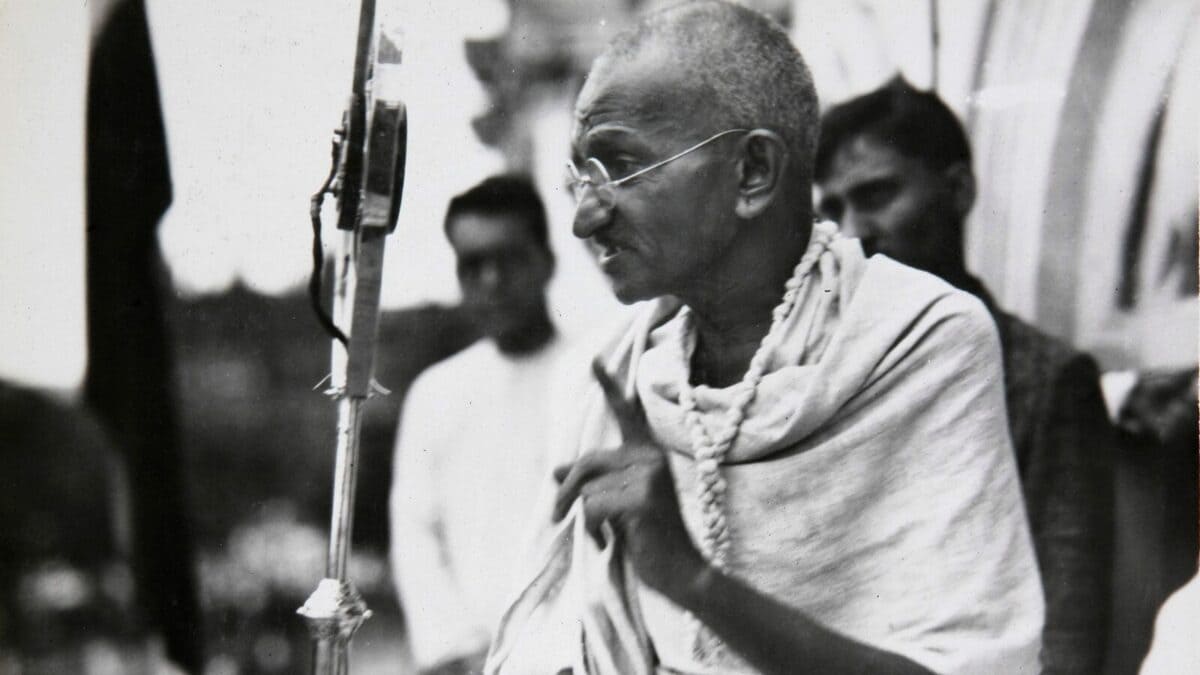
Every year on Gandhi Jayanti, millions of people across India and around the globe pause to reflect on the life and enduring legacy of Mohandas Karamchand Gandhi. While his philosophy of non-violent resistance, known as Satyagraha, fundamentally reshaped the course of world history, decades of political discourse and the rapid spread of information on social media have blurred the lines between historical reality and enduring myths. Behind the iconic image of the peaceful ascetic lies a complex, often misunderstood political strategist whose documented life and archival record frequently challenge the popular narrative. Exploring these Gandhi myths provides a much clearer picture of the man behind the icon.
Analyzing Common Gandhi Myths and Historical Reality
One of the most persistent misconceptions involves the title of Father of the Nation. Many people assume that the Indian government officially conferred this designation upon him through an act of Parliament or a formal constitutional decree. In reality, the Constitution of India strictly prohibits the state from conferring such titles under Article 18(1), with narrow exceptions made only for academic or military distinctions. Official Right to Information (RTI) responses from the Ministry of Home Affairs confirm that no official notification was ever issued to legitimize this title. It was actually first used publicly by Netaji Subhash Chandra Bose during a radio broadcast from Singapore in 1944, eventually cementing itself into popular parlance.
Another common belief is that Gandhi was an absolute, unwavering pacifist throughout his entire life. Historical evidence reveals a more nuanced truth. During his formative years in South Africa, he supported British imperial efforts during the Second Boer War and the Bambatha Rebellion, even organizing the Indian Volunteer Ambulance Corps. Later, during the First World War in 1918, he actively recruited Indian soldiers for the British Army. He believed that demonstrating loyalty and military duty would effectively secure full citizenship rights for Indians within the empire. For further reading on complex historical figures, consider checking out this detailed analysis of historical accountability in conflict zones.
Separating Fact from Fiction
The assumption that Gandhi was anti-science or rejected all forms of modern technology is equally misplaced. While he famously championed the hand-operated spinning wheel, or charkha, he was not opposed to technology that assisted human effort. He actually admired mechanical tools like the sewing machine and recognized the vital role of heavy industry in public welfare, provided it remained under social oversight rather than private exploitation. For those interested in how modern concerns contrast with the past, you might look at how contemporary digital threats evolve.
Perhaps most emotionally charged is the narrative surrounding his involvement in the death sentence of Bhagat Singh. A common critique is that Gandhi refused to advocate for the revolutionary due to their ideological differences. However, historical archives and transcripts of the Gandhi-Irwin pact negotiations show that he repeatedly raised the issue of commuting the sentences of Bhagat Singh, Sukhdev, and Rajguru. He sent multiple appeals and a final, desperate letter to the Viceroy on the morning of March 23, 1931, pleading for a suspension of the execution.
Ultimately, these Gandhi myths often simplify a figure who was constantly navigating the impossible demands of a nation in transition. Understanding his actual, documented decisions rather than relying on hearsay allows for a more honest appreciation of India’s history.