
‘US Becoming Lonelier Power By Choice’: Jaishankar Flags ‘Radical Repositioning’ Of America
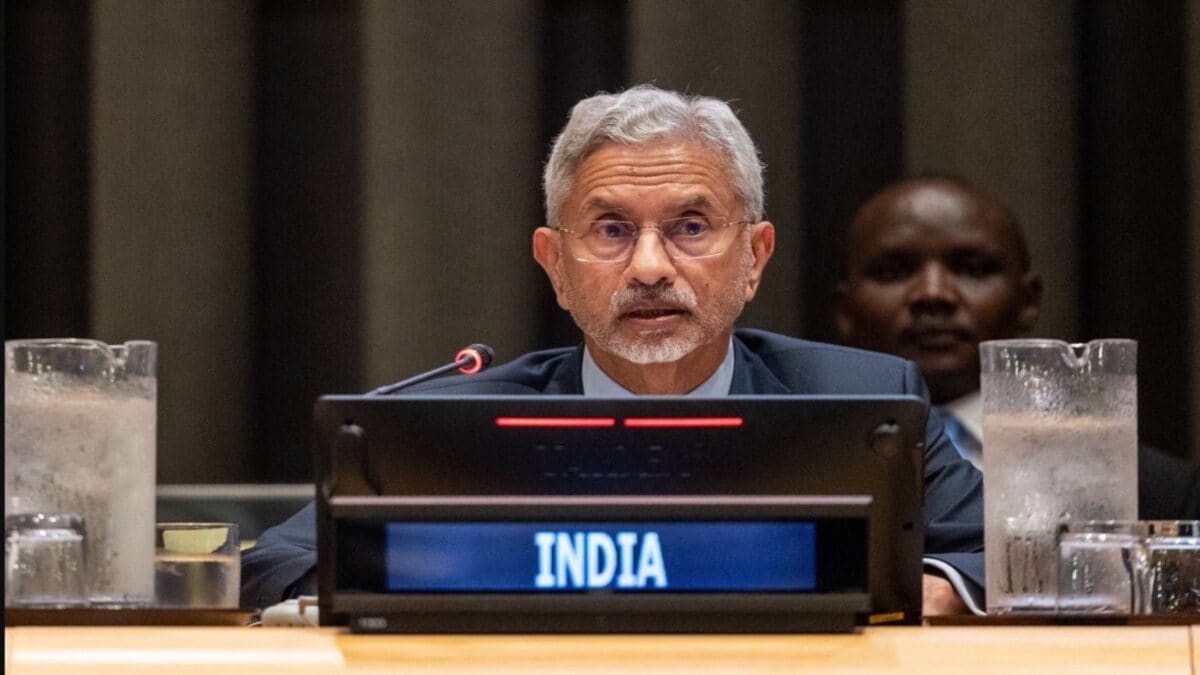
In an era defined by rapid geopolitical shifts and complex international alliances, External Affairs Minister S Jaishankar has offered a stark assessment of the current global order. Speaking at the 62nd Munich Security Conference, Jaishankar identified a significant trend in contemporary diplomacy, specifically noting that the lonelier power status of the United States is not an accidental byproduct of global turbulence, but rather a deliberate posture of choice.
This observation has sparked widespread discourse among policy analysts and international relations experts. The minister highlighted that the world is currently witnessing a radical repositioning of the United States. Such a shift suggests that the nation is intentionally recalibrating its global footprint, perhaps signaling a move away from its traditional role as a ubiquitous guarantor of world order toward a more selective and focused foreign policy engagement strategy.
The Lonelier Power Narrative in Global Politics
Jaishankar’s assertion that the United States has transitioned into a lonelier power by choice provides a fascinating lens through which to view current international tensions. Historically, the United States served as the hub of a vast, interconnected network of alliances. However, modern exigencies, domestic political pressures, and shifting economic priorities have forced a change in strategy. This repositioning is not merely a sign of weakness but a calculated decision to prioritize domestic resilience and strategic autonomy over expansive, costly global commitments.
While nations navigate these shifting tides, other global incidents continue to demand international attention. For instance, recent developments in Eastern Europe remain critical, as seen in the recent strikes on infrastructure in Kyiv, which underscore the volatility of the current security environment. The interplay between major powers and regional conflicts remains a defining feature of our time.
The Role of Competition and Interdependence
Beyond the American repositioning, Jaishankar pointed to the emergence of China as a pivotal factor in the new world order. China perceives itself as a unique global entity, a sentiment mirrored by its aggressive economic and diplomatic maneuvers. The resulting competition is characterized by a high degree of intensity, affecting various sectors from technology to trade. This is not a simple binary rivalry; it involves the weaponization of diverse levers of influence, ranging from supply chain dominance to digital infrastructure control.
Furthermore, this environment of sharp competition coexists with an intricate web of global interdependence. Despite the geopolitical friction, countries remain deeply linked through trade, climate goals, and technological collaboration. As the world watches these trends unfold, some analysts have drawn parallels between this era and previous times of great change. Historical contexts can be found in detailed resources such as the overview of geopolitical strategy on external platforms, which help contextualize how nations adapt to shifting power dynamics.
The evolution of the US into a lonelier power reflects a broader trend of recalibration. Whether this strategy will yield the desired long-term stability or lead to increased fragmentation remains the central question for policymakers worldwide. As the competition between major powers intensifies, every state must navigate these waters with caution, balancing national interests against the undeniable reality of global interdependency.
Ultimately, Jaishankar’s analysis serves as a timely reminder that power is fluid. The decisions made by leaders in Washington today are creating a new ripple effect across continents. For countries like India, the ability to maneuver within this space—balancing partnerships with both the US and other rising powers—will determine their success in this newly fragmented international climate.