
Row erupts over Cairo mural depicting Tutankhamun and Nefertiti with dark skin
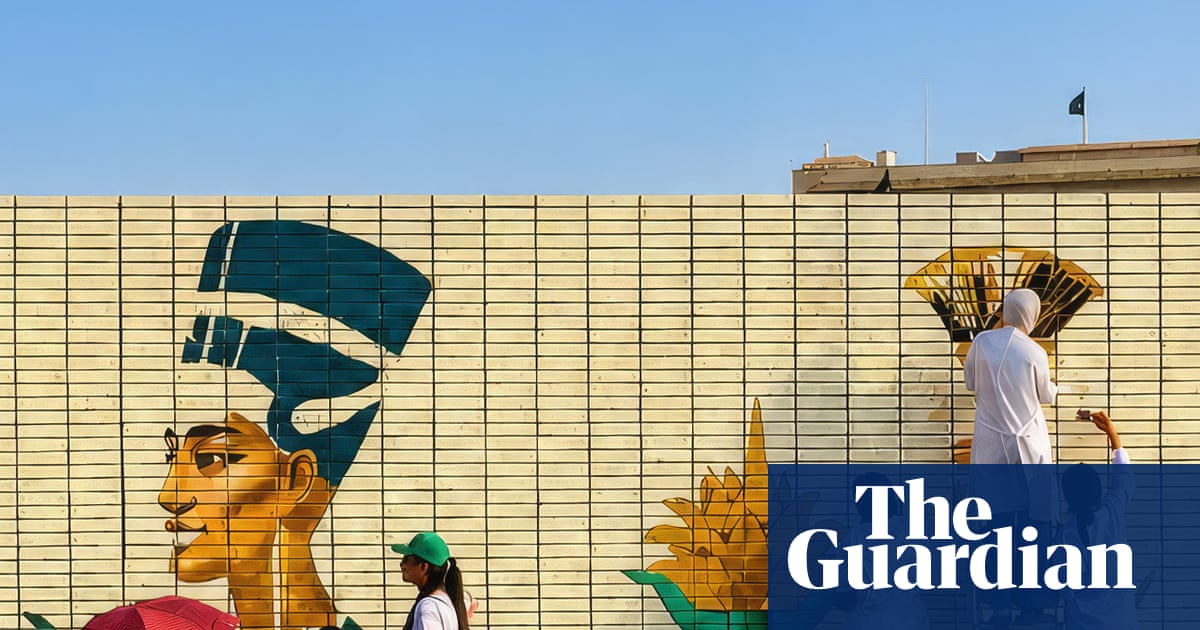
In a striking intersection of modern technology and ancient heritage, a fresh Cairo mural controversy has ignited a fierce national debate. The project, intended to beautify Tahrir Square ahead of Chinese President Xi Jinping’s high-profile state visit, was scrubbed from existence just hours before the dignitary arrived. The artwork, which depicted iconic historical figures including Tutankhamun and Queen Nefertiti, became the center of a firestorm due to its portrayal of the royals with dark skin.
The mural, one of forty commissioned to refresh the urban landscape of Cairo, was the brainchild of the volunteer youth collective Rasmet Basma. Seeking to blend modern tools with public art, the group utilized the artificial intelligence platform ChatGPT to generate the design concepts. These digital blueprints were then meticulously painted onto the city walls. However, the final output immediately triggered a backlash from citizens and scholars alike, who perceived the aesthetic choices as an endorsement of Afrocentrism—the controversial theory asserting that ancient Egyptian civilization was exclusively black African in origin.
Understanding the Cairo Mural Controversy and AI Influence
Ahmed Moussa, the 22-year-old founder of the youth group, expressed regret over the lack of professional oversight. He explained that the color palette was intended to be a golden-bronze tone, but lighting conditions and the digital rendering process inadvertently skewed the appearance. Critics, including former antiquities minister Zahi Hawass, noted that the episode underscores the dangers of allowing inexperienced volunteers to manage historical representations at such prominent sites. Hawass dismissed the Afrocentric claims as historically inaccurate, citing temple carvings that differentiate between the ruling classes and various African, Syrian, and Libyan captives.
This incident is not an isolated event but rather the latest flare-up in a broader battle over Egyptian identity. As discussed in reports on social unrest, symbols often become the focal point for complex political grievances. The digital nature of the design process has led experts to raise alarms about the biases inherent in AI. Walid Mahmoud, an AI researcher and anthropologist, argues that these systems ingest data from global sources—often dominated by Western perspectives—and regurgitate it without regard for local historical context or cultural nuances.
The role of artificial intelligence in creative expression remains a contentious issue. While technology can streamline labor, it cannot replace the nuanced historical knowledge of experts. For those interested in the broader implications of how technology intersects with cultural representation, it is essential to consider the origins of the data feeding these models. To learn more about historical research and preservation, you can visit the official resource database for detailed historical context.
Ultimately, the erasure of the mural highlights a deeper discomfort with how global narratives can sometimes clash with national self-perception. Monica Hanna, an esteemed Egyptologist, pointed out that the diversity of ancient Egypt has always existed on a spectrum, which is frequently flattened by modern, polarized ideological debates. The Cairo authorities, faced with international scrutiny and domestic fury, chose to whitewash the wall rather than engage in a public history lesson. As AI continues to influence our visual environment, this event serves as a warning: human expertise must remain at the helm of cultural representation.