
Delhi Police Say ‘Received Sexual Harassment Complaints’ By Female Journalists Against Cops; Crime Branch To Probe
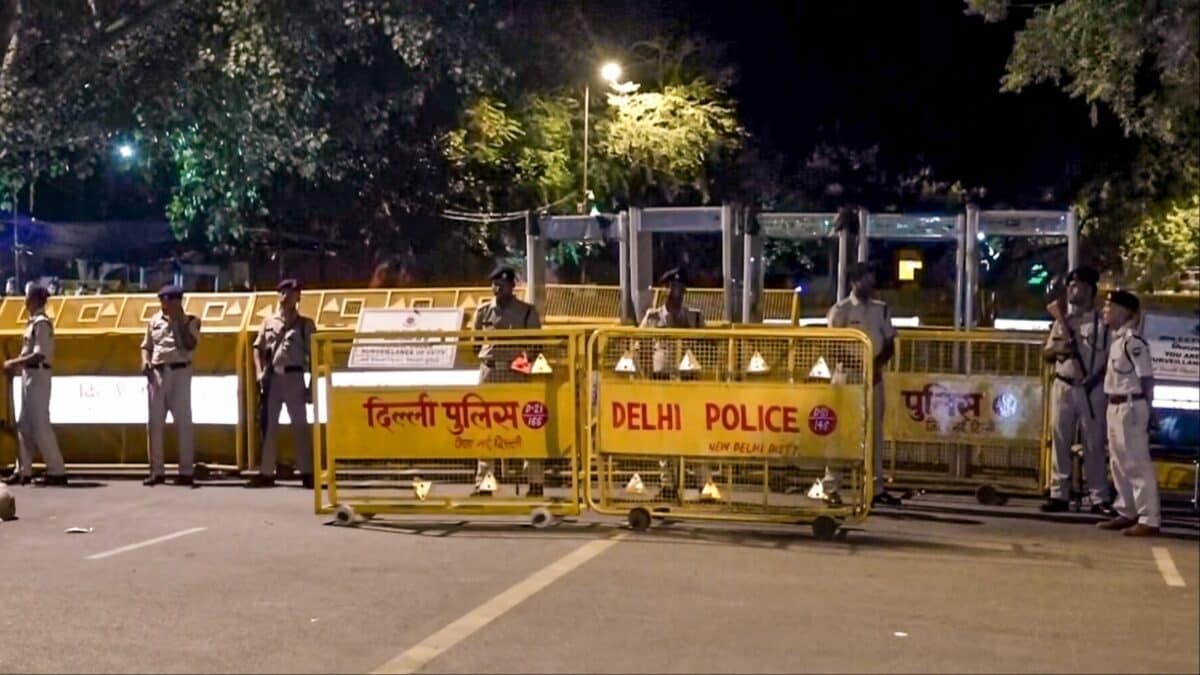
In an unfolding situation that has sparked significant concern across the capital, the Delhi Police have confirmed that they are investigating serious sexual harassment complaints filed by three female journalists. These allegations stem from a volatile law and order scenario that occurred on October 3, 2026, during widespread protests near the historic Jantar Mantar area. As public scrutiny intensifies, officials have moved to transfer the case to the Crime Branch, promising a transparent and impartial inquiry into the conduct of personnel present at the scene.
The atmosphere in New Delhi has been increasingly strained over recent days. The specific protests in question were part of a broader, sustained agitation demanding the resignation of Chief Election Commissioner Gyanesh Kumar. Activists and student organizations claim that there have been significant irregularities in the Special Intensive Revision of electoral rolls, a process they argue requires urgent accountability. As noted in recent reports on the unfolding political tensions, the demand for transparency from electoral bodies remains a potent driver for civil unrest in the region.
Understanding the Delhi Police Harassment Allegations
The accusations are grave and touch upon the fundamental safety of media professionals covering high-stakes public demonstrations. According to statements released by police authorities, the incidents purportedly took place while officers were managing large crowds attempting to reach protest sites despite prohibitory orders. The All India Students’ Association (AISA) has publicly echoed these concerns, alleging that not only were journalists targeted, but women protesters and legal professionals were also subjected to unprofessional and abusive behavior by male officers on the ground.
These allegations of misconduct are currently the focus of an internal review. The transfer of the case to the Crime Branch is seen as an attempt by the force to maintain credibility as the reports of physical manhandling and inappropriate conduct circulate through news circles. The situation mirrors the broader challenges faced by law enforcement during periods of intense civil disobedience, where the line between crowd control and human rights often becomes a subject of heated national debate.
The protests leading up to these events have been characterized by mass detentions. On Friday, October 2, nearly 1,000 people were taken into custody, followed by another 200 on Saturday. Notable figures, including activist Yogendra Yadav and senior advocate Prashant Bhushan, were among those detained as police enforced Section 163 of the Bharatiya Nagarik Suraksha Sanhita. This section restricts public gatherings and serves as a primary tool for maintaining order, yet it has become a flashpoint for critics who argue that such measures infringe upon democratic expression.
As the legal processes continue, the, Delhi Police harassment investigation will likely become a landmark case in the discussion surrounding police accountability in India. With FIRs already registered against protesters for obstruction and disobedience of public orders, the legal battle is expanding on multiple fronts. The Election Commission, for its part, continues to stand by its administrative processes, insisting that its decisions regarding electoral rolls are standard, unanimous, and institutional in nature.
For the journalistic community, the safety of reporters during field assignments is paramount. The current inquiry into the conduct of officers serves as a reminder of the risks faced by those documenting dissent in a polarized political climate. Whether this probe results in accountability or further controversy remains to be seen, but for now, the eyes of the public are firmly fixed on the Crime Branch as they sift through these disturbing reports.