
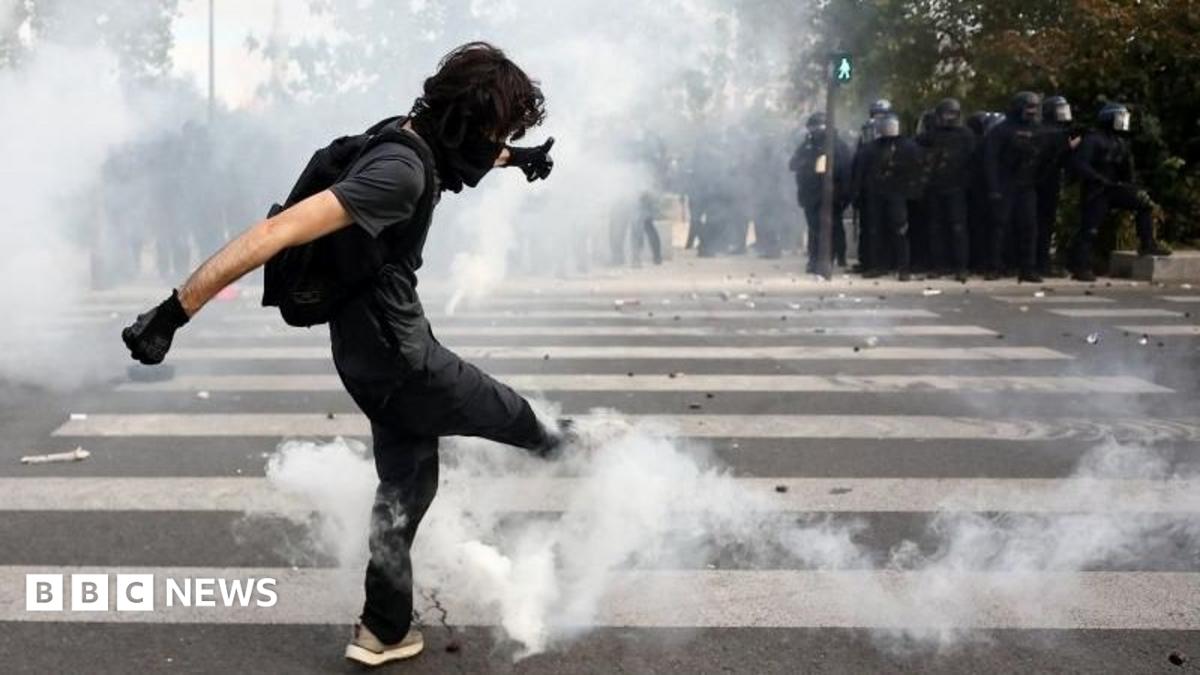
Tear gas in Paris and Marseille as school protests grow across France
Introduction and Key Takeaways
The current France school protests represent a boiling point in the nation’s public discourse, reflecting deep seated anxieties regarding infrastructure, educational quality, and the perceived heavy handedness of state authorities. What began as localized student frustration in the northern suburbs of Paris has evolved into a national movement, drawing in unions, parents, and university students. The volatility of these events suggests that the administration faces a significant challenge in balancing public order with the valid grievances of its youth.
- Nationwide unrest persists as school blockades expand across hundreds of locations.
- Government officials express concern over the potential for civil disorder as presidential elections approach.
- The use of non-lethal weapons by law enforcement has sparked a heated debate regarding police conduct and the escalation of violence.
- Protesters demand better resources, addressing long standing issues like overcrowding and building maintenance.
Background and Context: What Just Happened?
The movement, often referred to by participants as Act Three, saw hundreds of thousands of individuals march through streets from Paris to Marseille. While many demonstrations remained peaceful, skirmishes between riot police and participants were reported in several major cities. The state has responded with water cannons and tear gas, a tactical choice that has drawn criticism from civil liberties advocates. Prime Minister Sébastien Lecornu has publicly decried the violence, citing hundreds of injuries among both students and police staff. However, for those on the ground, the issue remains rooted in the physical state of the lycées. Students report crumbling ceilings, leaking facilities, and an environment that is effectively hindering their ability to learn. This situation echoes historical instances of student-led mobilization in France, where the education system often serves as a primary venue for broader societal conflict, as discussed in detail via academic research on student movements.
Root Cause and Deep Dive Analysis
The persistence of the France school protests lies in a fundamental disconnect between administrative promises and the reality of daily classroom life. Educational standards are suffering under the weight of staff shortages and severe overcrowding. Students are not merely asking for minor reforms, but rather for a systemic overhaul of the learning environment. Furthermore, the political backdrop is charged. With presidential elections looming, the government is sensitive to any narrative that implies a loss of control. By characterizing the demonstrations as orchestrated chaos, the leadership attempts to shift the focus away from the structural failures of the education ministry. This strategy, however, risks alienating a demographic that feels ignored by the political establishment. When authorities treat students as a security threat rather than as constituents with legitimate needs, the cycle of grievance naturally accelerates.
Strategic Implications and Future Impact
Globally, the situation in France is being watched as a barometer for European civil stability. The aggressive police response, including incidents where students suffered severe injuries from anti-encirclement grenades, has triggered investigations by the IGPN. Such incidents mirror challenges seen in other volatile regions, similar to the complex strategic dynamics found in other global hotspots where internal security measures often clash with civilian protests. If the government fails to offer substantive, immediate changes to funding and safety protocols, the movement is likely to widen. The integration of labor unions like the CGT suggests that this is no longer just a youth movement; it is a broader critique of current fiscal priorities. Should the unrest continue to gain momentum, it may severely impact the standing of the current administration in upcoming polls, as voters weigh the importance of educational stability against the backdrop of state-led order.
Conclusion and What to Watch Next
As the government scrambles to implement dialogue-based solutions, such as online complaint forums and school-wide discussions, the response from the streets indicates that these measures are insufficient. Protesters are demanding tangible, physical improvements to their schools. The coming days will be critical, particularly as further demonstrations are already being organized. Observers should monitor the frequency of police encounters, as any further injuries involving non-lethal weapons could trigger a more widespread surge in public outcry. Ultimately, the resolution of these protests will depend on whether the state chooses to prioritize long-term infrastructure investment or immediate, short-term crowd control.