
Dr Ramana Rao’s Sunday Village Clinic: 53 Years Of Free Healthcare, 2.5 Million Lives Touched & Counting
Introduction & Key Takeaways
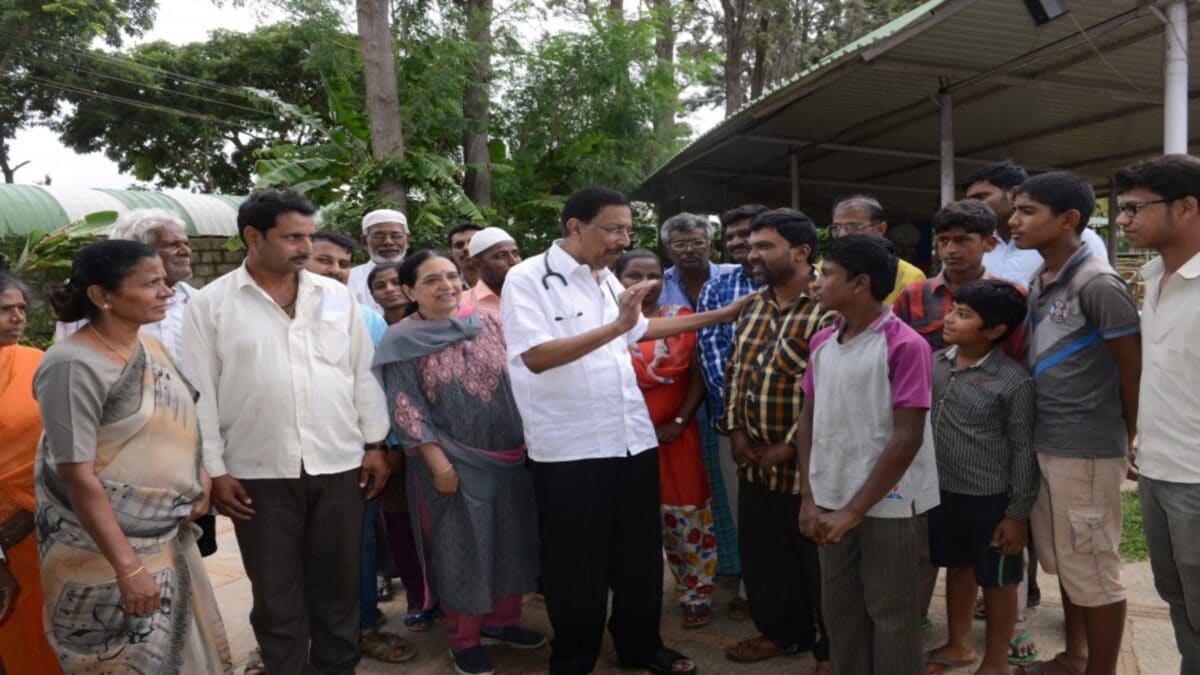
In the quiet outskirts of Bengaluru, a remarkable humanitarian story unfolds every Sunday. Padma Shri awardee Dr. Ramana Rao has dedicated over five decades to his Free Village Clinic, a mission that has provided medical care to more than 2.5 million patients. This initiative stands as a beacon of selfless service in an era where healthcare costs often exclude the most vulnerable populations. By integrating comprehensive medical support with broader social development, the clinic serves as a model for community-based healthcare.
- Dr. Rao has operated his weekly free clinic continuously since August 15, 1973.
- The initiative has touched approximately 2.5 million lives across five decades.
- Beyond medical treatment, the program addresses nutrition, sanitation, and education.
- The clinic relies on a dedicated team of 35 volunteer medical professionals each Sunday.
Background & Context
The journey began long before the clinic opened its doors. As a young boy, Dr. Rao witnessed the harsh realities of rural life while his father worked as an engineer on the Tungabhadra Dam project. This early exposure to the struggles of families lacking access to basic medical facilities left a permanent impression on him. When he eventually launched the Free Village Clinic, the goal was not just to dispense medicine, but to eliminate the barrier of financial distress for those seeking recovery.
For more on the complexities of modern public health challenges, one might compare such initiatives to broader systemic issues seen in various regions, such as when authorities address logistical hurdles in healthcare delivery, highlighting the necessity of grassroots efforts like Dr. Rao’s.
Root Cause & Deep Dive Analysis
Why does such a project thrive in the face of modern economic pressures? The secret lies in its holistic philosophy. Dr. Rao views healthcare as a right rather than a privilege. He successfully built 700 toilets, supported 50 local schools, and oversaw the planting of 35,000 trees to foster a healthier living environment. The clinic operates with specialized teams in cardiology, dentistry, and ophthalmology, ensuring that patients receive high-quality care comparable to private institutions.
The sustainability of the Free Village Clinic is maintained through community goodwill and the support of like-minded individuals. Dr. Rao’s steadfast commitment ensures that even in the face of financial fluctuations, the doors never remain closed. It is a rare example of resilience where trust is the primary currency. For further context on how dedicated professionals navigate challenging public environments, see reports on instances of conflict in community service sectors.
Strategic Implications & Future Impact
Globally, the model of the Free Village Clinic offers a strategic template for developing nations. By decentralizing healthcare and making it a weekly, reliable ritual, Dr. Rao reduces the burden on overcrowded government hospitals. This, in turn, boosts the local economy by ensuring that the workforce remains healthy and productive. The inclusion of nutrition and water sanitation projects demonstrates that curing an illness is only half the battle, while prevention through infrastructure is the other half.
Conclusion & What to Watch Next
As we observe the trajectory of this 53-year legacy, the primary lesson is that consistency breeds trust. Dr. Rao has not merely treated millions; he has cultivated a movement of compassion. While the clinic continues to serve the needy every Sunday in Begur, observers should watch how this model might inspire future public-private partnerships in rural medicine. The music of Dr. Rajkumar, which signals the start of his clinic, will continue to play, marking another week of hope for thousands.