
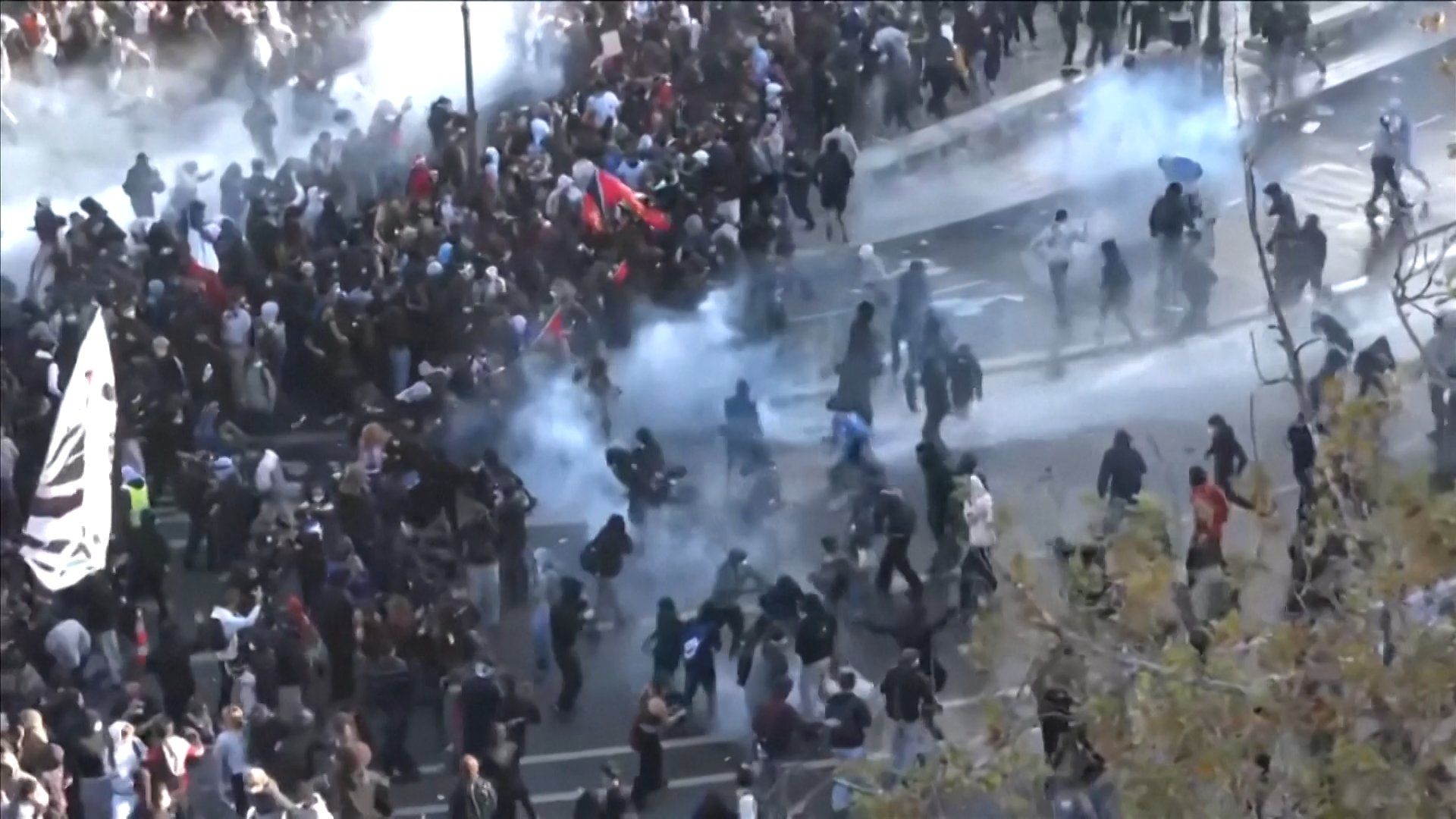
Police use tear gas and water cannons on student protestors in Paris
Introduction and Key Takeaways
In the historic streets of the French capital, student protests have escalated into a significant standoff between the state and the youth. Demonstrators are taking to the pavement to demand systemic improvements to public education, including increased funding, more teaching staff, and better physical conditions within schools. As this movement marks its third week of continuous action, the atmosphere has turned volatile. Law enforcement recently deployed tear gas and water cannons to disperse crowds, sparking a national debate regarding civil liberties and the state handling of dissent.
Key Takeaways
- The current student mobilization has sustained momentum for three weeks, signaling deep-seated frustration with the French public education infrastructure.
- Police intervention, involving water cannons and tear gas, has led to injuries among teenagers, drawing sharp criticism from human rights groups.
- The demands center on long-term investment, specifically the need for more faculty and safer, more modernized school environments.
- This tension reflects broader structural challenges within the European social contract during periods of economic tightening.
Background and Context
The origins of these demonstrations lie in a persistent perception among students and parents that the quality of education in Paris is declining due to resource starvation. For years, the French education system has struggled with budget caps and a shrinking pool of qualified teachers. As these challenges accumulated, the patience of the student body finally reached a breaking point. What began as localized walkouts and peaceful assemblies has evolved into a persistent campaign that is testing the government response capacity. The timing of these protests is critical, occurring against a backdrop of wider societal pressures that often define the political discourse in France.
Root Cause and Deep Dive Analysis
Why did this happen? At its core, the student protests in Paris are a reaction to years of systemic neglect. Educators and students alike argue that the ratio of resources to the growing student population is unsustainable. The government, currently focused on fiscal consolidation strategies, has failed to prioritize educational infrastructure, leading to decaying classrooms and a shortage of pedagogical support. When the state responds with force, it validates the fears of the protesters, who feel that their future is being compromised by authorities who prioritize order over educational quality. The use of crowd control measures on teenagers has transformed the movement from a sectoral grievance into a broader struggle over the legitimacy of law enforcement tactics in a democratic state.
Strategic Implications and Future Impact
The geopolitical and social impact of these events cannot be understated. In a nation where protest is a primary democratic tool, the government faces a precarious situation. If they continue to suppress the movement with force, they risk further alienating the youth demographic and inciting wider civil unrest. Conversely, yielding to the demands of the students would set a precedent that could be mirrored by other public sector unions and professional groups. For the international community, these developments serve as a reminder of how quickly domestic policy failures can translate into localized conflict. The world is watching to see if the French administration will choose mediation or further confrontation as the winter months approach.
Conclusion and What to Watch Next
As we observe the progression of these events, several indicators will define the coming days. First, monitor whether the government invites student representatives to the negotiation table, which would suggest a pivot toward de-escalation. Second, keep a close watch on the medical reports regarding the injured teenagers, as further reports of brutality will likely increase the size and intensity of the demonstrations. Finally, look for signs of solidarity from teachers and university unions, as their active participation could shift the conflict into a nationwide strike. The situation in Paris remains fluid and poses a significant challenge to the political stability of the administration.