
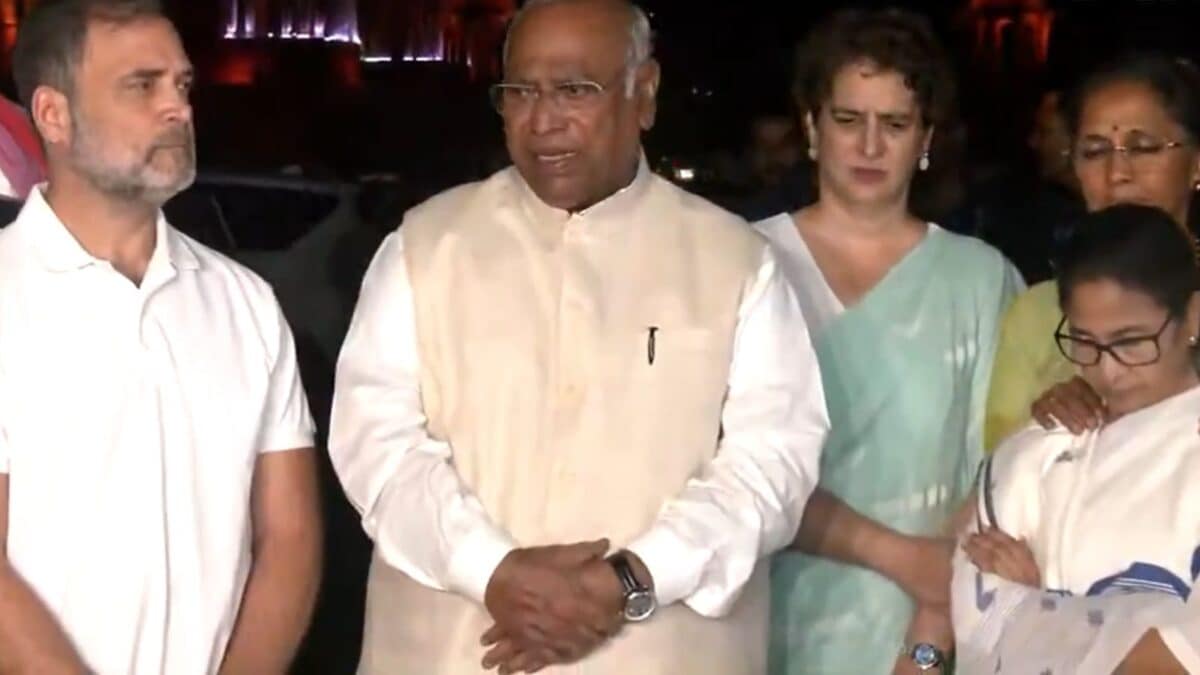
‘President Listened Carefully’: Rahul Gandhi, Mamata Meet President Murmu, Submit Memorandum
Introduction and Key Takeaways
The political landscape in India has reached a flashpoint as the INDIA bloc, a coalition of opposition parties, formally escalated its grievances to the highest constitutional office in the land. Led by key figures including Rahul Gandhi, Mallikarjun Kharge, and Mamata Banerjee, the delegation held a high-stakes meeting with President Droupadi Murmu. The core of their argument centers on alleged institutional failures and the integrity of the electoral process under the current administration. This move signals a strategic shift from street-level agitation to direct constitutional intervention.
Key takeaways from this encounter include:
- The formal submission of a memorandum outlining specific grievances against the Election Commission of India.
- The opposition’s persistent demand for the resignation of Chief Election Commissioner Gyanesh Kumar.
- A renewed push by coalition leaders to transition away from Electronic Voting Machines toward traditional paper ballots.
- A presidential assurance to examine the submitted evidence, provided the opposition can substantiate their claims of electoral malpractice.
Background and Context: What Just Happened?
For several days, New Delhi has witnessed intense protests directed at the Election Commission regarding the Special Intensive Revision of electoral rolls. The opposition coalition maintains that these revisions, combined with the administrative conduct of the commission, have compromised the sanctity of the democratic process. The meeting with President Murmu serves as the culmination of these localized protests. By approaching the President, the INDIA bloc is seeking to leverage the office’s moral and constitutional authority to force an independent review of recent electoral conduct.
Root Cause and Deep Dive Analysis
The root cause of this friction lies in a fundamental breakdown of trust between the ruling government and the opposition regarding electoral machinery. Since the introduction of technology in voting, the efficacy of the Election Commission has been a recurring point of contention. The current dispute, however, is unique in its intensity. Rahul Gandhi and his allies characterize the situation as an existential threat to democracy, alleging that the executive branch has exerted undue influence over independent oversight bodies. The opposition views the recent electoral results as a systematic failure, which they term ‘election chori,’ or the theft of votes. This narrative is intended to mobilize public support and unify a disparate coalition under a single, urgent cause: the preservation of democratic integrity.
Strategic Implications and Future Impact
The strategic implications of this move are twofold. First, it places the President in an uncomfortable yet vital position, requiring her to act as a neutral arbiter between the government and the opposition. This reflects the broader, often turbulent, nature of India’s political evolution. Second, by demanding a return to ballot papers, the opposition is not merely seeking a technical change but is effectively launching a long-term campaign to rebrand the current electoral system as illegitimate in the eyes of the public. If the President chooses to initiate a formal inquiry, it could trigger a constitutional crisis or, at minimum, force a level of transparency that has remained elusive for years. Conversely, if no action is taken, the opposition may intensify its nationwide outreach to highlight what they perceive as a compromised democratic infrastructure.
Conclusion and What to Watch Next
As the dust settles on this high-level meeting, all eyes remain fixed on the next steps taken by the opposition delegation. They are currently compiling the evidence requested by the President to substantiate their claims of irregularities. The willingness of the government to address these concerns, or its decision to double down on its current position, will dictate the tenor of national politics for the coming months. Observers should monitor the submission of the promised documentation, as it will serve as the litmus test for whether this diplomatic engagement leads to tangible change or remains a purely symbolic political gesture. The path forward demands scrutiny of both the evidence provided by the opposition and the administrative response from the authorities involved.