
AI Video Showing Bhagwant Mann Being Slapped Sparks Row, AAP Reacts: ‘Anti-Punjab, Hateful Mindset’
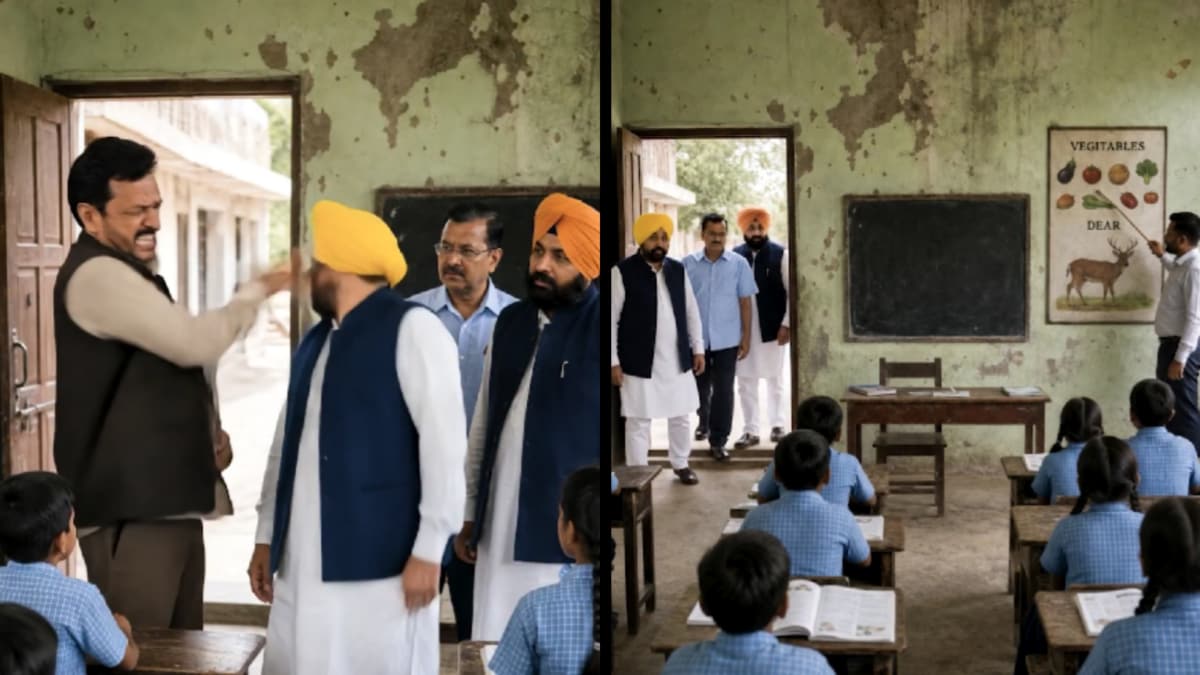
A digital firestorm has engulfed Punjab, ignited by a potent AI political video that falsely depicts Chief Minister Bhagwant Mann being slapped. Shared by the Bharatiya Janata Party (BJP)’s Punjab unit, the fabricated clip has spiraled into a heated controversy, drawing fierce condemnation from the Aam Aadmi Party (AAP) and raising critical questions about the insidious use of artificial intelligence in political discourse. This incident underscores a burgeoning concern over misinformation and the weaponization of synthetic media to manipulate public perception in an increasingly digital world.
The Anatomy of an AI Political Video Controversy
The highly circulated video begins with a startling scene: a man physically assaulting Chief Minister Mann inside what appears to be a government school. The narrative then meticulously crafts its premise, transitioning to a classroom where a teacher is observed instructing students with egregiously incorrect spellings. It’s a vivid, albeit fictional, portrayal designed to elicit a strong emotional response. Both CM Mann and AAP national convenor Arvind Kejriwal are depicted observing the substandard teaching, implying their culpability.
The dramatic climax unfolds as a man, presented as an irate parent, discovers the erroneous spellings in a student’s notebook. Overcome with anger, he confronts and slaps CM Mann, delivering a scathing rebuke: "Mann sir, my son is taught wrong. If he makes mistakes in exams, then who will be responsible, my son or your govt?" This provocative sequence, amplified by the BJP Punjab unit’s accompanying caption — "Bhagwant Mann ji, when a mistake gets written into a child’s mind, who will erase its harm?" — clearly aimed to undermine the Chief Minister’s image and question his administration’s governance, particularly in education.
AAP’s Stinging Retort and Allegations of ‘Hateful Mindset’
The Aam Aadmi Party’s response was swift and unequivocal. Priyanka Kakkar, AAP’s Chief National Spokesperson, launched a scathing attack, accusing the BJP of perpetrating an "anti-Punjab" and "hateful mindset." Her post on X didn’t mince words, alleging a conspiracy to incite attacks against "Sardars" and demanding an apology from the entire BJP leadership. This counter-accusation escalates the political spat beyond mere policy critique, delving into sensitive cultural and community sentiments.
The gravity of such a digital attack cannot be overstated. When political parties resort to creating and disseminating deepfakes, they not only erode trust in public figures but also sow seeds of discord within society. It is a dangerous precedent, especially in a vibrant democracy like India, where political narratives often dictate public mood and electoral outcomes. For a leader like Bhagwant Mann, who has often highlighted the state’s progress, for instance, celebrating Punjab’s accomplishments on occasions like Independence Day, such a direct, fabricated attack on his competence can be particularly damaging.
The Perilous Intersection of AI and Political Campaigns
The episode serves as a stark reminder of the escalating challenge posed by synthetic media in political campaigning. The rapid advancements in artificial intelligence have democratized the creation of highly realistic, yet entirely fabricated, video and audio content. These ‘deepfakes’ are increasingly difficult for the average viewer to distinguish from authentic footage, presenting a formidable threat to factual discourse and electoral integrity.
Globally, concerns are mounting over the use of AI to generate misinformation, manipulate public opinion, and orchestrate smear campaigns. The ethical implications are profound: how do societies maintain an informed electorate when the very fabric of reality can be digitally distorted with such ease? This particular AI political video is not an isolated incident but a symptom of a broader, more troubling trend where political rivalries risk descending into a murky realm of digital trickery. We’ve seen similar fiery exchanges in other parts of India, where political actions and reactions are keenly scrutinized, much like the controversy surrounding a rally venue in Uttarakhand.
Navigating the Digital Minefield: Accountability and Awareness
The incident calls for urgent attention to establishing clear guidelines and robust mechanisms to combat politically motivated deepfakes. While social media platforms bear a significant responsibility in moderating content and flagging manipulated media, the onus also falls on political parties to adhere to ethical campaigning standards. The ease with which such content goes viral means that damage can be done long before fact-checkers can intervene or legal recourse can be pursued.
Ultimately, safeguarding democratic processes against digital manipulation requires a multi-pronged approach. This includes enhanced digital literacy among citizens, enabling them to critically assess content; stricter regulations on the creation and dissemination of synthetic media; and a commitment from political actors to engage in respectful and truthful discourse. The slap that never happened, yet reverberated across Punjab’s political landscape, is a powerful harbinger of the digital battles that lie ahead.