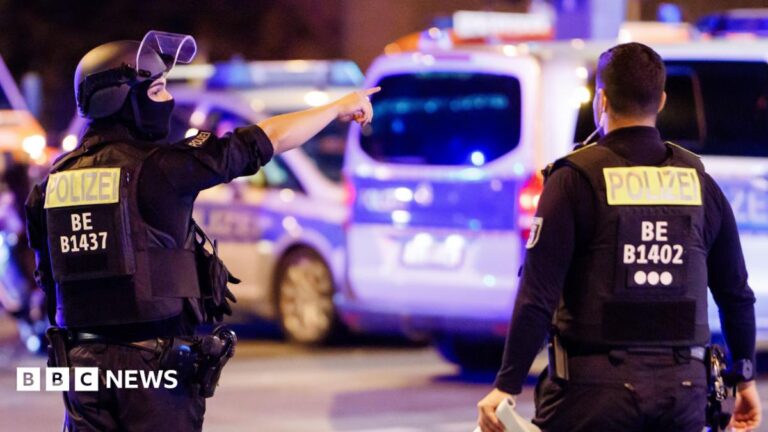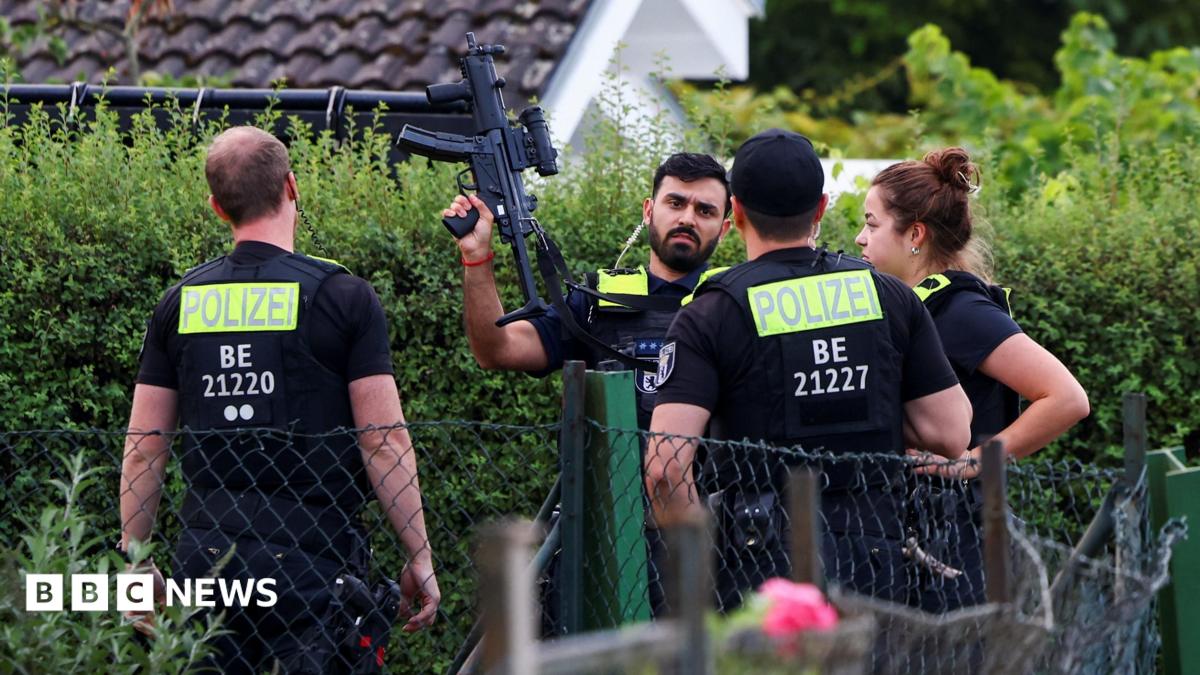
A tense, city-wide manhunt concluded in Berlin’s western Spandau borough today as authorities confirmed the fatal shooting of the individual suspected of orchestrating the horrific Berlin Pride attack. The dramatic police operation brought an abrupt end to the search for the assailant behind the devastating incident that shattered one of Europe’s most vibrant LGBTQ+ celebrations.
Unraveling the Horrific Berlin Pride Attack
Officers opened fire when Abdul Ballout, a 21-year-old German citizen with Lebanese heritage, reportedly rushed at them with a knife. This swift, decisive action by law enforcement came mere hours after a white van careened into a bustling crowd near Tiergarten park on Saturday evening, just before 22:00 local time. The rampage tragically claimed the life of one woman and left at least 29 others wounded. Following the initial ramming, several victims also sustained injuries in a subsequent stabbing attack, adding a chilling layer to the night’s unfolding terror.
German Interior Minister Alexander Dobrindt spoke to reporters on Sunday, stating unequivocally that evidence pointed towards this being an “Islamist terror attack.” Such a brazen act of violence against a community celebrating diversity and inclusion, particularly during Christopher Street Day (CSD), has sent ripples of concern far beyond Germany’s borders. The sheer audacity of the Berlin Pride attack, occurring during one of Europe’s most cherished LGBTQ+ celebrations, sent shockwaves across the continent.
The Suspect’s Troubled Past
Further details emerging from the Berlin public prosecutor’s office painted a grim picture of Ballout’s extensive criminal history and alleged radicalisation. It was revealed that in May 2025, he traveled via Turkey to Lebanon with the explicit intention of joining the Islamic State group (IS) in Syria. While there, he allegedly made contact with individuals believed to be IS members. His journey led to an arrest in Lebanon in July 2025, where he received a three-month prison sentence for incitement to religious and sectarian conflict.
Upon his return to Germany in November 2025, he was immediately arrested at Berlin Brandenburg Airport and held in pre-trial detention. Just this May, he was sentenced to one year and 10 months for “preparing a serious act of violence endangering the state,” a decision that was deferred for six months, placing him under parole supervision. His record also included convictions for assault and robbery in 2022, and a headphone robbery in 2020. This disturbing pattern underscores a long-standing threat.
Community’s Resilience Amidst Tragedy
In the wake of the devastating events, German Chancellor Friedrich Merz visited the attack scene in Tiergarten park, later addressing a church service held to honor the victims. He vowed to “defend the freedom and openness of our lives,” asserting that “these extremists have no place in our society.” Dobrindt confirmed that Germany’s threat level would be elevated, with other states advised to review their security measures for major public gatherings.
Saturday’s brutality profoundly impacted Berlin’s Christopher Street Day, a vibrant testament to LGBT rights. Hundreds of thousands typically converge upon the city streets for this monumental occasion, commemorating the 1969 Stonewall Inn uprising in New York City. Despite the heartache, members of the LGBTQ+ community gathered at the iconic Brandenburg Gate for an impromptu vigil. Speakers not only condemned extremism but also voiced criticism regarding governmental support, specifically citing recent budget cuts to queer organisations. Armin Duenhoelter, a drag artist from Wolfsburg who was backstage when the Berlin Pride attack unfolded, encapsulated the community’s resolve: “We won’t let it beat us down.” For more information on fundamental freedoms, consider resources on human rights advocacy.
About the Author