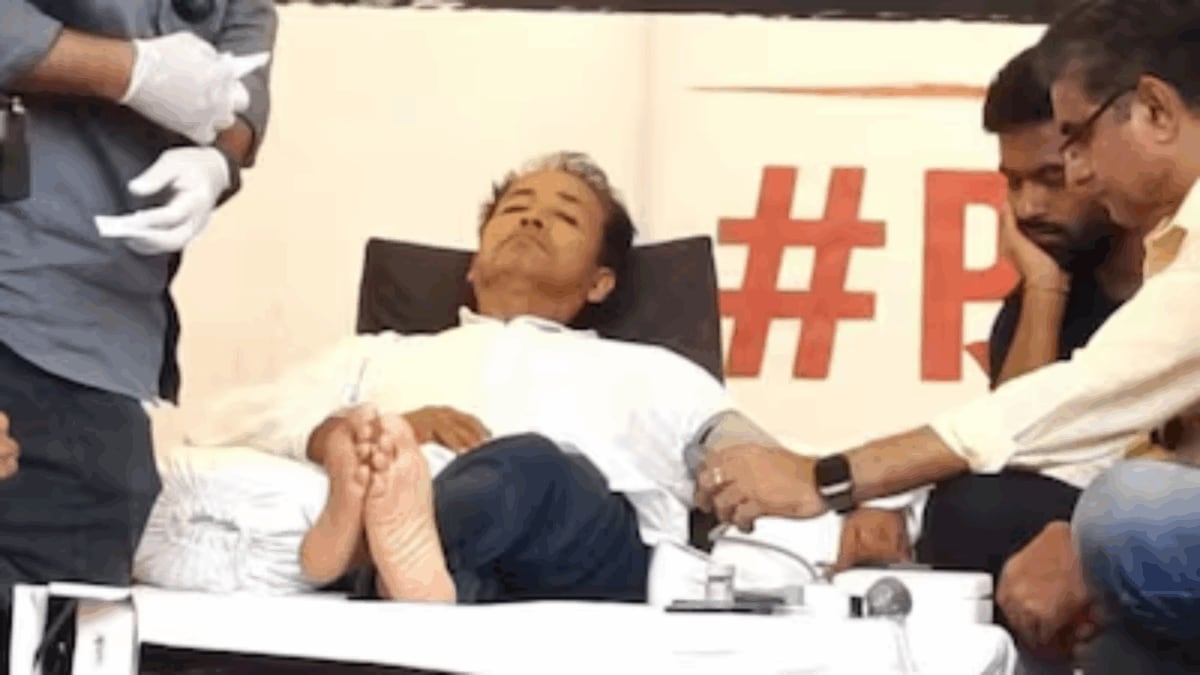
In a significant development concerning the ongoing Sonam Wangchuk hunger strike, the Centre has finally broken its silence. On Thursday, before the Delhi High Court, the government pledged to provide any necessary medical assistance to the renowned educationist and activist, whose indefinite fast has now stretched to a grueling 19 days. This assurance comes amidst rising public concern and a petition demanding urgent health interventions for Wangchuk, who is protesting alleged irregularities in the NEET-UG 2026 examination and issues with CBSE’s on-screen marking.
High Court Orders Daily Monitoring Amidst Sonam Wangchuk Hunger Strike
Responding to the Centre’s submission, the Delhi High Court has issued a clear directive: authorities must conduct daily clinical monitoring of Sonam Wangchuk’s health. A Division Bench, comprising Chief Justice Devendra Kumar Upadhyaya and Justice Tejas Karia, underscored the sanctity of human life. Solicitor General Tushar Mehta, representing both the Centre and Delhi government, confirmed that government doctors were already supervising Wangchuk’s condition, promising prompt medical intervention as needed. This pivotal legal development follows the persistent Sonam Wangchuk hunger strike, which highlights deep public concern over educational transparency.
The court’s emphatic pronouncement, stating that “the life of any citizen is precious and all efforts ought to be made by government authorities to save the same,” highlighted the gravity of the situation. This legal intervention followed a Public Interest Litigation (PIL) expressing profound concern over Wangchuk’s rapidly deteriorating health after more than two weeks without food. The PIL was subsequently disposed of, but only after receiving the government’s solemn assurance.
Wangchuk commenced his indefinite hunger strike at Jantar Mantar in Delhi on June 28. He stands in solidarity with the ‘Cockroach Janta Party’ and other protestors, who are demanding Union Education Minister Dharmendra Pradhan’s resignation and planning a Parliament march on July 20, the inaugural day of the Monsoon session. His continued Sonam Wangchuk hunger strike highlights the urgency of addressing alleged examination discrepancies.
Medical updates from protest organizers paint a grim picture. Dr. Lamba, addressing the media, revealed the activist’s alarming physical decline. Wangchuk has shed over nine kilograms since his fast began, his current body weight a stark 56.9 kg. Medical personnel are maintaining a relentless, round-the-clock vigil on his vital parameters.
Dr. Lamba further detailed Wangchuk’s specific diagnostic readings: “Today, on the 19th day of hunger strike, his total weight loss exceeds 9 kilograms. His blood sugar today is 80 mg/dL, and his pulse is 72 beats per minute. His blood pressure readings are 105/61 mmHg while lying down and 101/65 mmHg while sitting.” While his hydration status currently appears fair and his mental acuity persists, Dr. Lamba confirmed a critical progression: the activist has formally entered the second stage of prolonged starvation. The inherent risks associated with such an extreme form of protest are well-documented globally. For comprehensive information on the ethical considerations and health implications involved in such actions, one might consult various global health reports.
About the Author