
CJP Delhi Protest Live Updates: Dipke Calls Tiranga March At Connaught Place Amid Police Curbs
Introduction and Key Takeaways
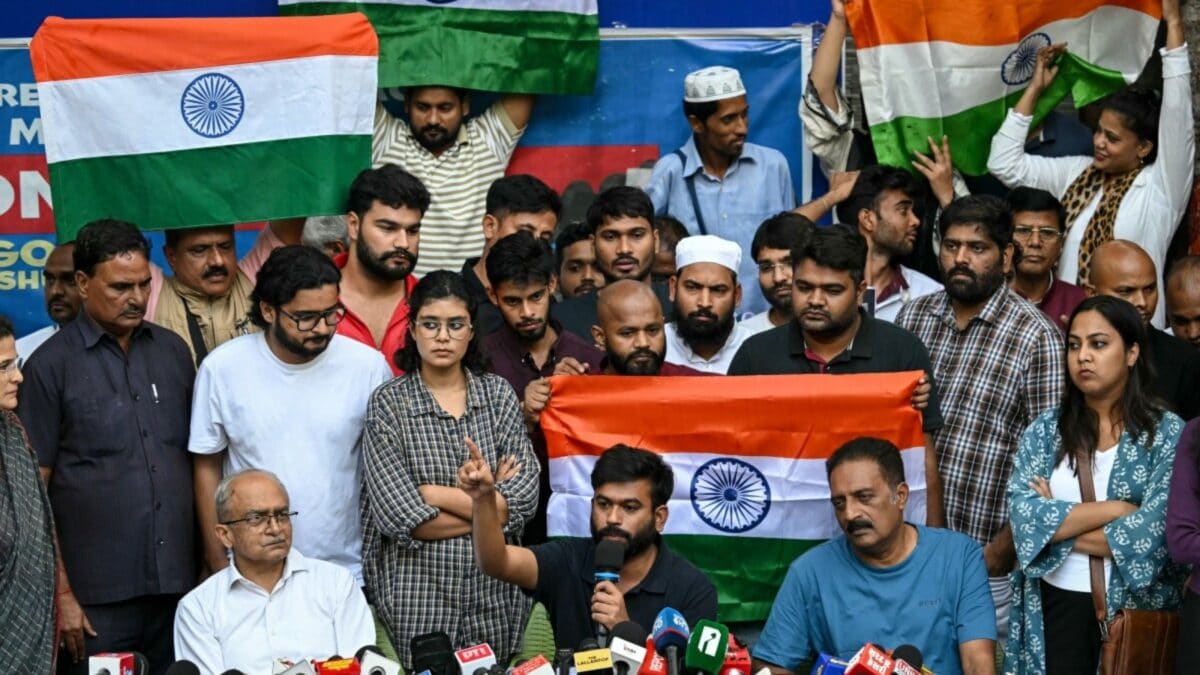
The political climate in India’s capital has intensified as the Cockroach Janta Party (CJP) prepares for a controversial public demonstration. The CJP, under the leadership of founder Abhijeet Dipke, has officially called for a Lehra Do Tiranga march at Central Park in Connaught Place. This mobilization is framed as a patriotic act, yet it masks a deeper political standoff. As authorities impose strict curbs, the event has become a flashpoint for civil unrest.
- The CJP is demanding the removal of electoral officials over alleged irregularities in the special intensive revision of voter rolls.
- Local authorities, specifically the New Delhi Municipal Council, have shuttered Central Park for administrative reasons.
- Delhi Police has issued a stern advisory, warning that major traffic routes will be affected and urging citizens to avoid the site.
- Previous demonstrations led by the group resulted in the detention of key members, including Saurav Das and Ashutosh Ranka.
Background and Context
The current impasse serves as a reminder of the volatile nature of urban street protests. The CJP, which often adopts unconventional methods of political communication, has focused its latest efforts on the perceived integrity of the electoral process. By invoking the national flag as a centerpiece for the gathering, the movement seeks to legitimize its demands, framing the administration as obstructive. Historically, Connaught Place has served as a central theater for civic engagement, making it a highly strategic location for organizations aiming to capture national attention. The decision to close the park reflects a broader trend of state caution when dealing with groups that challenge systemic electoral management.
Root Cause and Deep Dive Analysis
Why did this specific protest capture such intense police focus? The underlying issue involves claims of irregularities during the special intensive revision of electoral rolls. These administrative complaints have transformed into a broader political grievance against the state. The CJP’s strategy involves utilizing public spaces to force a direct confrontation with the political establishment. By calling for a march at a high traffic zone, the organizers hope to force the police into an overt show of force, which can be then leveraged to gain public sympathy. This tactic, while effective at generating headlines, risks alienating commuters and residents who view such blockades as a direct interference in daily economic life. For more insight into how similar protests have shaped the national discourse, one can review the history of civil disobedience in modern democracies.
Strategic Implications and Future Impact
The standoff over the CJP Delhi protest is unlikely to conclude with a single flag-hoisting ceremony. Intelligence reports suggest that the event carries the significant risk of evolving into an indefinite sit-in. Should this occur, the municipal authorities will face a difficult choice between allowing the occupation or engaging in mass arrests. Furthermore, the politicization of electoral grievances signals a potential rise in organized opposition directed at specific bureaucratic processes. If the government fails to address these concerns through dialogue, it may embolden other minor political factions to adopt similar confrontational tactics, thereby complicating the management of urban public spaces in Delhi.
Conclusion and What to Watch Next
The situation in New Delhi remains fluid. Observers should monitor whether the police successfully maintain the perimeter of Central Park or if the CJP finds alternative venues for its assembly. The primary variable remains the government’s willingness to address the substantive allegations regarding the electoral rolls versus its commitment to maintaining order. As the protest unfolds, the impact on local traffic and the potential for a long term sit-in will be the critical benchmarks for assessing the overall effectiveness of the CJP campaign. We will continue to watch for updates regarding the legal status of the detained members and the evolving stance of the security establishment.