A seemingly technical adjustment to recruitment regulations in Jammu and Kashmir has unexpectedly ignited a fervent political and cultural firestorm. At the heart of this escalating controversy lies a proposed amendment to the Revenue Service Recruitment Rules, specifically targeting the long-standing Urdu requirement for key administrative positions. This move has sparked widespread protests and accusations of an attempt to dilute the language’s historical significance and cultural imprint within the region.
The Evolving Urdu Requirement
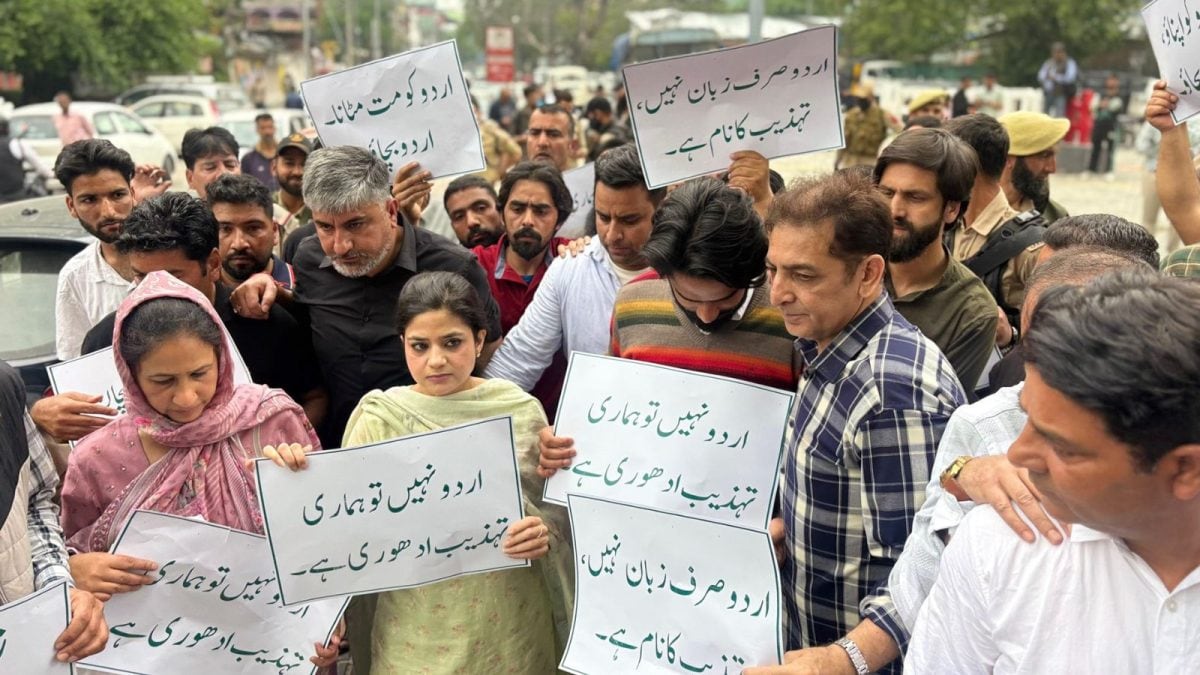
The Peoples Democratic Party (PDP) has spearheaded vociferous opposition. PDP leader Iltija Mufti passionately articulated her party’s concerns during a Srinagar protest. For many, this isn’t merely about bureaucratic procedure; it strikes at the very core of identity and heritage. Critics argue that altering this crucial Urdu requirement could weaken a language that has, for centuries, served as an administrative bedrock and a vital link connecting diverse communities across the valleys and hills of Jammu and Kashmir.
“Urdu is being sidelined in government services… it is our linguistic heritage,” Mufti declared, lambasting the National Conference-led government. “While the chief minister runs marathons, his administration is busy undermining the language that binds us.” Conversely, Nasir Aslam Wani, Advisor to the Chief Minister, swiftly dismissed these allegations as premature. He clarified that the department merely issued a public notification for feedback—a standard democratic process. “No final decision has been taken,” Wani asserted, reassuring the public that Urdu’s indispensable role in revenue systems remains secure.
Indeed, a significant volume of J&K’s revenue records, some dating back generations, are meticulously maintained in Urdu. “If revenue officers cannot interpret these critical documents, their utility diminishes significantly,” Wani underscored. He unequivocally stated, “Rest assured, Urdu will never be excluded from the syllabus.”
Historically, Urdu attained its official status in 1889 under Maharaja Pratap Singh, succeeding Persian as the court language. For over 131 years, it functioned as the sole official tongue of the erstwhile state, acting as a crucial communicative bridge amidst the region’s rich linguistic tapestry—Kashmiri, Dogri, Punjabi, and numerous other dialects. The shift from Persian, perceived as inaccessible to the masses, to Urdu, facilitated broader administrative communication and interactions between the Dogra rulers and the British.
The landscape of official languages underwent a dramatic transformation following the abrogation of Article 370 and the reorganisation of J&K into a Union Territory. The Union government subsequently elevated Kashmiri, Dogri, Hindi, and English to official status alongside Urdu, thereby ending its exclusive domain.
Prior to 2025, the Urdu requirement was absolute for positions like Patwari and Naib Tehsildar, precisely because revenue and land records were historically in Urdu. However, recent notifications and a Central Administrative Tribunal order have challenged this mandate. The BJP has publicly endorsed the removal, framing it as a non-discriminatory measure that expands opportunities for speakers of Hindi, Dogri, and Punjabi, aligning with the new multi-language policy.
Yet, the inherent challenge persists: while some advocate for digitisation and translation of all records into multiple languages, the vast majority of existing revenue documents across Jammu and Kashmir remain exclusively in Urdu. This linguistic reality presents a formidable hurdle, potentially leading to administrative gridlock if those responsible for land management lack proficiency in the language that underpins the region’s historical data. The debate continues, balancing modernization with heritage, and practical governance with deeply rooted identity.
About the Author