
Large forest fire burns close to residential areas in Ankara
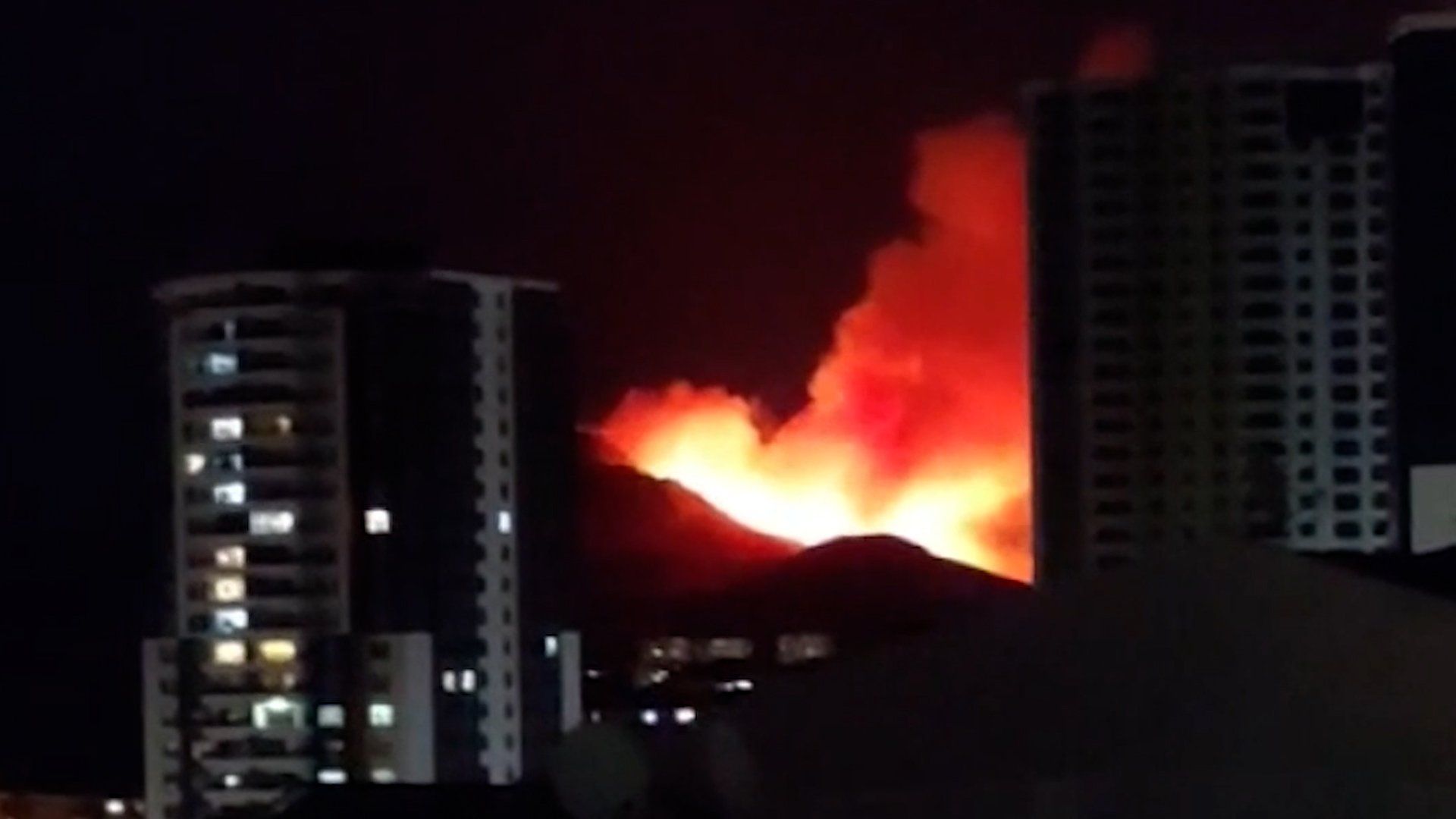
A palpable sense of dread hangs heavy over the eastern fringes of Ankara this week as a massive Ankara forest fire rages perilously close to densely populated residential areas. The inferno, which ignited with alarming speed, is currently threatening homes in Mamak, a district on the Turkish capital’s outskirts, prompting a colossal emergency response and raising critical questions about urban resilience in the face of escalating environmental challenges. As flames leap skyward, painting the horizon a sinister orange, the focus remains squarely on containment and the protection of lives and property.
The blaze, first reported early on August 24, 2026, quickly escalated from a localized incident to a formidable threat. Fueled by dry conditions, dense vegetation, and unpredictable winds, the fire has demonstrated a terrifying voracity, consuming vast swathes of forest land within hours. Residents of Mamak found themselves suddenly enveloped by acrid smoke and the unsettling glow of encroaching fire, a stark reminder of nature’s raw power. Emergency services, including multiple fire brigades, municipal teams, and forestry management units, were deployed en masse, initiating a desperate struggle to establish firebreaks and douse the advancing inferno.
The immediate concern centers on the rapid evacuation of at-risk neighborhoods. While official numbers of displaced residents are still being compiled, local authorities have advised inhabitants in the direct path of the fire to prepare for or initiate evacuation. The psychological toll on these communities cannot be overstated; watching your home, your memories, and your livelihood threatened by an uncontrollable force is an experience fraught with anxiety. This scenario echoes other recent urban disasters, highlighting vulnerabilities inherent in areas where natural landscapes meet expanding human settlements. For instance, the tragic landslide at a waste mound in Guinea’s capital, though different in nature, similarly underscored how quickly daily life can be upended by environmental calamities, often exacerbated by proximity to human activity.
Battling the Ankara Forest Fire: A Herculian Effort
The operational scale required to combat such a pervasive Ankara forest fire is immense. Ground crews, equipped with hoses and heavy machinery, toil tirelessly to cut fire lines and control hotspots. Overhead, a squadron of firefighting helicopters and fixed-wing aircraft perform precision water drops, a dramatic ballet against the fiery backdrop. These aerial assaults are crucial, especially in rugged terrain inaccessible to ground vehicles, but their effectiveness can be hampered by heavy smoke and strong, erratic winds. The coordinated effort involves not just professional firefighters but also volunteers, demonstrating a powerful sense of community solidarity in the face of adversity. This collective endeavor is vital in containing such a destructive force.
Turkey, with its hot, dry summers and extensive forested areas, is no stranger to wildfires. However, the increasing frequency and intensity of these events, particularly those encroaching on urban areas, have become a growing concern. Experts point to a confluence of factors, including prolonged drought periods, higher average temperatures attributed to climate change, and human activities, as primary contributors. The Mediterranean basin, of which Turkey is a part, is recognized globally as a wildfire hotspot, and the patterns observed align with broader global trends of more extreme weather events. The scientific community has extensively documented the correlation between climate change and the intensification of wildfires, underscoring the urgent need for robust prevention and mitigation strategies.
Government officials have pledged full support to the affected region. The Ministry of Agriculture and Forestry, along with the Disaster and Emergency Management Authority (AFAD), are working in tandem to not only fight the fire but also to assess damage, provide temporary shelter, and offer aid to those impacted. Beyond the immediate crisis, this Ankara forest fire serves as a potent reminder of the critical importance of proactive forest management, early warning systems, and public education on fire safety. Investing in resilient infrastructure and community preparedness measures is paramount for safeguarding both Turkey’s natural heritage and its growing urban populations from future threats.
As night falls over Ankara, the glow of the flames remains visible from afar, a stark, unsettling beacon. The fight against this formidable blaze continues without pause, with emergency personnel working around the clock. The resilience of the Turkish people and the unwavering commitment of their emergency services are on full display, battling a force that tests the very limits of human endurance and strategic planning. The hope is that through sustained effort, this destructive fire can soon be brought under control, allowing the long process of healing and recovery to begin for the affected communities in Mamak.