
Palestine weekly: Israel kills dozens in Gaza after Hamas disarmament deal
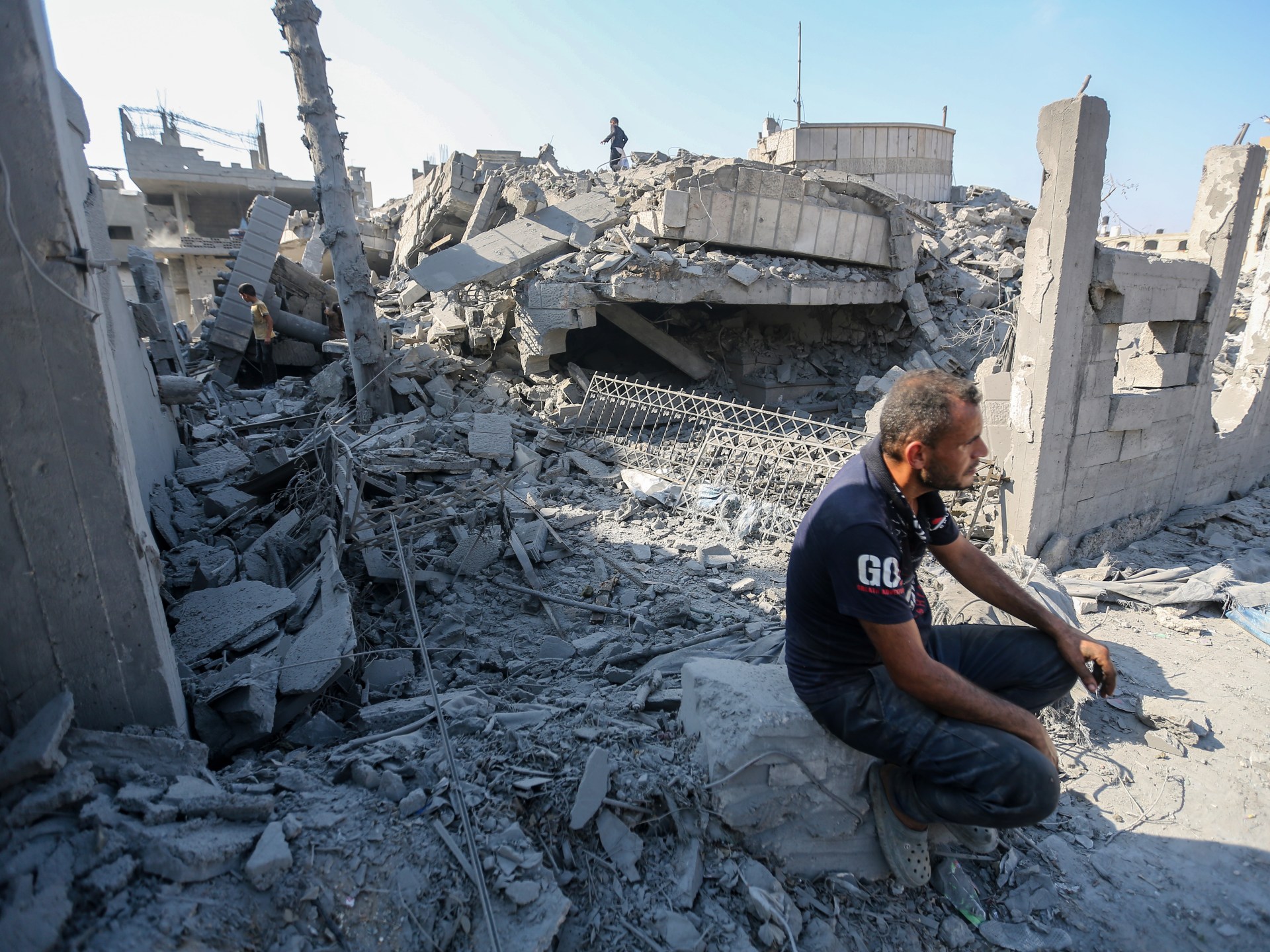
A fragile calm, a shattered promise. Days after a US-brokered disarmament agreement was heralded as a diplomatic triumph, the Gaza Conflict has shockingly escalated, with Israeli strikes unleashing a brutal wave of violence across the besieged territory. The ‘breakthrough’ deal, intended to usher in a new phase of peace following the October 2025 ‘ceasefire’, has instead been met with a devastating surge in hostilities, leaving dozens dead and a population in deepening despair.
United States President Donald Trump announced the “historic agreement” on July 30, outlining the disarmament of Hamas and other armed groups in Gaza. This accord, negotiated through the Board of Peace, was designed to oversee Gaza’s post-war reconstruction and governance. However, the optimism proved fleeting. Hamas negotiator Ghazi Hamad swiftly declared that the Palestinian group would refuse implementation until Israel fulfilled its own obligations, including a halt to attacks and troop withdrawal. Meanwhile, Israeli Prime Prime Minister Benjamin Netanyahu’s office maintained that forces would not pull out until Hamas was fully disarmed. A classic, tragic deadlock.
Deadliest Month Amidst the Gaza Conflict
This fundamental disagreement has perpetuated, indeed intensified, the attacks that have plagued the 10-month ‘ceasefire’. Within days of the so-called “historic agreement,” Israeli strikes claimed at least 19 Palestinian lives in a single day, bringing the weekend death toll in Gaza to 26. Board of Peace envoy Nickolay Mladenov condemned the escalation, lamenting the civilian casualties and destruction of vital medical supplies. This brutal period capped July as the deadliest month in Gaza this year, and a particularly lethal one for Palestinians in the occupied West Bank due to Israeli settler attacks since 2023.
The human cost of this renewed Gaza Conflict is stark. Sunday saw families annihilated in their homes. In Gaza City’s al-Sousi Tower, Abdullah Abu Taif, his pregnant wife Abeer Anan, and their five-year-old son Azzam perished. Medics at al-Shifa Hospital recovered the remains of an unborn child from the rubble. Similar tragedies unfolded in al-Qarara, near Khan Younis, and Deir el-Balah, where entire families, including an elderly couple, were wiped out. Even a tent sheltering displaced people in Gaza City’s Remal neighbourhood was struck, killing two, including a child. The following evening, four more died when a drone targeted a vehicle near the Sharia Court, an attack Israel claimed hit military operatives.
Beyond individual lives, the infrastructure of survival is crumbling. An overnight strike on Saturday obliterated the medicine warehouse attached to Al-Aqsa Hospital in Deir el-Balah, crippling medical supply storage. Israel claimed it struck a Hamas weapons depot, but Gaza’s Health Ministry Director-General Munir al-Bursh decried the act, stating it “turns medicine and illness itself into a tool of war.” The Health Ministry reported 152 fatalities in Gaza during July alone, bringing the cumulative toll since the October 2025 ‘ceasefire’ to a horrifying 1,250 killed and over 4,100 wounded. Civil Defence teams, after a two-week search, retrieved 112 bodies from a flattened Sabra home, 40 of them children. An estimated 157 people remain missing, some tragically “fused into concrete by the force of the explosions.”
West Bank Suffers Intensified Settler Attacks
The violence isn’t confined to Gaza. The West Bank endured its own week of heightened tensions, making July the deadliest month for Palestinians in settler-related incidents since October 2023, according to the United Nations Office for the Coordination of Humanitarian Affairs (global humanitarian efforts). OCHA documented over 1,380 settler-related incidents across the West Bank since the beginning of 2026, averaging 6.6 per day. These acts, coupled with demolitions, have displaced an average of 17 people daily this year – double the rate of the preceding three years. A report by the Palestinian National Bureau for Defending Land and Resisting Colonization revealed a disturbing trend: no soldier from Israel’s settler-heavy “Hagmar” defence units has been arrested for killing a Palestinian since at least 2017, with over 93 percent of investigation files into settler attacks closing without indictment.
Incidents ranged from a 10-year-old boy shot in the back near al-Mughayyir to an elderly couple, Issam Radwan and Nahil, brutalized on their farmland near Beitillu. Settlers, often escorted by Israeli soldiers, marched through Palestinian villages, established new illegal outposts, and continued the relentless seizure of land. In the Jenin governorate, Israeli authorities seized approximately 200 dunums (0.2 square kilometres) for military roads. Critically, military orders are now seizing Palestinian Authority-administered land in Area A – not for security, but to connect new illegal settlements, a step deemed unprecedented by researcher Dror Etkes. The international community, including Global Affairs Canada and the UN’s rights office, has voiced alarm over the settlement expansion, with Canadian officials stating they are “illegal under international law.”
This enduring cycle of violence, despite diplomatic pronouncements, underscores the profound and tragic reality of the Gaza Conflict and the wider Israeli-Palestinian struggle. The promise of peace remains elusive, buried beneath rubble and the weight of unresolved grievances.