
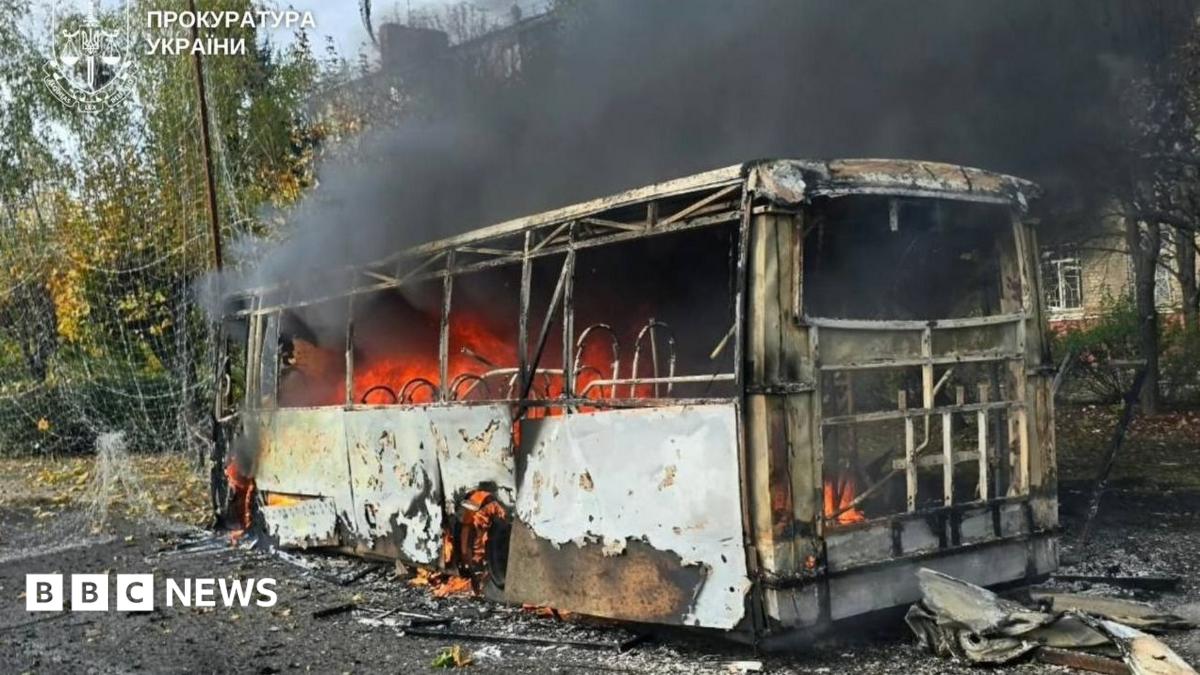
Russian strike on buses kills at least 30, say officials, as deadly attacks on Ukraine surge
Introduction & Key Takeaways
The conflict in Ukraine has reached a harrowing new inflection point following a devastating Russian strike in the city of Kramatorsk. At least 30 civilians were killed after Russian forces utilized lethal glide bombs, weapons designed for high impact, against civilian transport buses. This incident is part of a broader, intensified strategy that has seen a sharp increase in civilian casualties across the nation. As global observers analyze the shifting landscape, the United Nations reports that civilian fatalities in Ukraine have already surpassed the total figures recorded for the entirety of 2025.
- Kramatorsk remains a focal point as Russia attempts to capture the industrial heartland of Donbas.
- The use of glide bombs highlights the evolving and increasingly dangerous nature of aerial bombardment.
- President Volodymyr Zelensky has issued urgent calls for international partners to provide more robust defense capabilities.
- Escalating strikes are disrupting critical infrastructure, including energy grids and water supplies, in major hubs like Kyiv.
Background & Context
What just happened in the eastern front line city of Kramatorsk is widely viewed by military analysts as a deliberate escalation in the war against civilian infrastructure. By targeting buses, the strike served to sow panic and paralyze local movement. Kramatorsk, alongside neighboring Slovyansk, forms a critical defensive belt for Ukrainian forces, often referred to as the fortress belt. For Moscow, capturing this region is essential for achieving the stated goal of total control over the Donbas territory. Local authorities were forced to halt all public transport in the region, citing the immediate and dire necessity of protecting human life from further aerial assaults.
Root Cause & Deep Dive Analysis
Why did this happen at this specific juncture? The deployment of glide bombs represents a tactical shift for Russian forces. These munitions are fitted with winglets, allowing them to glide toward specific targets rather than relying on standard ballistic trajectories. This maneuverability makes them exceptionally difficult to intercept with existing air defense systems. The strategic rationale behind this offensive, as suggested by international observers, is twofold. First, Russia seeks to degrade the logistical capacity of the Ukrainian military by creating chaos in rear areas. Second, the sustained frequency of these strikes is an attempt to break public morale, forcing civilian populations into constant shelter-seeking, which disrupts economic activity and daily life.
Strategic Implications & Future Impact
The global geopolitical implications of this intensified aerial campaign are profound. With the supply of interceptor missiles running low worldwide, the current defensive posture of Ukraine is being stretched to its absolute breaking point. The strategic impact of this shortage cannot be overstated. As Russia continues to target the energy grid and logistical warehouses, the cumulative effect of these attacks will likely manifest as a humanitarian crisis during the upcoming winter months. UK Foreign Secretary Ed Miliband recently condemned these actions, framing them as a testament to the aggressive intent behind the Russian war machine. Furthermore, the commitment to tighten sanctions on the Russian shadow fleet and financial networks reflects a growing realization that economic pressure must evolve in lockstep with military support.
Conclusion & What to Watch Next
As the front line continues to fracture under the weight of unrelenting fire, the world waits for the response of Ukraine’s international allies. The call for concrete action by President Zelensky underscores a desperate need for advanced air defense systems and revised geopolitical strategies. Observers should keep a close watch on the effectiveness of new sanctions packages and whether the influx of advanced defensive weaponry can shift the current balance of power. The survival of the Donbas region remains the immediate priority, but the long term consequences of this conflict will continue to reshape European security for the foreseeable future.