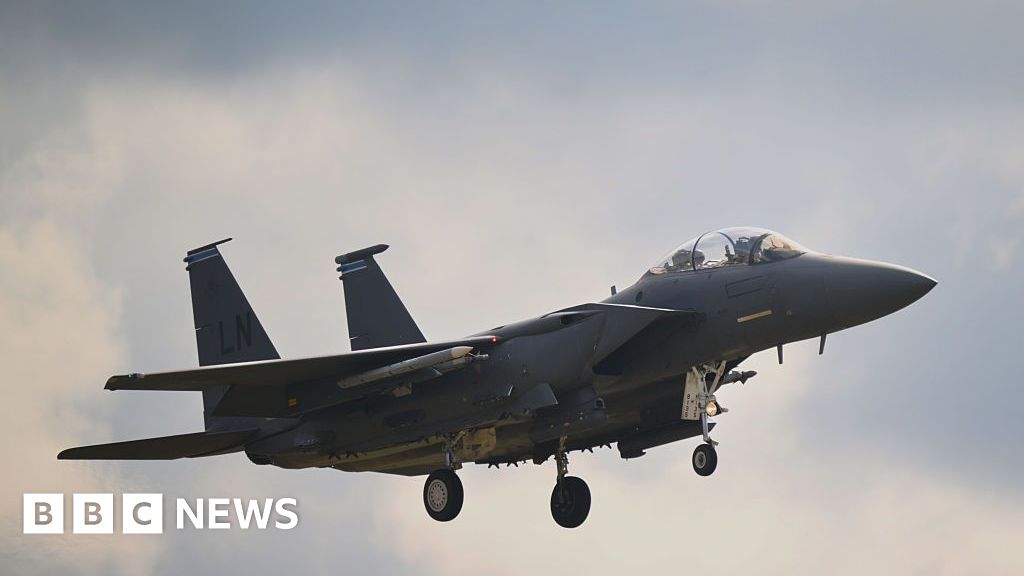
A palpable tension hangs over Washington D.C. as the frantic, high-stakes search for a missing US Airman intensifies in the treacherous skies and rugged terrain of Iran. This dramatic development, following the downing of an F-15 Eagle fighter jet, delivers a significant blow to a White House that had confidently asserted American air superiority over the region, claiming Iran’s air defenses were severely weakened.
President Donald Trump and his Defence Secretary Pete Hegseth had previously insisted Iran couldn’t “do a thing” about American aircraft operating above its territory. Yet, Friday’s incident, which left one crew member rescued but another unaccounted for, starkly contradicts those assurances. It powerfully suggests Tehran retains a surprising, albeit perhaps limited, capacity to defend its airspace. The true magnitude of this unfolding crisis, however, hinges precariously on who finds the missing weapons systems officer first: American rescue teams or Iranian forces.
The Perilous Hunt for the Missing US Airman
The situation is profoundly complex. Reports from the BBC indicate President Trump’s national security advisors were deeply immersed in briefing him on Thursday concerning a search-and-rescue mission that, alarmingly, came under Iranian fire. While US media outlets reported that the crew sustained injuries but managed to flee Iranian airspace, the fate of the second airman remains tragically unknown. Publicly, the President has attempted to downplay the incident, suggesting it won’t derail negotiations aimed at ending the conflict ignited by US and Israeli strikes on February 28. Privately, however, this unravelling saga is undoubtedly a grave concern.
Adding layers of complexity, Iran’s Islamic Revolutionary Guard Corps has reportedly launched its own search operation, mobilizing troops and local residents. A substantial reward, approximately $66,000 (£50,000), has been offered for the live capture of the American. Should Iranian forces succeed in locating the missing US Airman, the repercussions for Washington could be monumental. Beyond the immediate political embarrassment, there is a haunting specter of propaganda exploitation, evoking grim parallels to the 1979 Iran hostage crisis, an event that left deep, enduring scars on American psyche and foreign policy.
History provides a sobering backdrop. Past US administrations have gone to extraordinary lengths, sometimes controversially, to secure the freedom of detained Americans. A notable example includes President Barack Obama’s 2014 exchange of five Taliban detainees for US Army soldier Bowe Bergdahl, who was captured in Afghanistan. Critics argued such swaps might inadvertently incentivize future hostage-taking. This intricate history now poses difficult questions for the current White House as it navigates the urgent predicament of the missing US Airman.
The potential capture of a US service member presents President Trump with an agonizing choice: either intensify military action in response, risking further escalation, or seek a diplomatic off-ramp through backchannel efforts to ensure the airman’s safe return. Lawmakers in Washington, while offering prayers and support, are already showing signs of division. Republican Congresswoman Nancy Mace has called for troops to be brought home, while Democratic Senator Tim Kaine has pressed Iran to adhere to international law regarding any captured personnel.
A palpable unease about the safety of US service personnel permeates the political landscape, particularly amid whispers of a possible ground invasion. Across the political spectrum, there is little appetite for another “forever war” or for an increase in American casualties. President Trump, on Saturday, reiterated his ultimatum for Iran to agree to a deal and reopen the Strait of Hormuz by Monday, April 6, or face “hell,” including strikes on its energy infrastructure. These deadlines, however, have shifted repeatedly, often juxtaposed with claims of “very good” and “productive” talks that Tehran vehemently denies have even occurred. With ongoing threats of further US strikes and a steady military buildup in the Gulf, the signs tragically point towards an escalation already well underway.
About the Author