
Somalia won’t accept Israeli presence ‘under any circumstances’: President
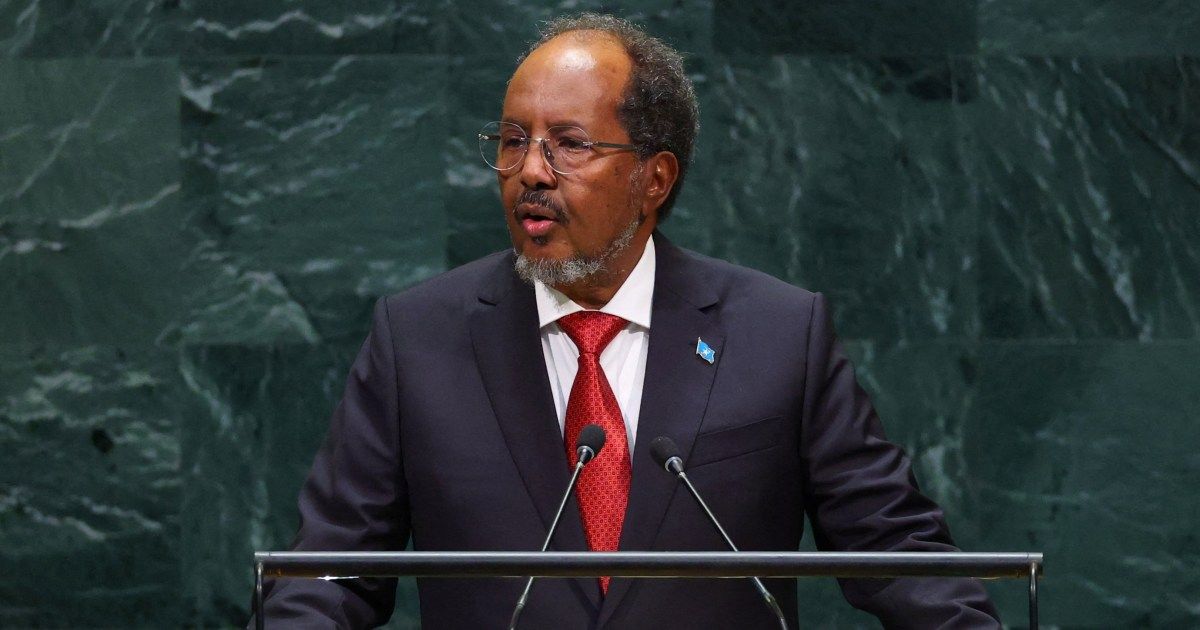
Somalia has taken a firm stance against foreign military encroachment, with President Hassan Sheikh Mohamud declaring that his nation will not accept an Israeli presence within its borders under any circumstances. In an exclusive interview, the president signaled a resolute refusal to allow his country to become a pawn in the broader, escalating tensions currently roiling the Middle East. This bold declaration underscores Mogadishu’s commitment to maintaining its sovereignty amid a complex regional power struggle involving maritime access and strategic alliances.
President Mohamud specifically highlighted concerns regarding reported Israeli plans to establish a naval base in the port city of Berbera. Located along the Gulf of Aden in Somaliland, a self-declared republic that is legally claimed by Mogadishu, the city occupies a vital position near the strategic Bab al-Mandeb strait. Analysts note that controlling this bottleneck allows for significant influence over trade routes that connect the Red Sea to the Indian Ocean. For more background on regional developments, it is useful to track how security concerns are evolving globally.
The Geopolitical Impact of an Israeli Presence
The President suggested that the intent behind these maneuvers is not merely local, but rather a strategic play to bridge the gap between Israel and other major players in the Gulf region and Iran. He labeled Israel a destabilizing force that consistently ignores international law. This friction is exacerbated by the fact that Israel became the first and only nation to formally recognize Somaliland’s independence in late 2025. This move has been heavily condemned by the central government in Mogadishu, which views the recognition as a direct affront to its territorial integrity.
Furthermore, Mohamud drew parallels between these maritime ambitions and the controversial concept of a Greater Israel, a term often associated with historical proposals for the expansion of borders beyond current lines. While the Israeli government has not officially adopted this doctrine, recent rhetoric from Prime Minister Benjamin Netanyahu has heightened anxieties across the Arab world. As global diplomatic tensions shift, many are observing how international relations in Africa are being reshaped by external investments and military agreements.
Regional Security and Stability
Beyond the immediate controversy surrounding the naval base, the president touched upon the ongoing struggle against internal and external threats. He reiterated that the United States remains a primary partner in the collective effort to combat violent extremist groups like al-Shabab. While the federal government has made strides in securing major urban centers, the persistence of the militant group continues to pose a challenge to long-term stability in the Horn of Africa. The president insists that the group holds no future in the country’s political landscape, despite its continued presence in more remote, rural provinces.
The discussion also encompassed relations with neighboring Ethiopia. Despite earlier tensions regarding Ethiopia’s desire for sea access, Mohamud indicated that diplomatic channels remain open and that Mogadishu is willing to explore constructive arrangements that do not compromise its sovereignty. This calm approach to regional diplomacy contrasts sharply with his harsh criticism of the Houthi movement in Yemen. Mohamud characterized the group as a primary source of chaos in the Bab al-Mandeb strait, arguing that their military activities serve only to threaten international navigation and regional security.
As these multifaceted issues continue to evolve, the international community remains watchful. Somalia’s insistence on self-determination reflects a growing trend among nations in the Global South that are increasingly wary of being pulled into proxy conflicts. For now, the administration in Mogadishu is focused on reinforcing its defensive position and ensuring that its coastline remains a zone of commerce rather than a theater for international warfare.