
What is birthright citizenship, and what does the Supreme Court ruling say?
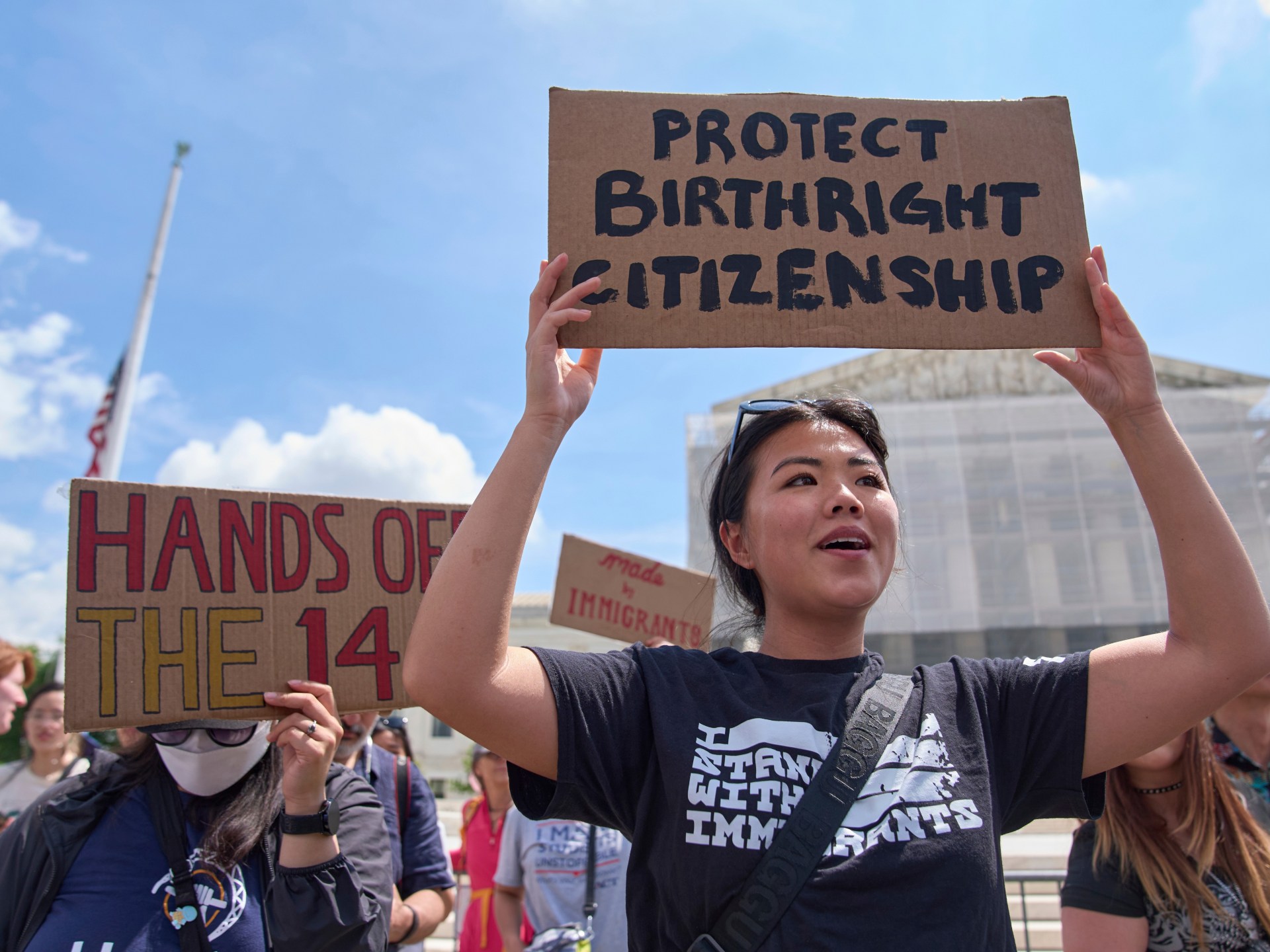
In a momentous declaration that reverberated across the nation, the United States Supreme Court has decisively affirmed the enduring principle of Birthright Citizenship. This ruling, a significant setback for former President Donald Trump’s aspirations to curtail the constitutional right, solidifies a bedrock of American law guaranteeing citizenship to nearly all children born on U.S. soil. The highest court’s decision, announced on a bustling Tuesday, ensures that a long-established pillar of the Fourteenth Amendment remains intact.
Understanding Birthright Citizenship
At its core, Birthright Citizenship is deceptively simple: any person born within the geographic boundaries of the United States, barring a select few exceptions like children of foreign diplomats, is automatically a U.S. citizen. This fundamental concept was enshrined in the Fourteenth Amendment to the U.S. Constitution, ratified in the tumultuous aftermath of the Civil War. Its primary purpose then was profoundly clear: to extend full citizenship and its protections to newly freed Black individuals, ensuring they enjoyed equal rights under the law.
Numerous landmark Supreme Court cases have since reinforced this right. A pivotal precedent emerged from the 1898 case, United States v. Wong Kim Ark. Here, a man born in San Francisco to Chinese parents was denied re-entry after a family visit abroad. The Court, however, swiftly ruled in Wong’s favor, asserting his irrefutable status as a U.S. citizen, a decision that cemented the broad application of the clause.
It is crucial to distinguish this automatic conferral from naturalized citizenship, where individuals attain status through established legal procedures. Yet, once naturalized, these citizens enjoy the exact same extensive privileges and immunities as their native-born counterparts, safeguarded by the same constitutional provisions. The Fourteenth Amendment, with its five distinct sections, prominently states: “All persons born or naturalized in the United States, and subject to the jurisdiction thereof, are citizens of the United States and of the State wherein they reside.”
The Trump Challenge and Judicial Rebuke
During his 2024 presidential campaign, Donald Trump made it abundantly clear he intended to dismantle Birthright Citizenship. He frequently voiced claims on social media, alleging that the provision fueled an “invasion” of immigrants. Upon his return to the Oval Office in January 2025, Trump acted swiftly, issuing an executive order designed to exclude certain children from receiving birthright status, specifically those born to undocumented immigrants or parents without permanent residency.
The executive order, met with immediate and fervent legal challenges, never actually took effect. Critics vehemently argued that such a move would plunge countless infants into a state of statelessness, a humanitarian crisis in the making. Lower courts consistently blocked its implementation, setting the stage for the Supreme Court’s ultimate review.
The Supreme Court’s Definitive Stance
In a resounding six-to-three vote, the Supreme Court unequivocally struck down Trump’s 2025 executive order in the case of Trump v. Barbara. Chief Justice John Roberts, a conservative appointee of former President George W. Bush, authored the majority opinion. He meticulously highlighted that the Fourteenth Amendment’s text offers no support for Trump’s restrictive interpretation, which sought to limit citizenship solely to children of existing citizens or permanent residents.
“If Congress intended to limit American citizenship to the children of those domiciled in the United States, nothing in the succinct language of the Citizenship Clause conveyed that design,” Roberts articulated. He further referenced the 1898 Wong Kim Ark precedent, emphasizing, “In the 128 years since, we have repeatedly understood the rule of Wong Kim Ark to guarantee citizenship to all children born in the United States and subject to its power. We see no reason to depart from that view today.” Joining Roberts were conservative Justice Amy Coney Barrett and the court’s three liberal justices: Sonia Sotomayor, Ketanji Brown Jackson, and Elena Kagan.
Interestingly, Justice Brett Kavanaugh, while concurring with the outcome, diverged on the rationale. He posited that the right was secured by the U.S. legal code rather than the Fourteenth Amendment itself, leaving a narrow, albeit speculative, opening for Congress to potentially amend federal law to exclude children of temporary or unlawful immigrants. The dissenting votes came from conservative Justices Clarence Thomas, Neil Gorsuch, and Samuel Alito, with Thomas penning a lengthy dissent arguing for the legitimacy of Trump’s restrictions and questioning the Court’s interpretation of the Fourteenth Amendment’s original intent.
What Lies Ahead?
Despite the Court’s decisive ruling, Trump has already vowed to seek alternative avenues, suggesting Congress could legislate a change without the arduous process of altering constitutional provisions. “The Supreme Court upheld Birthright Citizenship, which is too bad for our Country, but we can easily make it up in Congress through Legislation, with the support of the President,” Trump posted online. He urged Congress to act “TODAY,” promising his “Complete and Total Support.” However, most legal scholars contend that modifying the fundamental meaning of the Fourteenth Amendment would indeed necessitate a constitutional amendment, a process deliberately designed to be exceptionally challenging.
The Supreme Court’s robust term concluded on this same busy Tuesday, with other significant rulings including the upholding of a state ban on transgender girls participating in public school sports and the striking down of limits on political parties’ campaign spending, further reshaping the American legal landscape.