In a stunning display of military prowess and covert operations, a daring US Airman Rescue mission recently unfolded deep within the rugged, hostile terrain of Iran. The intricate operation successfully extracted a seriously wounded F-15 crew member whose jet had been downed, marking a critical moment in US military history. The precise circumstances surrounding the incident remain shrouded in some mystery, yet the sheer complexity of extracting this individual from enemy territory cannot be overstated.
The harrowing ordeal began on a Friday when an F-15E Strike Eagle, carrying both a pilot and a weapons systems officer, reportedly fell victim to enemy fire over southern Iran. This incident was alarmingly significant, marking the first time in over two decades that an American fighter jet had been shot down by hostile forces. While both crew members managed to eject, the pilot was swiftly rescued; however, the second airman vanished, triggering an urgent, desperate hunt.
President Donald Trump, using social media, later declared victory, stating, “We have rescued the seriously wounded, and really brave, F-15 Crew Member/Officer, from deep inside the mountains of Iran.” But between that declaration and the Friday downing, a frantic race against time ensued. Iranian authorities, keen to capture the airman alive, even put a £50,000 bounty on his head, fueling a widespread search by armed civilians, according to unverified social media footage.
Ordeal of the Missing: The High-Stakes US Airman Rescue
Alone and armed with only a handgun, the stranded officer executed highly specialized survival training. He strategically concealed himself within a mountain crevice, judiciously limiting the use of his beacon signal to avoid detection by Iranian forces. He waited. Meanwhile, American officials, monitoring his location relentlessly, planned the extraordinary US Airman Rescue operation around the clock.
The Central Intelligence Agency (CIA) played a pivotal, almost cinematic, role. A senior Trump administration official revealed the intelligence agency precisely pinpointed the airman’s hiding spot, relaying the critical coordinates to the Pentagon. Furthermore, reports suggest the CIA launched an elaborate deception campaign, circulating rumors within Iran that the second airman had already been found, likely to disorient enemy search efforts.
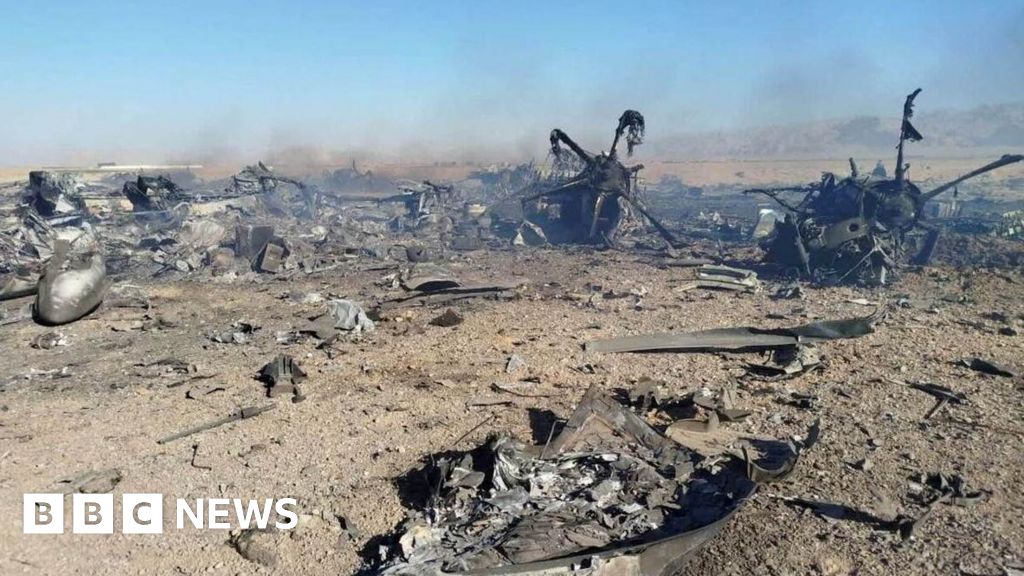
Dozens of elite special forces, backed by an intimidating array of US warplanes and helicopters, were deployed. As rescue teams converged on the trapped officer, bombs and weapons fire were strategically unleashed to repel approaching Iranian troops. The mission, however, was not without its costs. Reports indicate two US transport planes, originally intended to airlift rescue crews, were unable to depart a remote Iranian base and were subsequently destroyed to prevent them from falling into enemy hands. Special forces then used three additional aircraft for the extraction.
Iranian state media offered a contrasting narrative, claiming their Islamic Revolutionary Guard Corps (IRGC) shot down a US drone and foiled an “escape mission” near Isfahan, destroying two C-130s and two Black Hawks. These conflicting accounts underscore the murky, perilous nature of the entire event. However, confirmed footage did show a smoldering aircraft wreckage in central Iran.
Ultimately, before midnight US time, the monumental US Airman Rescue culminated in success. The seriously wounded, yet resilient, airman was whisked away to Kuwait for urgent medical attention. Though his identity and exact rescue location remain undisclosed by US authorities, the underlying military ethos was clear. As retired US Navy Admiral William Fallon articulated, “It takes a year to build an aircraft – it takes 200 years to build a military tradition where you don’t leave anybody behind.” This principle, more than anything, steered the dangerous mission.
For more insights into the capabilities of this formidable aircraft, explore its history and design.
About the Author