
‘We are preserving a tradition’: how Ghana’s sensationalist film posters became collectible art
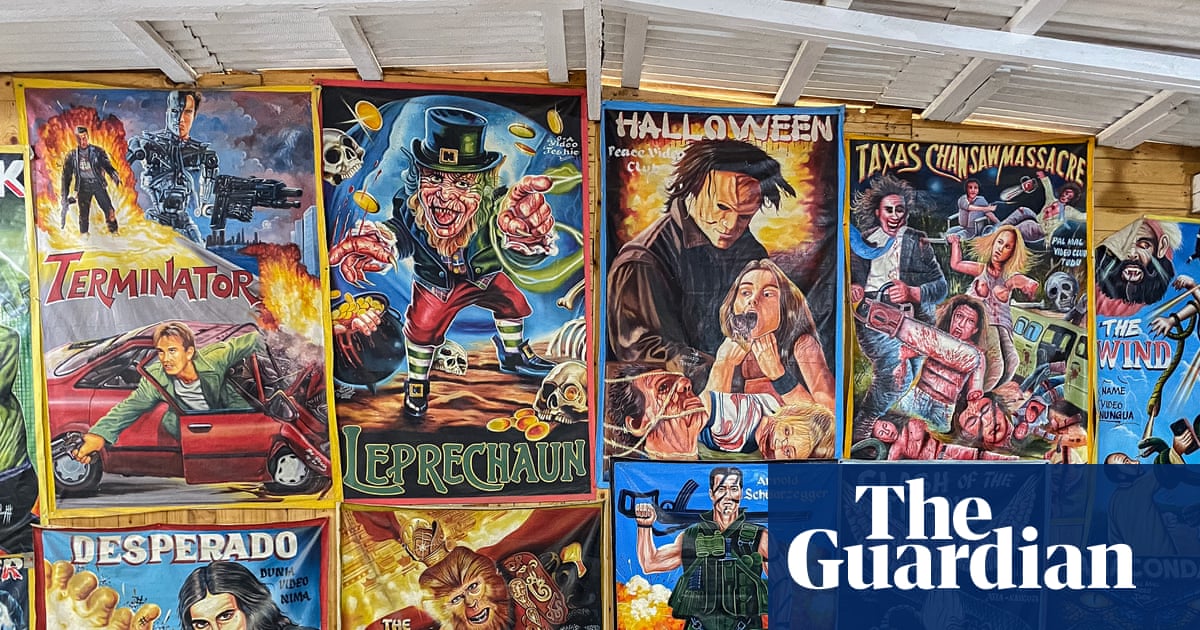
In the vibrant cultural heart of Accra, Ghana, a peculiar artistic tradition flourishes: the creation of wildly imaginative Ghanaian film posters. These hand-painted marvels, often bearing little resemblance to the movies they advertise, were once a cornerstone of local cinema. Today, they represent a cherished legacy, captivating audiences worldwide with their audacious reinterpretations.
Imagine a horror film poster depicting a prince wielding a bloody knife and a menacing skull. Now, imagine discovering this poster was actually for Disney’s The Little Mermaid! Such was the genius of artists like Jeaurs Affutu, known as Heavy J. From his porch in Teshie, near Accra, Heavy J would dip his brush into red oil paint, transforming mundane flour sacks into canvases of pure, unadulterated sensation. He wasn’t depicting the plot; he was inventing an irresistible spectacle.
From the late 1970s through the early 2000s, these hand-painted film posters were the lifeblood of Ghanaian video clubs. Organisers quickly learned that original, often tame, movie posters simply failed to attract audiences. Thus, a new art form was born, with artists competing to create the most outlandish "forgeries," their personal interpretations becoming more important than accuracy. Plot lines were merely suggestions, springboards for wild, surreal flights of fancy.
The Enduring Appeal of Ghanaian Film Posters
The dawn of the 21st century brought a decline. As more Ghanaians gained access to electricity and personal television sets, video clubs shuttered their doors. Many artists pivoted to other forms of income. Yet, the posters themselves had already achieved global renown, gracing international exhibitions and books, their rarity making them highly sought-after collectibles. After a brief lull, demand for newly painted works surged, fuelled by online marketplaces and a dedicated clientele of Western film aficionados.
Enter Deadly Prey Gallery. Co-founded in 2012 by Robert Kofi, a former "hype man" for video centres, and Brian Chankin, the gallery has become a vital conduit, preserving this unique cultural practice while connecting Ghanaian artists to a global audience. Deadly Prey Gallery collaborates with 15 artists, including Heavy J, who boasts four decades of experience. Kofi, acting as both manager and editor, meticulously guides the artists, ensuring their creations meet the often-specific demands of online customers. Prices for these bespoke pieces start at a considerable $600.
Most commissions flow from the United States, with a particular appetite for posters from classic action, science fiction, and horror films. Titles like The Exorcist, Star Wars, and Terminator franchises are perennial favourites. Kofi’s role is critical; he matches artists to projects, shares his artistic vision, and frequently inspects works in progress. He once, for instance, instructed artist Stoger (Benjamin Amartey) to make cats "uglier" and spaghetti "dirtier" for a Gummo poster – a testament to the exaggerated aesthetic these Ghanaian film posters embody.
Joseph Oduro-Frimpong, director of the Centre of African Popular Culture at Ashesi University, succinctly explains this phenomenon as "visualising the invisible." Audiences hadn’t seen the films, so artists were free to tap into "imaginative painting." This sensationalism, while captivating, wasn’t without its risks. Kofi humorously recounts a 1990s incident where viewers, feeling utterly duped, physically assaulted him because a Double Impact poster promised a beheading scene that simply wasn’t in the movie. Such was the power – and occasional peril – of the misleading masterpiece.
Today, at the Centre for National Culture in Accra, vibrant examples from Deadly Prey Gallery adorn the walls, showcasing iconic, yet wildly reinterpreted, scenes: Jennifer Lopez battling a snake in Anaconda, or a mouse escaping Jamie Lee Curtis’s mouth in Halloween. This incredible collection offers a glimpse into the broader world of film and its diverse visual cultures. As Kofi so poignantly states, of this astonishing poster-painting craft: "We are preserving a tradition. We are preserving a history."